
(left) Balenciaga single seam wedding dress, 1967; (right) “Good Kate, Bad Kate,” Kate Moss, photographed by Steven Klein, W Magazine March 2012.

(left) Balenciaga single seam wedding dress, 1967; (right) “Good Kate, Bad Kate,” Kate Moss, photographed by Steven Klein, W Magazine March 2012.
If you haven’t seen it yet, tomorrow will be your last chance to see the beautiful exhibition Joaquin Sorolla and the Glory of Spanish Dress at the Queen Sofia Spanish Institute. Our Jill Hemingway was there and here is her report:
 The Institute’s press release for the exhibition explains the premise, “a seminal exhibition analyzing the rich history of Spain’s regional clothing styles through the monumental paintings of Valencian artist, Joaquin Sorolla y Bastida (1863-1923). The exhibition will feature more than ten paintings and over thirty rare examples of men’s and women’s clothing and accessories.” This premise is repeated in the introductory text, which consists of five large printed paragraphs on the entrance wall. The text is easy to read (even if a visitor forgot his/her glasses) and gives enough information for the visitor to grasp the purpose of the exhibit without having to read any of the object labels if they choose not to. The text explains that you will see paintings by Sorolla next to types of costumes they portray. Next to the introduction text is a large black and white photograph of the artist with his large mural Vision of Spain. This mural being the original work he was commissioned to paint (which was installed in 1926 at the Hispanic Society of America) and led to the creation of the costume study paintings seen in the Queen Sofia exhibit.

Traje corto (riding ensemble), c. 1961 Collection of the Duchess of Alba. Image Courtesy Queen Sofia Institute Press release
The first object on display is a contemporary Balenciaga ensemble in a glass case at the main lobby. This is a nice way to tie in the Institute’s previous costume exhibition on Balenciaga, as Balenciaga is Spain’s best known designer. The object label had a 1912 image of a Sorolla painting, depicting a regional costume that the contemporary Balenciaga costume resembled. Not only does this illustrate how contemporary designers (this ensemble is by Nicolas Ghesquiere for Balenciaga) are still influenced by regional Spanish dress, it also sets the tone for the entire exhibition and what you can expect to see: a painting next to a case with costumes that somehow relate to each other. The objects on view include: flamenco costumes, wedding attire, bullfighter’s suits, riding ensembles, everyday farm wear, children’s costume, as well as other festive decorative men’s and women’s clothing and accessories. These costumes are exhibited in cases next to correlating large scale paintings depicting similar regional Spanish dress. Some of the paintings depict the actual costume that is in the case, because Sorolla would purchase many of the costumes after he had painted the scenes. These costumes from the artist’s own collection are on loan from Madrid’s Museo Sorolla. Other similar clothing shown with the paintings is borrowed from Madrid’s Museo del Traje. The purpose of the exhibition is to analyze Spanish regional dress, and using the paintings as a visual context for the garments is very successful. The press release also notes that, “Sorolla’s detailed renderings form an important record of traditional dress, which by the early twentieth century was beginning to fade as a form of daily sartorial expression.” The exhibition works perfectly with the Queen Sofia’s mission to, “promote greater awareness and understanding of the culture of the Spanish-speaking world in the United States” along with its, “strong commitment to the fine arts by exhibiting major masters and newly emerging artists from Spain, Latin America, and Europe. The exhibition also fits in well with another point from the Institutes mission, “to celebrate the deeply rooted creativity of Spanish spirit and cultures across media, disciplines, and eras.”

The exhibition organized by region of dress; the costumes from each region are grouped near the paintings that represent the same style of clothing. There is not a definite path in the multi-level exhibition, but on my first visit, a docent suggested I start on the lower level and work my way up to the main floor, then end on the third floor. Therefore the viewer can begin anywhere and not be confused, even moving, within in each gallery, from one side of the room to the other.

The exhibition is beautifully designed and mounted. The gallery walls were painted pink, orange, and red and worked with the existing yellow walls and purple carpet of the Institute. All the colors picked up shades found in the paintings. The platforms and risers in the cases are painted the same deep purple as the carpet which gives the overall space a seamless effect. A few slanted risers in one case were covered with muslin (not painted purple) to display jewelry, for conservation reasons. All the risers in cases were well lit. The costumes are attractively displayed on unobtrusive mannequins that seem to have been made specifically for each costume (and probably were). One large eye-level wall case displayed jewelry on a large slanted mount. There was only one large label above the objects which used a numbering system to identify each object: a number next to the label object name and a small white numbered head pin next to the actual object. This is a great way to avoid visual clutter when displaying numerous smaller objects when multiple labels could become very confusing. One of the mannequins had jewelry affixed to a chignon and her head: earrings, a mantilla, and ornate hair pins. I did not think the faux chignon (made with the same thick muslin material used for the mannequins head) was necessary. Though they were trying to show how the pieces were actually worn with the ensemble, the rest of the jewelry was shown neatly on a riser near the mannequins. Since this was the only mannequin with faux hair in the exhibition, it broke visual continuity. Everything is securely displayed in closed cases. The display elements further the exhibition’s aims, adding even more Spanish flavor to the paintings and objects on view. There is piped-in Spanish music in the galleries. On my first visit, it was a bit loud and distracting. On my second visit, they had lowered the volume quite a bit; perhaps they had complaints.  One of the paintings depicts a man from North Western Spain playing the bagpipes and on that first visit, the soundtrack played a bagpipe song, which would be confusing if you happened to miss this particular painting and not know that this region of Spain is Celtic. I did not hear this song on the second visit and wondered if they removed it for that reason.
The top gallery floor has a large video monitor (and seating) showing footage of Jackie Kennedy’s visit to Spain with the Duchess of Alba from 1966, and the Hermitage of the Virgin Festival from 2010. This really enhanced the exhibition, because it was interesting to see live people walking, dancing, moving and even on horseback in regional costumes both past and present. I overheard one visitor say, “I wish it had sound, music.” Perhaps they chose not to use the video sound so as not to compete with the piped in music in the adjoining gallery. In the main gallery on this floor there is a wall case that contains printed materials, such as Vanity Fair, Life, and Harper’s Bazaar magazines, opened to articles related to contemporary Spanish fashion. 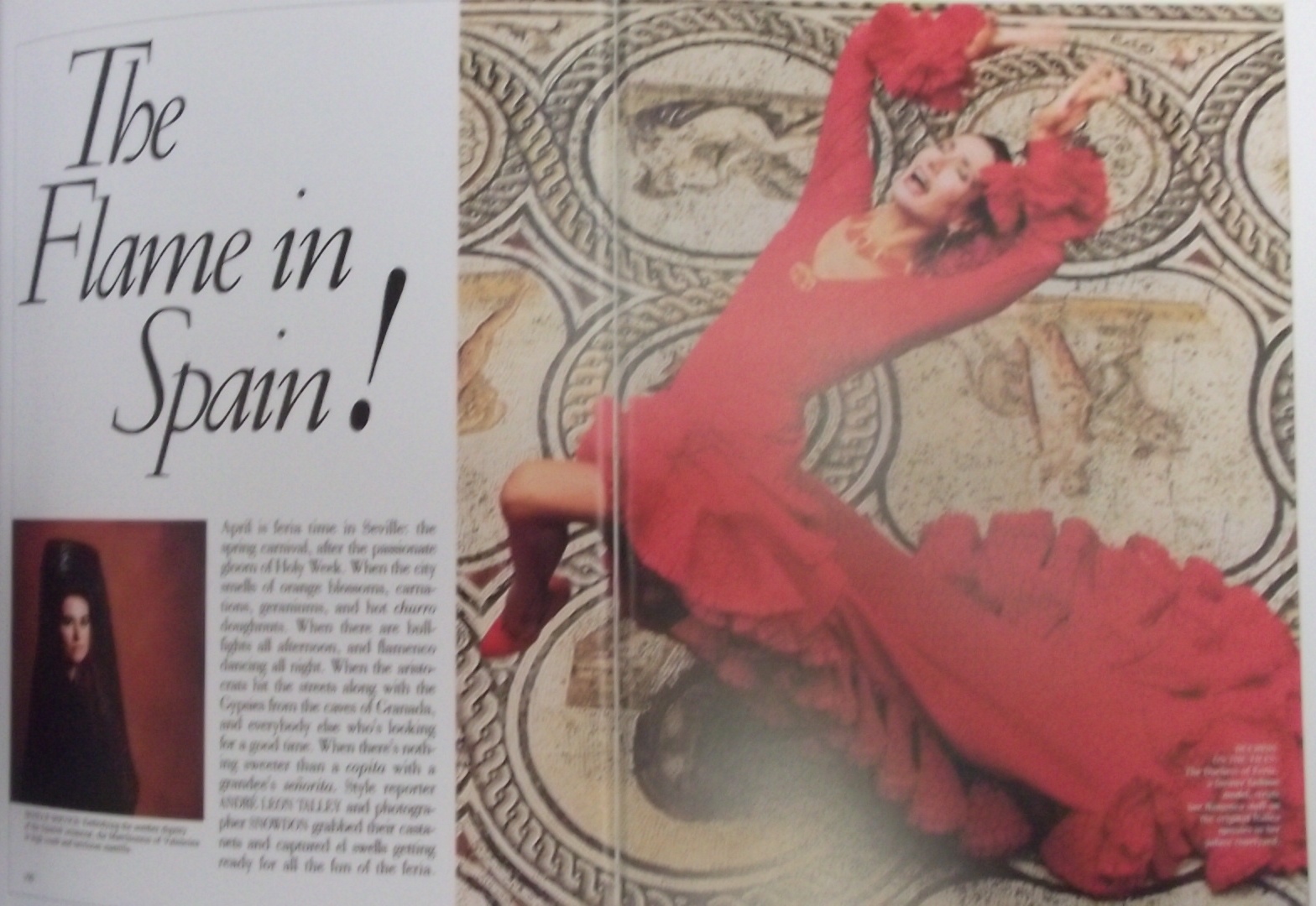 This case was quite dark and I realized it had no source to light it. Someone thought the large ceiling chandelier in the room would be enough illumination for the case, but I could hardly see the images, or read the small magazine text. Above this case was wall text written by the curator, André Leon Talley, which summed up the exhibition and explained how the influence of Spanish culture is important to designers and continues today. On the left wall of this gallery was a huge reproduction of Sorolla’s Vision of Spain, and on the facing wall were two more large reproductions of details from the same painting. The far wall contained the exhibition’s grand finale: a huge case displaying contemporary designers interpreting Spanish influence in couture costumes. There are costumes by Karl Lagerfeld for Chanel, Stefano Pilati for Yves Saint Laurent, Carolina Herrera, two looks by Christian Lacroix, Ralph Lauren, and Oscar de la Renta. This room was my favorite, because you could see every influence from the paintings and costumes on the two previous floors channeled into these amazing couture creations.

Ensemble by Christian Lacroix
There is a beautiful exhibition catalog reasonably priced at $45 dollars, however, like most catalogs, it does not contain everything seen in the exhibit, as the catalog must be written, edited and printed well before the exhibition opens. But, it is a thorough catalog that delves more deeply into the art of Sorolla and regional Spanish dress.
I think the visitor will take away knowledge of regional dress they may have never known about at all if not for this exhibition, as well as the work of Joaquin Sorolla, which is what I learned from the show. It also reminded me to add a visit to the Hispanic Society of America to my to-do list. I have recommended this exhibit to my colleagues and friends, and many people I know have already seen it, and all have enjoyed it very much.
Well it has finally happened! Jil Sander is returning as head designer at the label she started in 1968. After Prada acquired the brand in 1999, Sander left the company, only to briefly return in 2003. Sander’s new/old position signals the departure of current designer, Raf Simons, fuelling rumors that he be hired as the chief designer at Dior.
Jil Sander opened her boutique in 1968 in Hamburg, Germany, launching her first collection in 1973. By the 1990s, the company had gained international attention, in particular for its celebration of minimalism, quality craftsmanship, and meticulous detailing. In 1993 the first flagship store opened in Paris. The label launched in Italy and the US in 1994 and 1995 respectively, testament to the brand’s worldwide appeal.
In honor of the third-coming of Jil Sander, I have compiled images of the brand from Sander’s initial stint at the eponymous label (from 1973-1998), with a focus on her heyday in the 90s.

Jil Sander Boutique, Hamburg, 1968
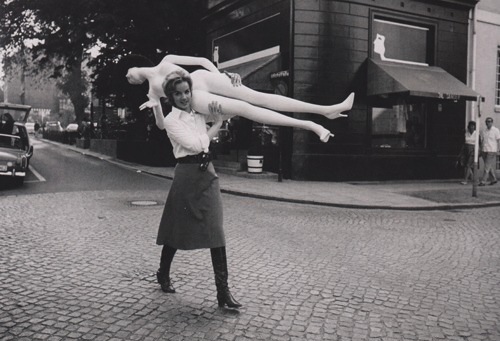
Jil Sander, Hamburg, 1968
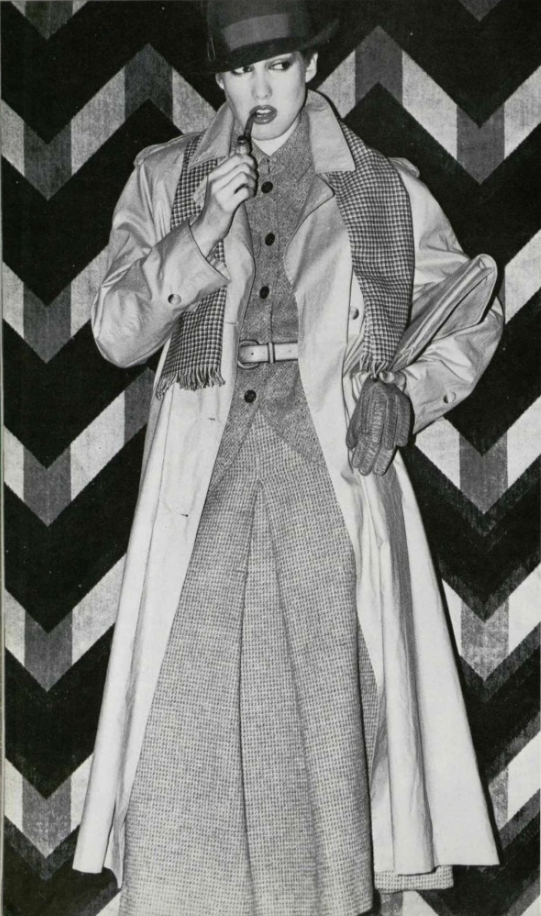
Jil Sander rain coat and tweed suit, 1978
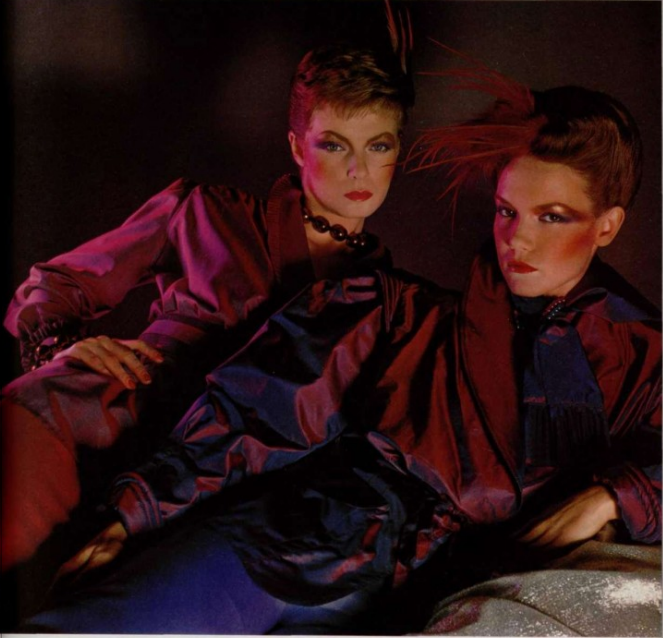
Left: Jil Sander blouse and skirt, 1979

Jil Sander, 1992
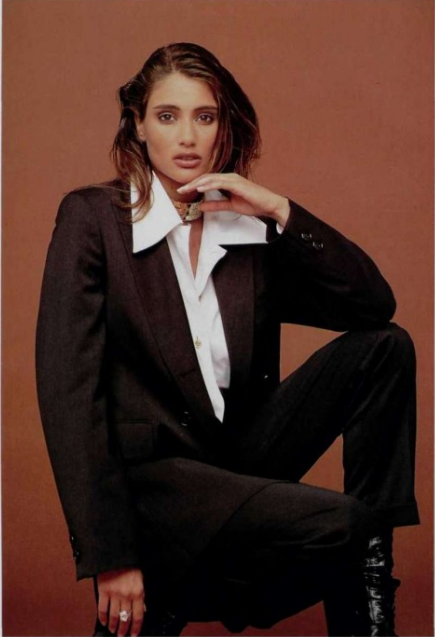
Jil Sander jacket, cigarette pants, and boots. Chanel shirt, 1993.
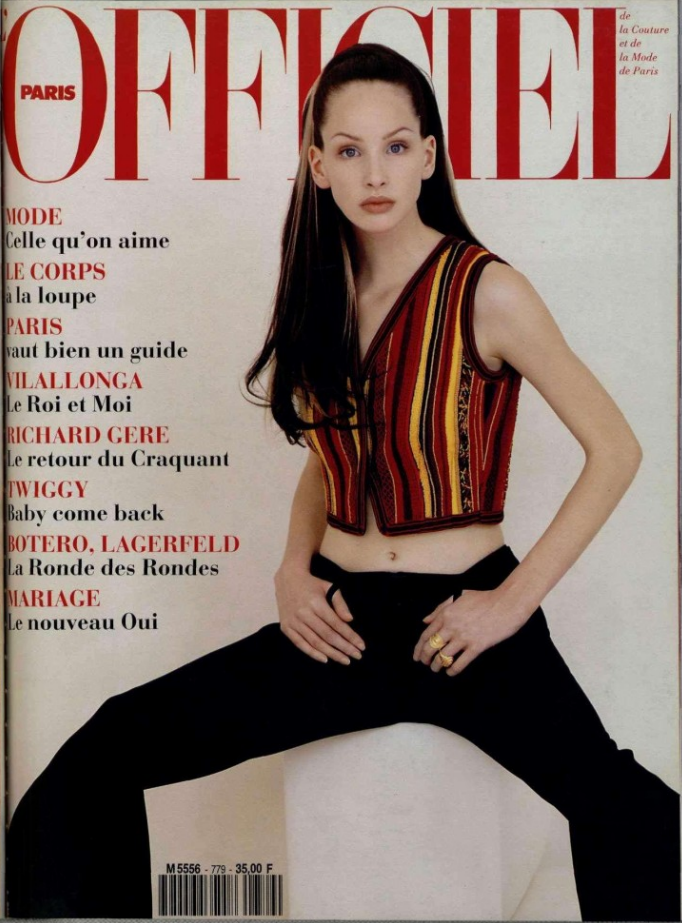
Jil Sander designs on the cover of L'Officiel, 1993
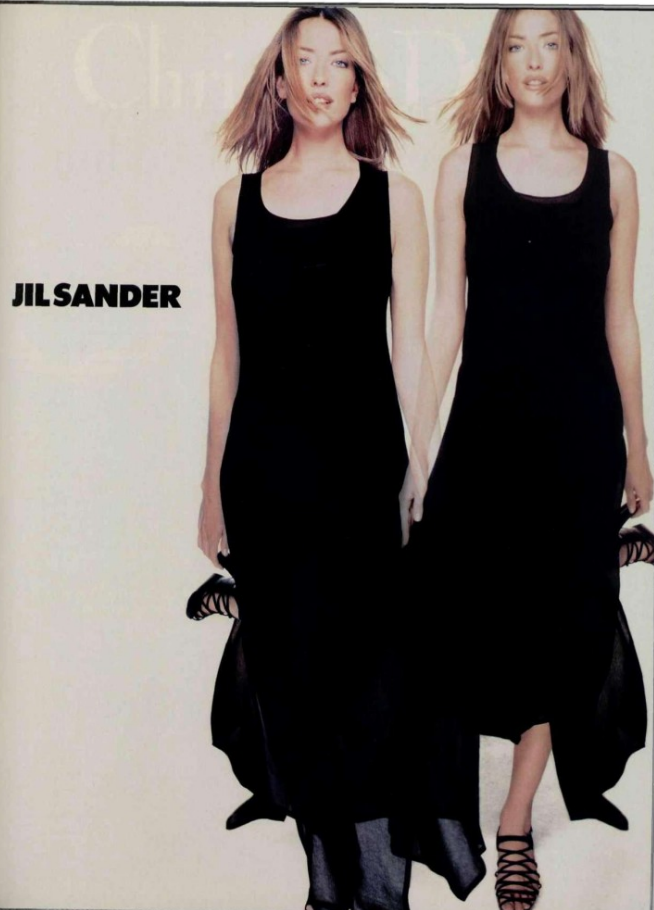
Jil Sander Advertisement, 1993

Jil Sander linen suit, 1993
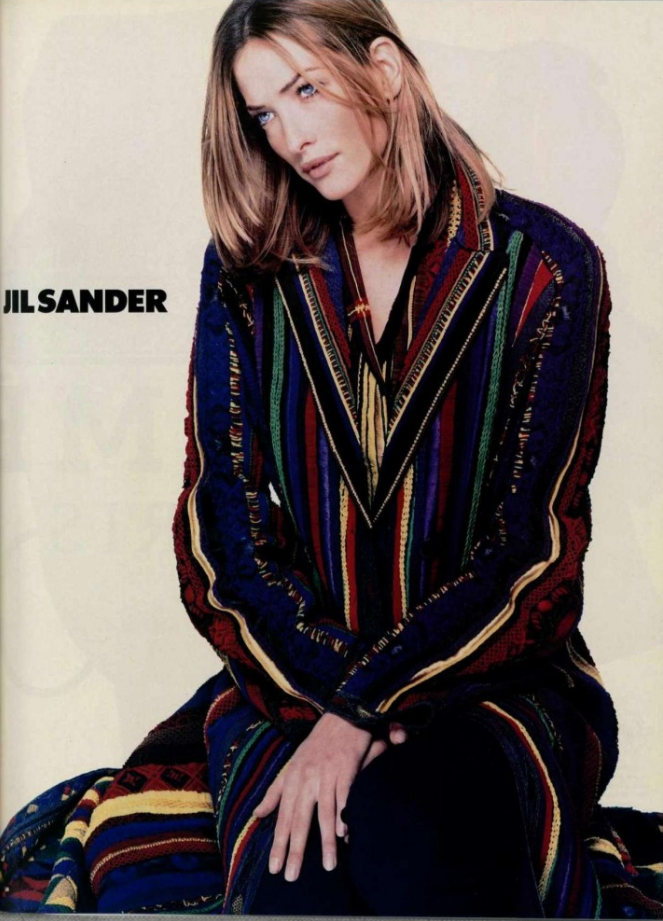
Jil Sander Advertisement, 1993
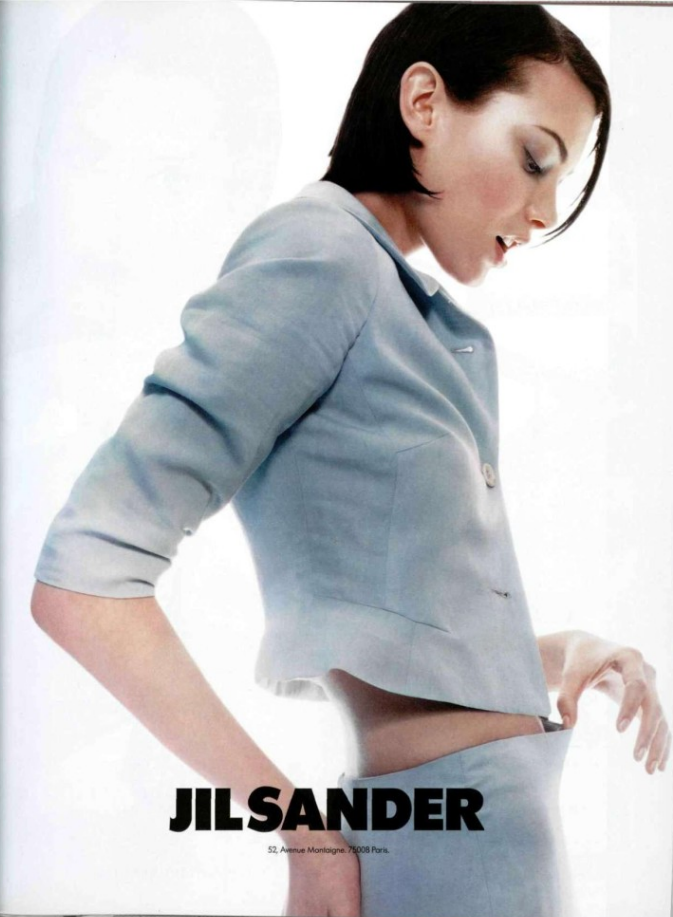
Jil Sander Advertisement, 1995
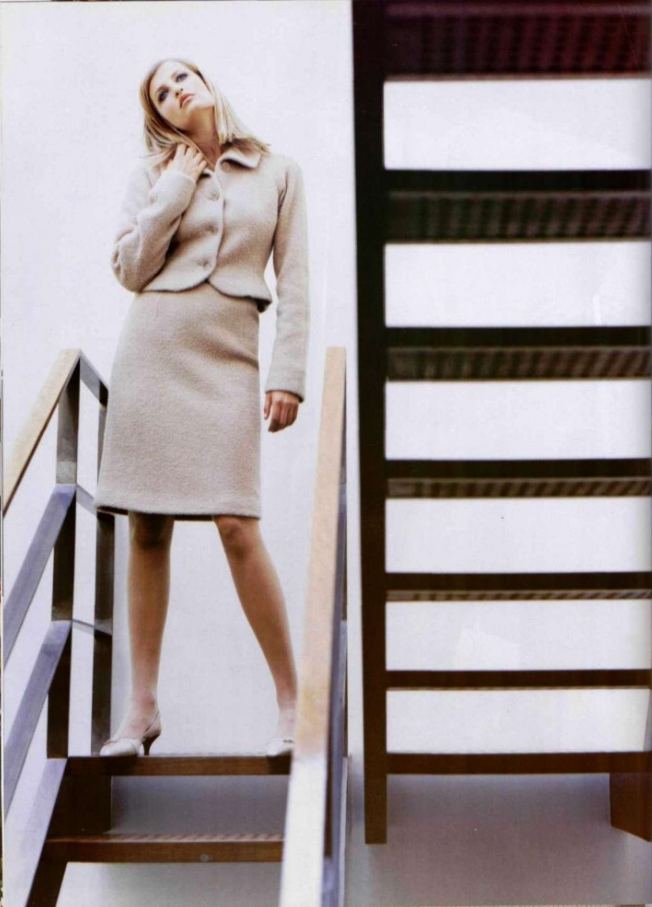
Jil Sader suit, Prada heels, 1995
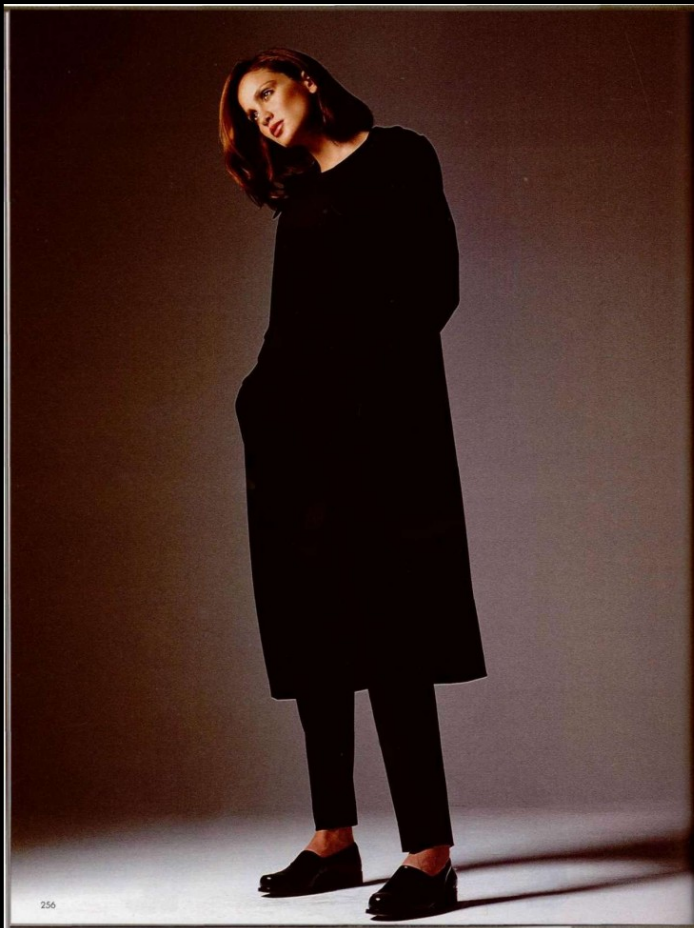
Jil Sander coat, pants, and shoes, 1996
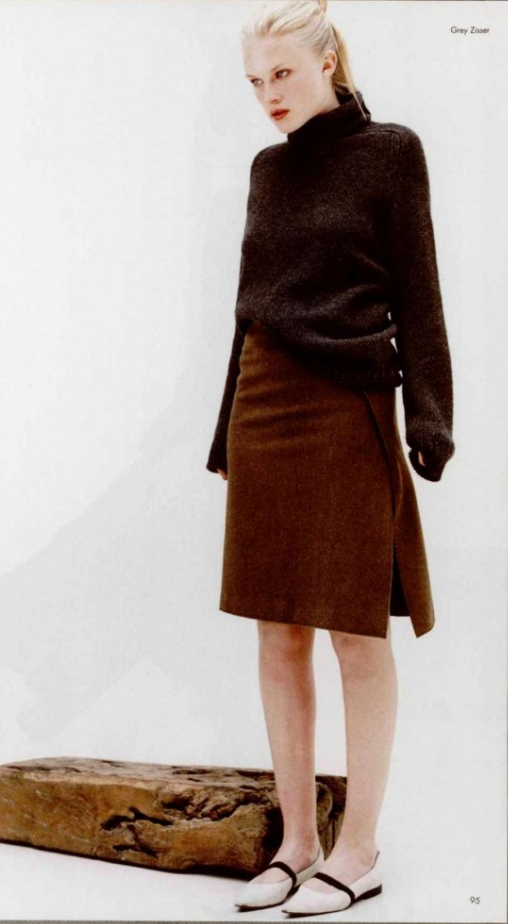
Jil Sander sweater, skirt, and shoes, 1997
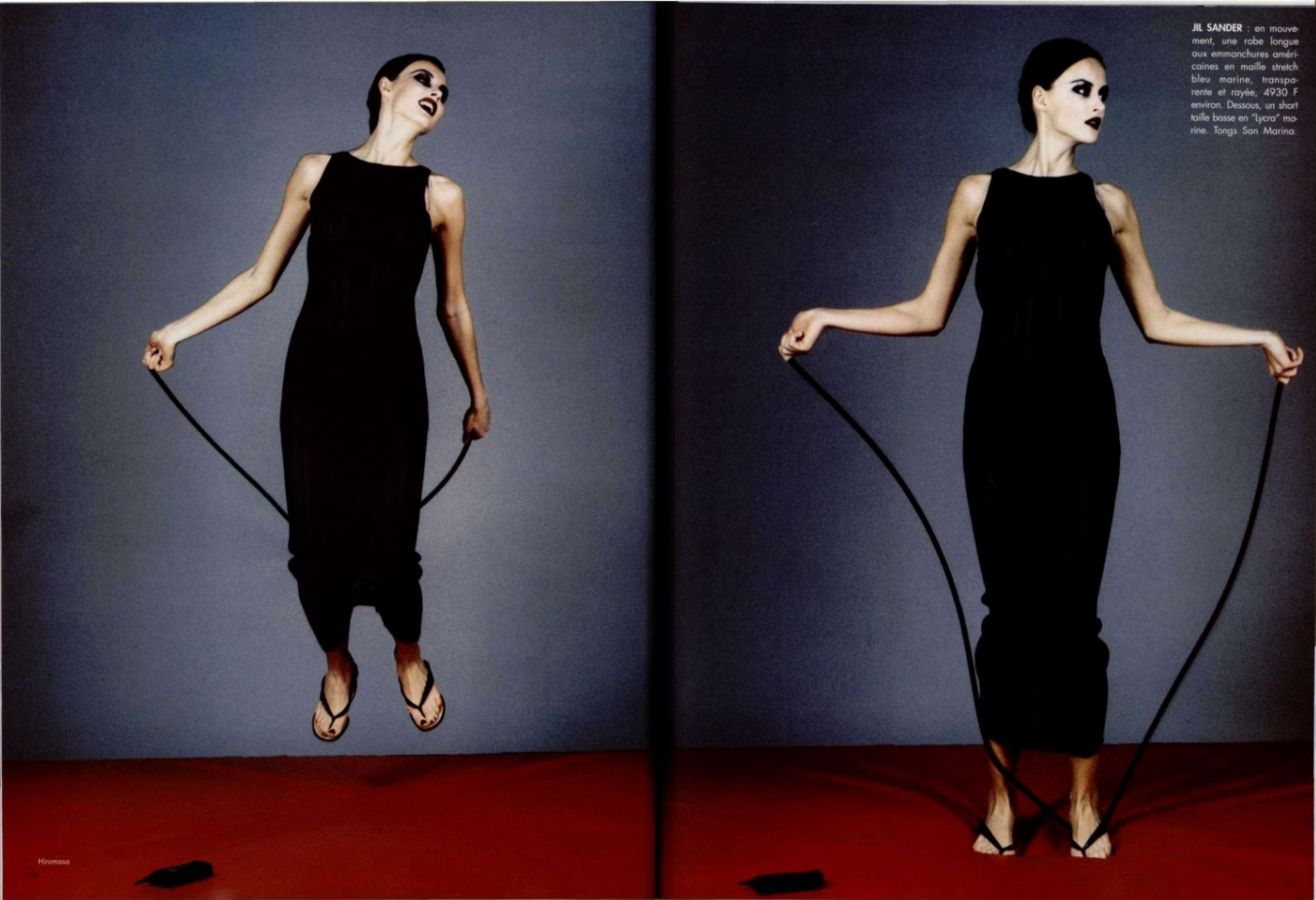
"Dress in movement," 1997
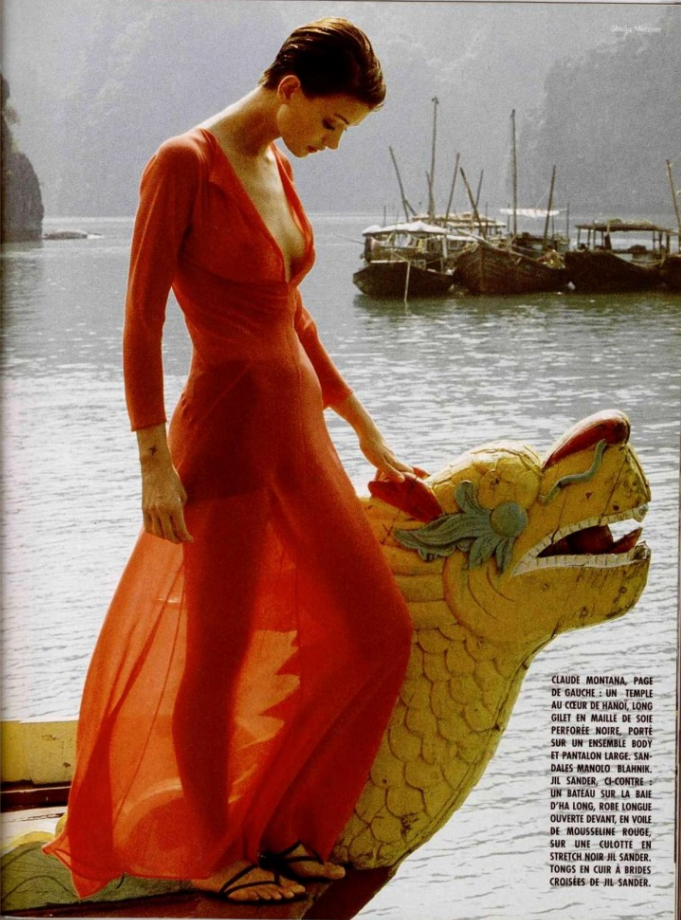
Jil Sander dress and sandals, 1997
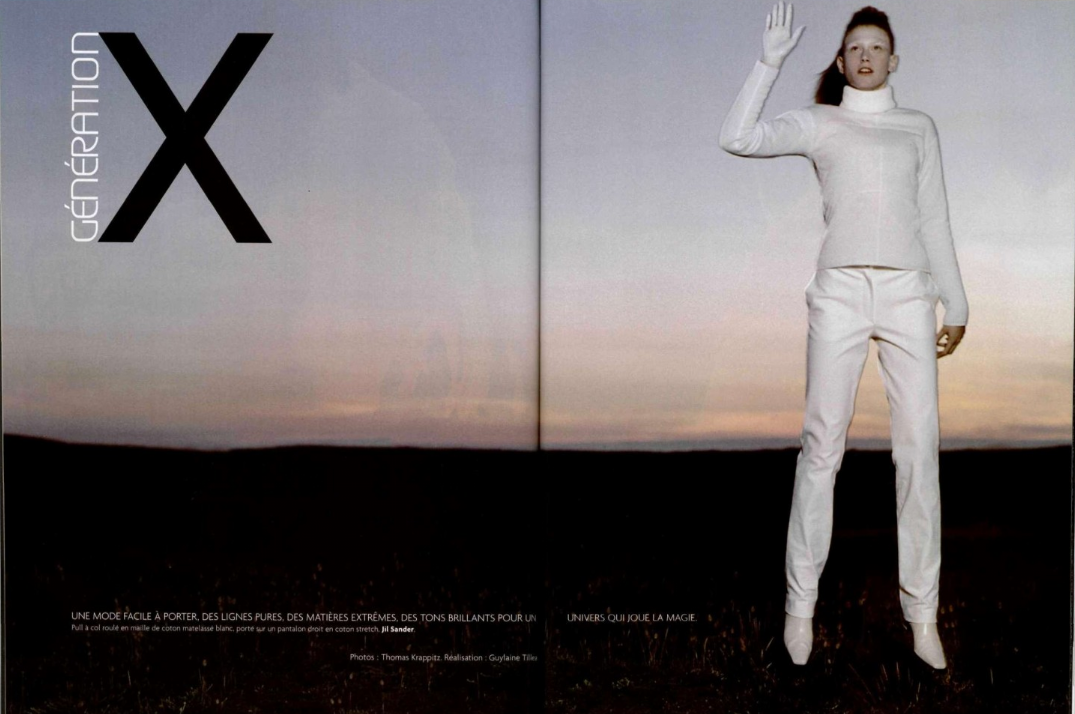
Jil Sander shirt and cotton stretch pants, 1998
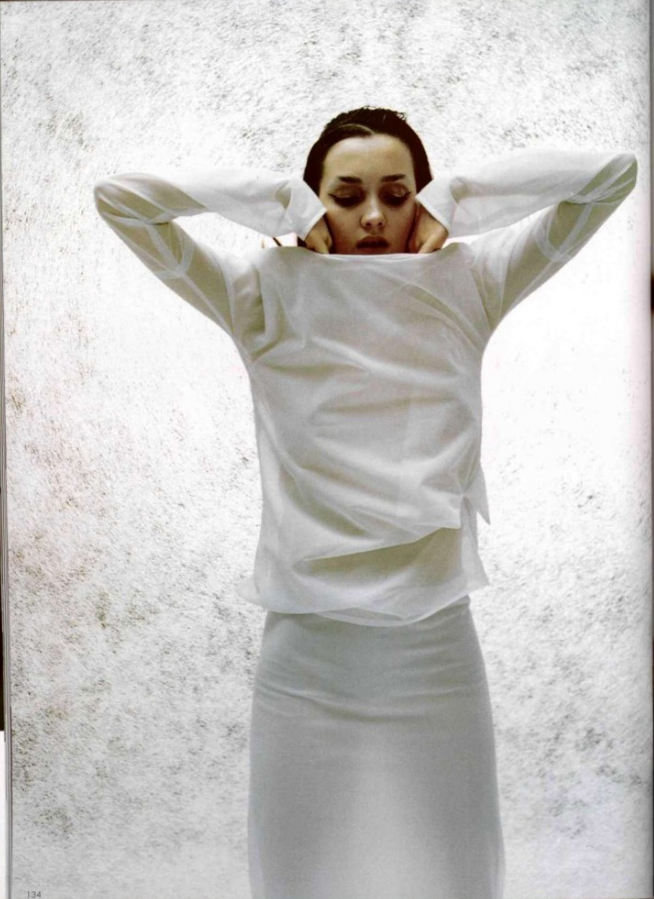
Jil Sander nylon jersey shirt and skirt, 1998
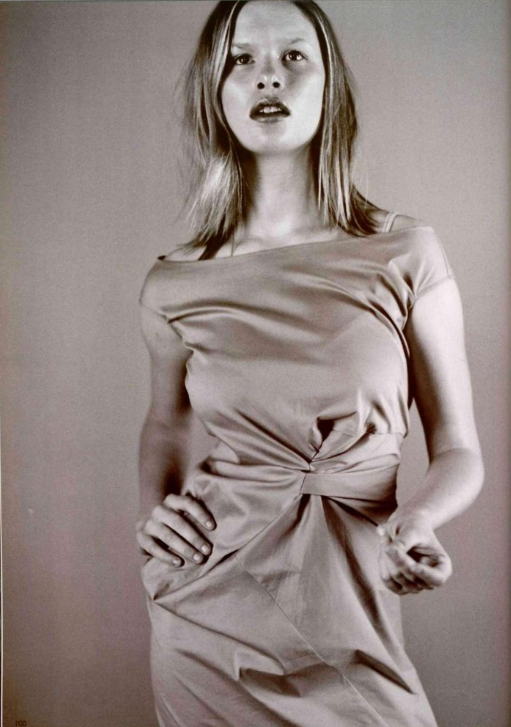
Jil Sander cotton dress in khaki, 1998
Visit us on our new website pinsndls.com


(left)Francisco Goya, Mourning Portrait of the Duchess of Alba, Duquesa de Alba, 1797 Oil on Canvas.The Hispanic Society ofAmerica,New York City. (right) Jean Paul Gaultier, Spring 2012 Couture. Style.com
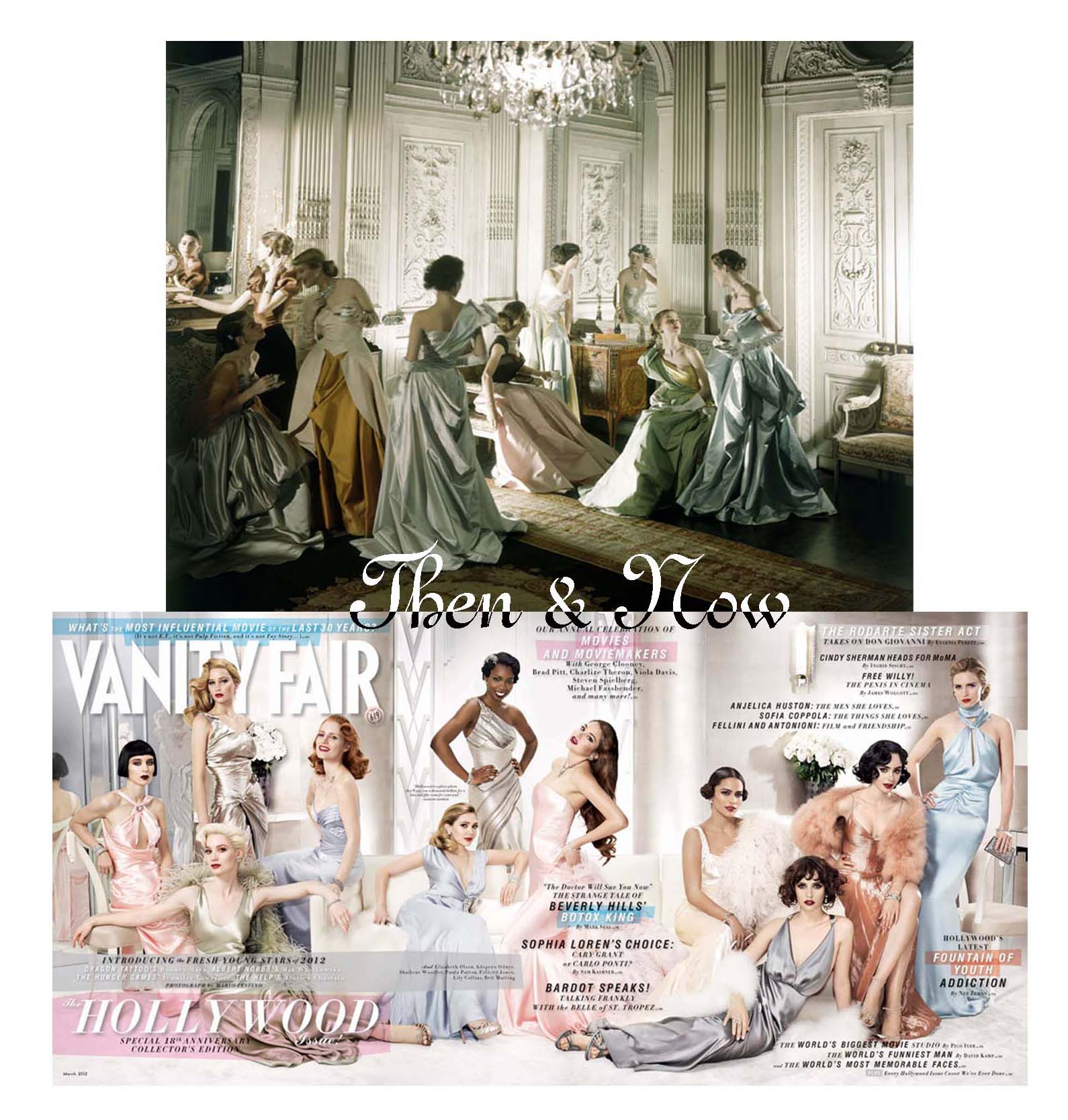 Top: photograph by Cecil Beaton, dresses by Charles James, Vogue, 1948. Bottom: photograph by Mario Testino, Vanity Fair Hollywood issue cover, March 2012.
New and upcoming fashion books:
By Jéromine Savignon (Assouline)
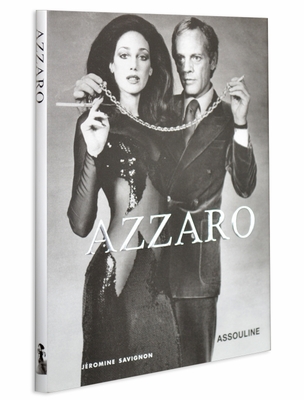
Jéromine Savignon looks at the life and legacy of French fashion icon Loris Azzaro. Creatively fearless, Azzaro designed fashions that embody the nocturnal sensuality of the sixties and seventies, making him the go-to couturier for royalty and celebrity alike.
By Ana Marta Gonzalez and Laura Bovone (Berg)
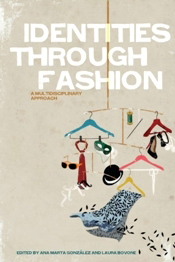
From the publisher:
Fashion has become a fertile field of study for academics across disciplines, now that the rules, once tightly fixed, have been deconstructed. This volume brings together academics from various disciplines – philosophy, sociology, medicine, anthropology, psychology and psychiatry – to examine fashion’s complex relationship with post-industrial societies. Herein the authors address, from the standpoint of their respective disciplines, what crucial functions fashion fulfils in the modern world, especially as it relates to the construction and deconstruction of the self.
This volume is the result of a conference held by the Social Trends Institute at which the authors presented original papers. The Social Trends Institute is a non-profit research centre that offers institutional and financial support to academics in all fields who research and explore emerging social trends and their effects on human communities. The Institute focuses its research on four main subject areas: family, bioethics, culture and lifestyles, and corporate governance.
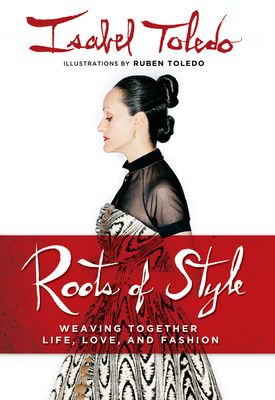
From the publisher:
Hailed as the “designer’s designer,” Isabel Toledo is known for her impeccable handmade construction and understanding of how her pieces make a woman feel-a unique approach considered a lost art in the midst of the everevolving world of fashion. Although her pieces are sold in select high- end retailers, her work has made national and global headlines, most notably when Michelle Obama wore her unforgettable lemongrass dress at the presidential inauguration. Although becoming more visible and accessible, Isabel remains a very private designer, paving her own way with her own rules, including choosing not to show at Fashion Week.
In Roots of Style, Isabel opens up for the first time about her life, process, inspiration, and experiences while imparting her guiding principles for any woman to sharpen her sense of style. Isabel’s equally artistic husband, Ruben Toledo-an institution in his own right- transforms her designs from concepts to fleshedout illustrations, bringing Isabel’s words and artistic sensibility to life with beautiful and visually stunning drawings.
By Claiborne Swanson Frank, text by Genevieve Bahrenburg (Assouline)
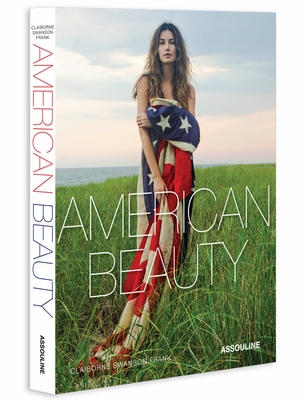
From the publisher:
Photographed by Vogue alumna Claiborne Swanson Frank,American Beauty features over 100 portraits of quintessentially American women such as Lily Aldridge, Solange Knowles, and Jenna Lyons—each of whom possesses an original blend of grit, grace, glamour, and gravitas that echo far beyond the pages of this oversize hardcover.
By Florence Müller (Abrams Books)
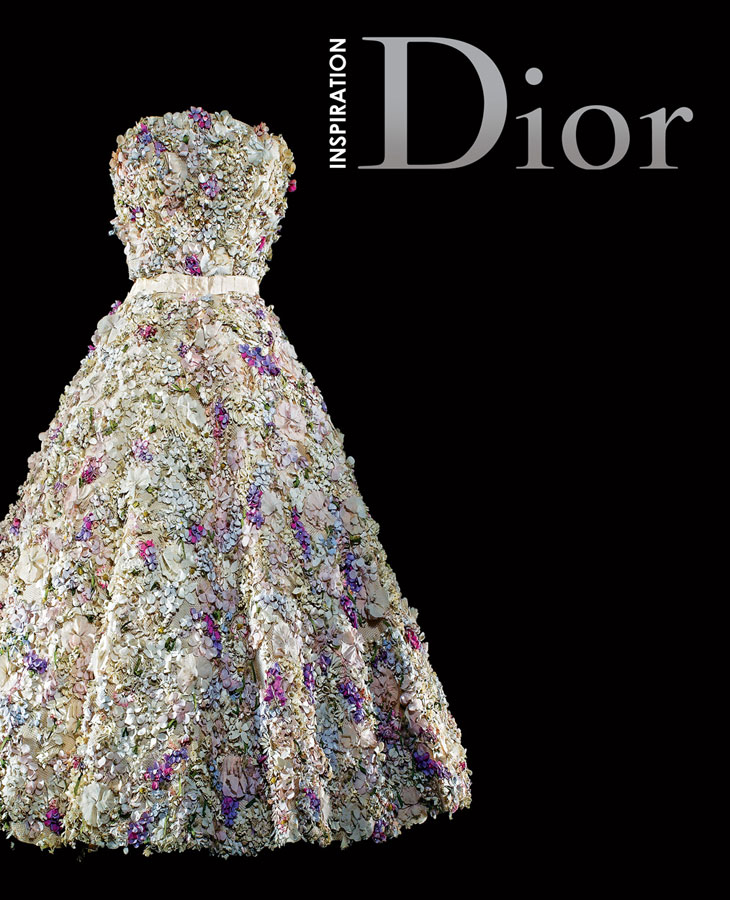
From the publisher:
Inspiration Dior is an exclusive, comprehensive, and stunningly beautiful look into one of the world’s most successful names in fashion. Moving from the launch in 1947 to the present day, the book defines the roots of Dior style. The book showcases gowns, suits, and accessories, with close-up details; it traces the themes and sources of inspiration, from artwork to the natural world; and it delves into the craft of haute couture—leatherwork, intricate embroidery, luxurious fabrics, and more. Archival photographs, previously unpublished images, and sketches are reproduced as well. A showcase of the many famous people who have worn Dior, including Elizabeth Taylor, Nicole Kidman, Princess Diana, and Kate Moss, to name just a few, completes this luxurious volume, a fitting tribute to this legendary fashion house.
By Caroline Bongrand (Dior Fashion), Jerome Hanover (Dior Jewelry and Dior Perfume) (Assouline)
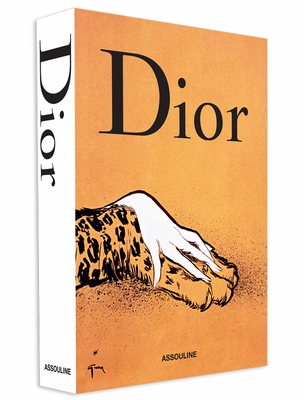
From the publisher:
The pinnacle of French haute couture and savoir faire, the house of Dior is one of the world’s most celebrated luxury brands. In three retrospective volumes presented in a collectible slipcase, Dior captures the most enduring images from each decade of the brand’s rich history. Immortalizing Dior Fashion, Jewelry, and Perfume, this addition to Assouline’s Mémoire series presents anobjet as chic as its subject.
I would like to introduce you to Address a brand new, independent, advertising-free journal for fashion writing and criticism.

The aim of Address is to discuss fashion through a variety of written and visual pieces presented from multiple perspectives as a critique on fashion, in order to comment, challenge and explore the subject. Address wants to open up the discipline of fashion by presenting analysis, research and reflections, explaining events and expressing opinions by encouraging different voices to emerge. Address suggests that by mixing different modes of writing – scholarly, journalistic and creative, we can start to approach the discipline of critique in the context of fashion, in a manner that is not only informative and rigorous, but also entertaining, easy to approach and right for the subject. 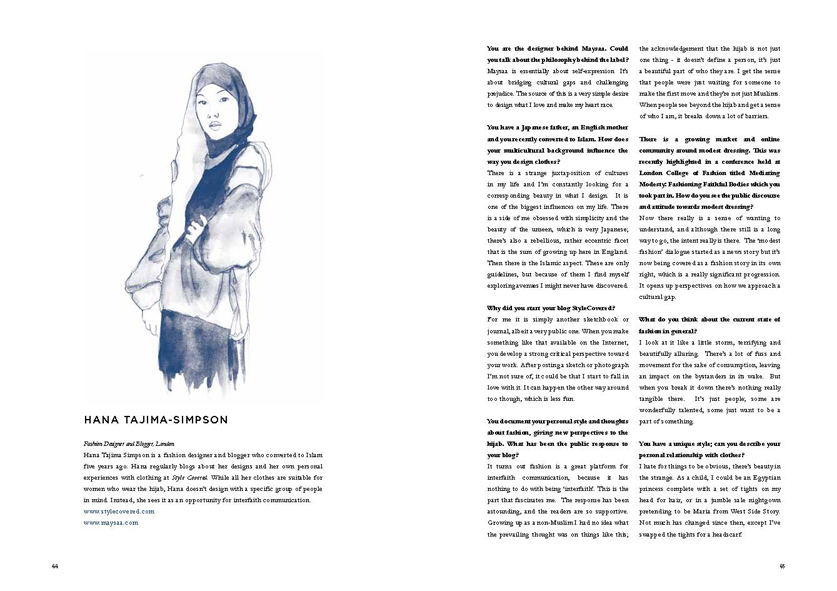
In Address, readers will find a variety of written and visual pieces, which examine different topics, whether it is close examinations of our relationship with clothing or wider issues affecting the culture, politics, economics and practice of fashion.  Ideas have been juxtaposed to create a varied range of content. Whilst Address includes scholarly articles, the journal is not an academic publication, in that is not peer revived.
Address includes scholarly articles, as well as poetry, fiction, interviews and visuals. By having a variety of content, we are aiming to open up the dialogue around fashion metaphorically speaking but also by opening the possibility for everybody interested in fashion to contribute regardless of academic status. We are more interested in engaging content, opinions and different points of view. The format is sort of a hybrid of creative, journalistic, opinion led and scholarly writing.
You can also find more information from Address website at www.addresspublications.com
TECHNICAL DETAILS / ISSUE #01 Pages: 112 Size: 210mm x 190mm
Today we bring you this interview with Marisa Berman, the Executive Director of the Queens Historical Society in Flushing, Queens. Marisa completed the MA program in Fashion & Textile Studies: History, Theory, and Museum Practice coursework in 2006 and submitted her thesis shortly after.
Keren Ben-Horin: What was your academic or professional background, before attending FIT’s MA program ?
 Marisa Berman: I hold a B.A. in English Literature specializing in British and American Modernism from Marist College in Poughkeepsie, NY. I also hold a B.P.S. in Fashion Design from Marist as well. I was honored to receive the 2004 Silver Needle Award for Outstanding Collection for my senior project.
KBH: What was the topic of your thesis? Is this topic something you continue to research? is it related to what you do today in any way?
MB: My thesis was a study of the evolution of the American women’s nurse uniform in the 20th Century. I continue to research and gather materials related to my topic. I hope to one day add a few chapters to my thesis and have it published. This research topic definitely has connections into the work I do today and in the jobs I held after graduation. Many of the museums I have worked out have nurse uniforms in their collection, or other objects or images pertaining to medical history.

From Marisa's thesis; Nursing Graduation, 1954
KBH: Did you do any internships while at FIT? Do you think these experiences helped you to get to where you are today professionally?
MB: I interned for the Nassau County Department of Parks, Recreation, and Museums on Long Island, NY. I began my internship, during the summer between my first and second year at FIT. I was very lucky that this internship evolved into a full time position that I held after I finished the program. This internship definitely led me to the position I hold today. I can’t stress enough how important internships and volunteering that pertain to your future career goals can be. Today when I interview potential employees or interns I always pay attention to their related experience, even if they weren’t necessarily paid positions.
KBH: Please tell us about your current position and institution? What are your responsibilities? how did school prepared you for what you do today?
MB: I am Executive Director of the Queens Historical Society (QHS) located in the Historic Kingsland Homestead – NYC landmark and a member of the Historic House Trust of NYC. Here I am responsible for overseeing daily operations including: personnel supervision, exhibition development, fundraising & grant writing, and implementing publicity efforts – such as email marketing and bulk mailings. A large amount of time is spent developing programs for the general public, students, and families. Many events I developed were the result of establishing strong relationships in this field with authors, researchers, professors, and teaching artists. I have personally led numerous house/walking tours for all age groups, taught workshops and arts-in-education programs for elementary school and graduate students, as well as professional development for teachers. In 2009 I curated an exhibition highlighting the amazing costume collection at QHS, it was entitled – “Unraveling History: Using Textiles to Date the Past.” The program at FIT was helpful in so many ways to my success in this position. The ability to research and write concisely, to understand collections management practices and techniques, to work on tight deadlines, and of course the knowledge of fashion and textile history.
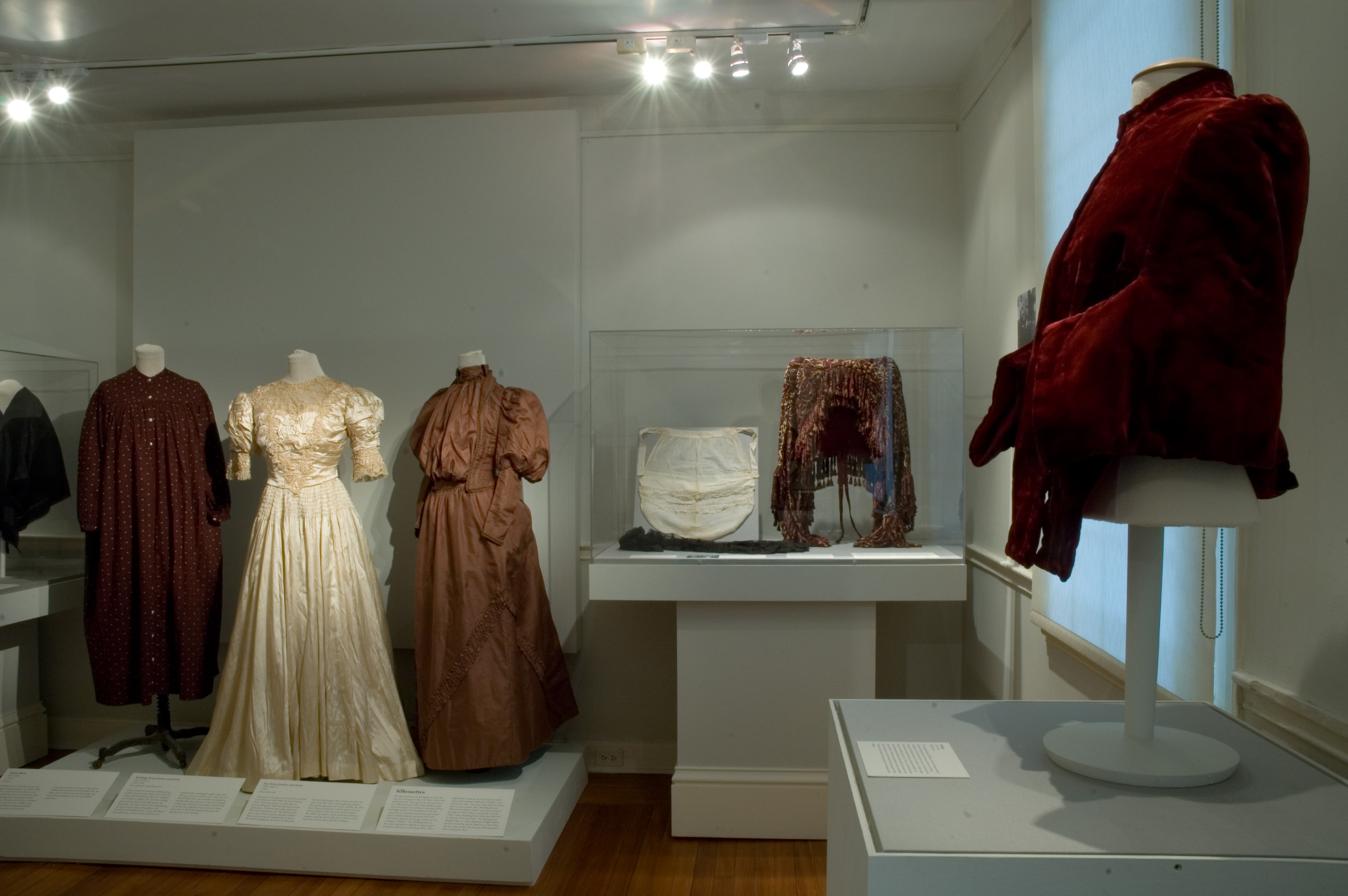
Image from 2009 exhibition at QHS on fashion and textile history.

Queens Historical Society headquarters, Kingsland Homestead
KBH: Who are the people who use and visit your institution?
MB: QHS attracts a wide audience of visitors each year – a mix of students, researchers, historians, authors, and the general public who are interested in the history of Queens – or just history in general.
KBH:Lastly, what is your advice for students graduating from the program?
MB: The best advice I can give students graduating from the program is to network as much as possible. Get on LinkedIn, keep your resume updated, make up business cards to distribute, and attend as many cultural events and lectures as possible. The job market for museum studies graduates is fairly grim right now, but there are positions available. Is there a dream institution you would like to work for? Get involved there. Attend their events, volunteer, make contacts – that is the way to secure an interview when a position opens up. And be sure to market the MA program in a way that suits each unique position you apply for. Sometimes I was concerned that our program was too specific and wouldn’t make me eligible for some of the jobs I was applying to. Just be sure to stress in your cover letter that this is a Historic Preservation program, and that you are knowable in all facets of Museum Studies but with the added benefit of a concentration in Fashion and Textile Studies. Our program is unique, and I think it definitely prepares us for future successful museum careers.
QHS is a small institution and we rely heavily on the work done by volunteers and interns. We have interns each semester from various programs – both graduate and undergraduate. We are always looking for interns who have a focus in curating, collections management, museum education, and development.
If interested in internship or volunteer opportunities please visit: www.queenshistoricalsociety.org for more information. Or you can email us with a cover letter and resume to info@queenshistoricalsociety.org with the subject line “internships.”
KBH: Thank you Marisa
MB: Best of luck!
Read other interview with graduates of our program here and here
I grew up in Maine’s smallest city with no cable television and as such, my taste in entertainment as a wee lass was a bit strange. One of my favorite TV shows was Are You Being Served?, a comedy full of innuendo and puns, set on the floor of a department store shared by Menswear (or Gent’s Ready-Made, if you wish), and Ladies’ Lingerie. the show ran from 1972-85, and I saw it in re-runs in the early ’90s. Mrs Slocombe’s color wheel hair and Mr Humphries’ flamboyant antics are what amused me as a 12-year-old, but when I began a course in Menswear at FIT in the Fall, I looked back to the show for it’s depiction of a mid-range department store Menswear counter, thinking I might be able to channel my nostalgia into a paper. Imagine my delight when I learned that the creator of the show worked at a renowned London department store, Simpson of Piccadilly, and based many of his jokes and scenes on actual experiences peddling the ingenious DAKS trousers and made-to-measure suits.

The Simpson’s façade during construction, top, and at opening in 1936. Scanned from The British Tradition: Simpson - A World of Style.
Department stores “for men only” became a trend in the 1930s and 40s, starting with Wanamaker’s in Philadelphia. Though the term “man cave” had not been coined yet, journalists surely would have delighted in employing it to describe these multi-level shops that housed such masculine products as sporting equipment, bearskin rugs and airplanes. The perception of retailers in these first few decades of the twentieth century was that men did not enjoy being around female shoppers and merchandise. These male would-be shoppers longed for a macho environment where they would not feel “all at sea,” said a 1905 issue of the New York Tribune. “They find themselves surrounded by a lot of women’s fashions, and this fact probably has much to do with their preference for shops that deal exclusively in masculine requirements.”
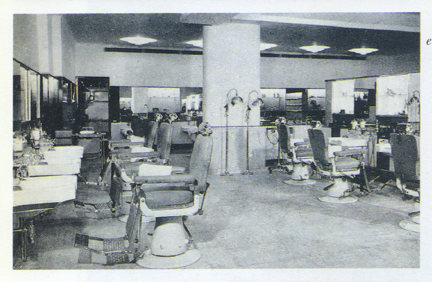
The barber shop at Simpson of Piccadilly when it opened in 1936. Scanned from The British Tradition: Simpson - A World of Style.
Besides manly merchandise and décor, men’s department stores would often hold exclusive events for their customers. In-store bars were stocked with liquor and men were invited to view models wearing lingerie that the men would presumably consider purchasing for their wives. Workshops were offered in athletic endeavors—Hudson’s in Detroit held a 3-day baseball-coaching clinic. When Simpson of Piccadilly opened in 1936, it was thought to be filling a hole in the retail market as well as the social lives of men—finally, men had store to call their own. The Manchester Guardian went as far as to call it “a bid to right the balance of sex equality,” which, the Guardian noted, “is now so heavily weighted in favour of women.” Simpsons’ exclusivity lasted only a year before a women’s department was added (women, with their relentless upper hand!). That was in 1937, and yet our dear junior assistants of the Are You Being Served gent’s counter dealt with the same issue in the pilot episode, on a smaller scale–they were forced to share their display space with comely mannequins in bras and stockings.
Simpsons prided themselves on their service and pampering for customers who, for the “bargains” they were getting, likely would not experience such treatment elsewhere. Simpsons was a veritable classy man factory, as a display expert noted in Flagship Marketing, “a man can arrive . . . looking like a tramp . . . and, after a while, leave with the air of a well-turned-out City man.” Even when the store closed for good in 1999, an employee lamented that it was twenty-first century shoppers who were unappreciative of what Simpsons had always been. “There was a clear sense among Simpson staff that their vaunted service and dedication was no longer valued in an era of suburban malls, catalogues and Internet shopping,” reported the International Herald Tribune at the time.

Jeremy Lloyd and Are You Being Served? tells us a different story, of gullible men being misled by snake charmer sales associates. Are You Being Served? contains many scenes in which salesmen cut corners for comedic effect, their customers unsuspecting. On such clips from his show, Jeremy Lloyd told Are You Being Served?: The Inside Story, “These are things that actually happened while I worked in a department store, which Simpsons would deny, but which did happen.” In the pilot episode, floor manager Captain Peacock shows a new sales associate, Mr. Lucas, the proper was to fold his pocket-handkerchief to be presentable. Though Mr. Lucas accepts and practices the new method, a more seasoned salesman, Mr. Humphries, shows him that he has glued the top of a handkerchief to a piece of cardboard, easily keeping it perfect at all times. Lloyd referenced another early episode in which Mr. Lucas is shown a trick of the trade—if a jacket is too small, he is instructed to take it out of sight, break the armhole stitches with his knee, and then tell the customer he has found another “slightly larger” jacket. “Kneeing a jacket was a technique known by assistants but not by management . . . I had three year’s experience at Simpsons, so I poured as much of my own experiences into the show so as to make it authentic.”

Of course, Lloyd ran out of real life experiences eventually, and the show may have jumped the shark by season 10 (it is doubtful, for example, that any Simpsons employee also performed as a backup singer for a pop star). And yet it’s still worth watching, especially in early seasons, for the bon mots combined with authentic representation of retail menswear in an era that was already hanging onto the glory of earlier decades. And let’s face it, Mr Humphries’ trill “I’m free!” and Mrs. Slocombe’s references to her pussy will never get old. We’re in luck: it’s all on Youtube.
Sources:
Adrian Rigelsford, Are You Being Served?: The Inside Story (San Francisco: KQED, 1995).
Bronwen Edwards, “The Department Store,” in Flagship Marketing: Concepts and Places, comp. Tony Kent and Reva Brown (New York: Routledge, 2009).
New York Tribune. “Where Men May Shop.” October 15, 1905.
Tom Buerkle, “End of Line for London Shop a Cut Above the Rest,” International Herald Tribune (Paris), January 30, 1999


 ON PINS AND NEEDLES