Aimee Mullins talks to Harold Koda

In conjunction with the exhibition Alexander McQueen: Savage Beauty, model, athlete and actress Aimee Mullins and Harold Koda, curator in charge will meet to discuss art, fashion and the unique body as object of beauty.

Mullins, who had both her legs amputated below the knee when she was a year old, appeared in a 1999 McQueen runway show on a wooden prosthetic, and wearing a leather bodice and a lace skirt all made for her by the designer. McQueen, who always tried to challenge the preconceptions of beauty, must have found this unique woman quite inspiring. in this interview Aimee tells of their collaborations:

“I don’t think it is an overstatement for me to say that my experiences working with Lee were epic. It was a huge loss for me, we had planned a lifetime of collaborations; we had three pairs of prosthetics, things that he wanted to make for me because obviously he was somebody who managed to use the arena of fashion to address topics. His women, his “Goddesses” as he called them, they are all total characters and they do not fit the standard norm”.

Aimee by Nick Knight for the Alexander McQueen guest edited issue of Dazed & Confused


Sunday at the Met
Alexander McQueen: Art, Beauty, and the Unique Body

Sunday, June 19, 3:00–4:30 p.m.
The Grace Rainey Rogers Auditorium, 1st floor
FM assistive listening devices available

Free with Museum admission

Posted in Uncategorized | Tagged , , , , , | 1 Comment

Then&Now

(left)Thomas Gainsborough(1727 – 1788), Sarah, Lady Innes, c.1757 oil on canvas. Henry Clay Frick Bequest, Frick Collection. (right) Rodarte, Spring 2007.

Posted in Then&Now | Tagged , , , | Leave a comment

Then&Now

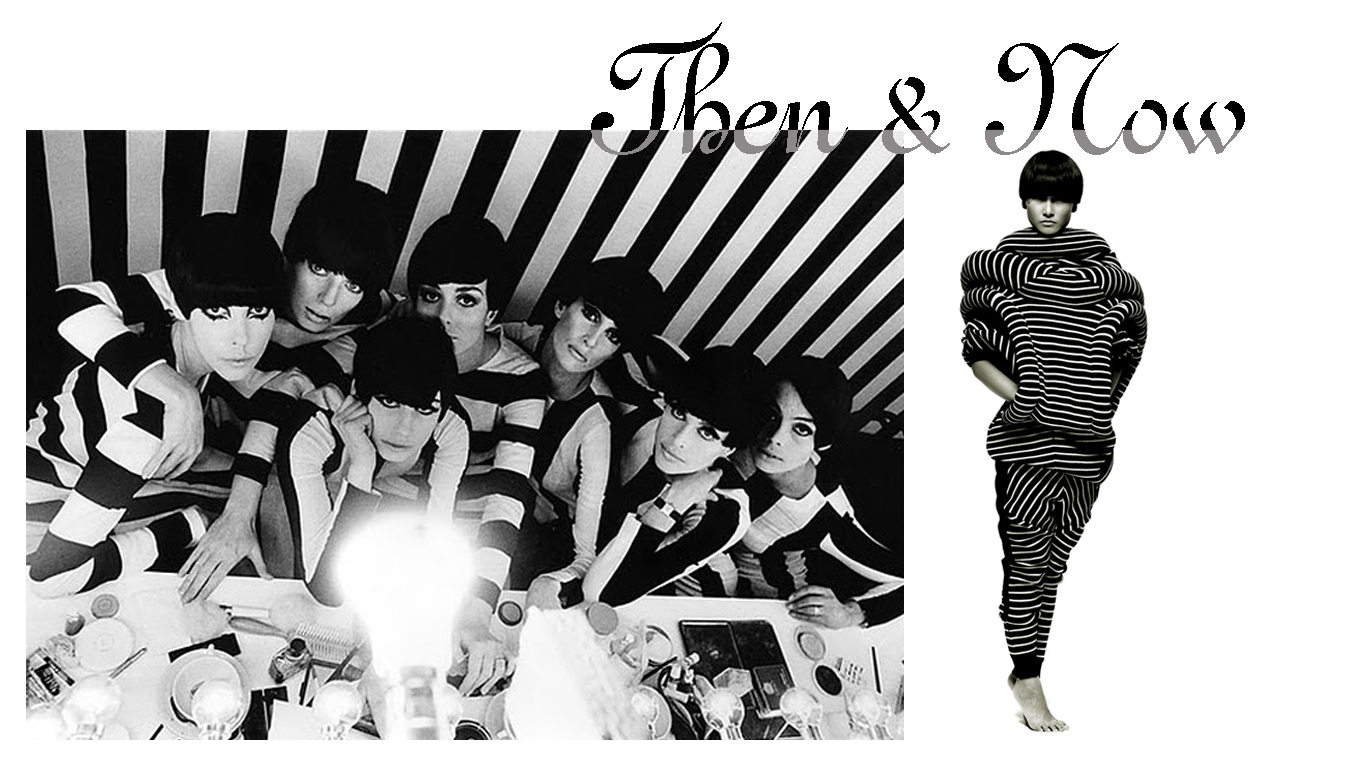
(left) Who Are You Polly Magoo? 1966, director William Klein. (right) photograph by Pierre Dal Corso, 2011.

Posted in Then&Now | Tagged , , , , | Leave a comment

Then&Now

(left) Mantle Coat, Cristobal Balenciaga, 1950. Photograph by Irving Penn. (right) Stephane Rolland Spring 2011 haute couture. Image from Style.com

Posted in Then&Now | Tagged , , , , | Leave a comment

EXHIBITION: GEORGES DAMBIER : WHO’S THAT GIRL?

EXHIBITION: GEORGES DAMBIER : WHO’S THAT GIRL?

Bonni Benrub Gallery
Closes May 27, 2011
41 East 57th Street 13th Floor,
New York, NY 10022
212.888.6007 tel
212.751.0819 fax

Regular Hours: Tuesday – Saturday, 10am – 6pm
Summer hours: Monday – Friday, 10am – 5:30pm
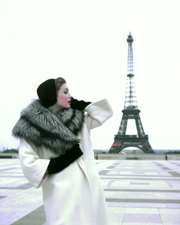
Georges Dambier Suzy Parker Tour Eiffel, pour ELLE, Winter Givenchy, Paris, 1954

Born in1925, Georges Dambier first went to work for painter Paul Colin, where he learnt drawing and graphic design. Then he landed a job as assistant to Willy Rizzo, a famous portraitist photographer (Harcourt’s Studio, Paris Match). There, he discovered photography and was taught the fundamentals of this art, especially lighting.

Georges Dambier was 20 when the Second World War came to an end, a moment when the social scene in Paris suddenly took off. Nightlife, subdued during the Occupation, exploded. Le Bœuf sur le toit, Le Lido, la Rose Rouge, Le Lorientais, Le Tabou : he frequented cabarets and jazz clubs in Saint Germain des Prés, where famous artists and celebrities organised glittering parties and balls. One night, he managed to take pictures of Rita Hayworth who had come incognito to a famous night club, Le Jimmy’s. He sold the exclusive images to France Dimanche, a daily magazine recently created by Max Corre and Pierre Lazareff, and won himself a job on the magazine as a photo-reporter. In his new post, he was sent to all over the world to cover current events. However, with his predilection for graphic design and aesthetics, his liking for refined mise-en-scene, and at the urging of many friends, such as Capucine, Suzy Parker, Jacques Fath, Bettina, Brigitte Bardot, Jean Barthet, he was lead towards fashion photography.

As Georges Dambier built and perfected his craft, he was hired by Helene Lazareff, director of ELLE, the fashion magazine. She encouraged him and gave him his first assignment as a fashion photographer. Georges Dambier did not conform to the standard technique of taking fashion pictures, with models standing emotionless and seemingly indifferent to the camera. Instead, he showed models smiling, laughing and often in action. His models were surrounded by local people in a market place in Marrakech, or in a village in Corsica, or – and above all – in his beloved Paris.

Most of all, it was Georges Dambier’s ability to put his subjects at ease (many of them were friends) that helped him create true, intimate and lasting images. With his delicate style, and refined technique, his work revealed a reality of great elegance. As his career blossomed, he became widely known for his ability to capture the essence of feminine chic and glamour in his images.

In 1954, Robert Capa asked him to lead a fashion department at the Magnum Photo Agency. Unfortunately, Capa died a few weeks later, while covering the Indochinese war.

Meanwhile, Georges Dambier set up his own studio in Paris, Rue de la Bienfaisance. As a freelance photographer, he continued to contribute to ELLE and other magazines: Vogue, Le Jardin des Modes, Marie France…He also collaborated with Françoise Giroud and Christine Collanges at L’Express. Big advertising campaigns (Synergie, Havas, Publicis), and contracts for many brands such as L’Oréal, Carita, Jacques Dessange followed.

In addition to his work in advertising, Georges Dambier did portraits for record covers and posters for his great friend, the producer Eddie Barclay and Jacques Canetti. As his reputation grew, so did opportunities to meet and photograph celebrities from different worlds.  He captured the faces of the most notable artists of the 60’s: Sacha Distel, Zizi Jeanmaire, Dalida, Jeanne Moreau… His impressive client list included celebrities (Cerdan, Cocteau…), singers (Johnny Hallyday, Sylvie Vartan, Charles Aznavour…), actors (Alain Delon, Françoise Dorléac, Catherine Deneuve…) and many others.

In 1964, Georges Dambier launched his own project: a magazine for young people, dedicated to culture and fashion: TWENTY. He hired young artists and photographers: Just Jaeckin, Jean Paul Goude, Philippe Labro, Copi, Bosc and many others who would later become famous in their own right. Twenty lasted two eventful years.

In 1976, he created the magazine VSD with his old friend Maurice Siegel. Georges Dambier led the artistic side of the magazine and headed the photographic section. VSD was an instant success.

In the late eighties, Georges Dambier retired to a quieter life in the countryside. He now lives in the Perigord, in a hotel which he converted from an old familial mansion. The design of the interiors reveals that his exquisite taste for design and decoration is unchanged.

Text from http://www.georges.dambier.fr/

Posted in Exhibition | Tagged , , | Leave a comment

Then&Now

(left) Bazaar cover, June 1953. (right) Lalla Essaydi, Harem. Series of photographs exhibited at Edwynn Houk Gallery November ’10- January ’11.

Posted in Then&Now | Leave a comment

FIT Graduate Student Symposium

Don’t forget to attend the Fashion & Textile Studies graduate student symposium this Saturday, May 7 from 1-5pm! Students will be questioning, investigating, and debunking some of fashion history’s longest-held myths. The symposium is free and you don’t want to miss it!


Posted in Uncategorized | Leave a comment

Then&Now

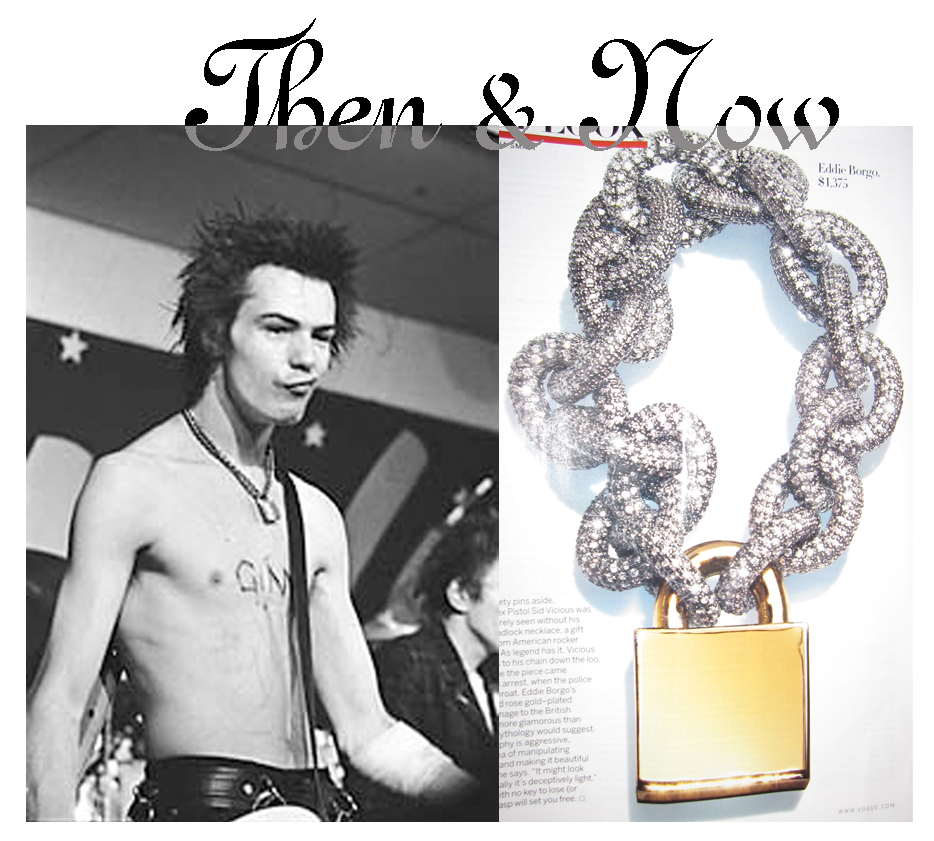
(left) Sid Vicious, 1978. Photo by Ken Hoge. (right) Eddie Borgo bracelet, homage to Sid Vicious. Scanned from Vogue , May 2011.

”  Punk iconography is aggressive, but I like the idea of manipulating something raw and making it beautiful and feminine. It might look heavy, but actually it is deceptively light” Eddie Borgo on the above bracelet, quoted in Vogue, May 2011 p.286.

Posted in Then&Now | Tagged , , , , | Leave a comment

Revolutionizing the Riding Habit: Théroigne de Méricourt as Fashion Innovator

Revolutionizing the Riding Habit: Théroigne de Méricourt as Fashion Innovator

By Tracy Jenkins

Of the women patriots of the French Revolution whose names are known, Théroigne de Méricourt (1762-1817), courtesan turned revolutionary, continues to fascinate. Although she participated in neither the storming of the Bastille nor the women’s march to Versailles, these events inspired her to political action. She was mythologized both during her lifetime and later by the Romantics as much for her beauty and provocative appearance as for her revolutionary deeds.

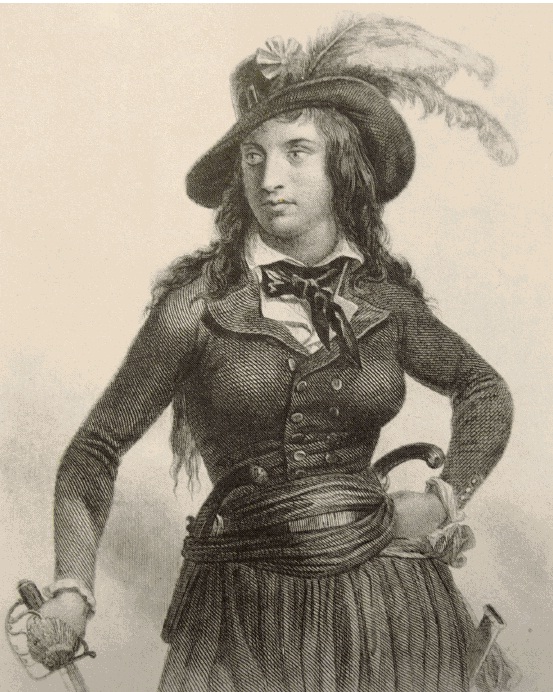
Méricourt personified the revolution for supporters and foes alike. Idealized in works of art and vilified in satirical cartoons, she is depicted wearing overtly revolutionary accoutrements such as the cockade and Phyrgian bonnet, as well as the riding habit as everyday attire — a highly gender-transgressive act in 1789. As women stood the chance of gaining real political power, dress became more politically charged than ever before. By 1800, sumptuary laws were overturned, luxury no longer the privilege of a certain class. The shedding of the corset, a woman’s “armor,” was a further erosion of class boundaries, the wearing of armor a privilege previously accorded only to the nobility. As one of the earliest and most influential adopters of the riding habit — essentially a man’s redingote and breeches with the addition of a petticoat — as everyday attire, Méricourt was an early proponent, and possibly even the inventor, of women’s revolutionary dress. As Schama has observed, Méricourt is a “purified vessel for Revolutionary ideology,” a classical heroine standing for liberty, equality, and fraternity, she is also Baudelaire’s bloodthirsty “amante du carnage.” As the early idealism of the revolution and its promise of egalitarianism for all — women included — would be overshadowed by the Reign of Terror, Méricourt’s “un-feminine” militancy and call to violence would play a part in her downfall: she was ultimately declared insane and died in La Salpêtrière asylum. Through visual and literary sources and contemporary accounts, I examine depictions of Méricourt’s dress and appearance as symbols of the revolution and as sources of fashion history.

Théroigne de Méricourt by Auguste Raffet. Bibliothèque Nationale, Paris. Original steel engraving drawn by Raffet, engraved by Bosselman, 1847.

Posted in Uncategorized | Tagged , , | 3 Comments

Savage Beauty- Alexander McQueen retrospective at the MET

Check out this slideshow from Vogue. It features images from the upcoming Alexander McQueen retrospective “Savage Beauty” at the MET’s costume institute with captions by Sarah Burton, who was McQueen’s assistant and today is the creative director of the house.

Posted in Exhibition | Tagged , , , | Leave a comment