EVENT: Vintage: Value, Values and Enduring Design

The 12th Annual New York Fashion Conference
Thursday-Saturday, December 2-4, 2010

What do we value in fashion and design? The rare? The classic? Or, the new? Do we value that which is eco-sensitive or the beautiful-but-scarce? Do we value a maker’s history of integrity, a corporate commitment to quality, a dedication to a tradition of craft? Or do we prize an object or garment irrespective of who made it or what went into creating it?

Fashion is ephemeral and of the moment, while maintaining a dialogue with the past. Hence, the recent passion for “vintage” clothing merits close consideration.

Subversion of traditional markers of quality through the use of deliberately raveled edges and raw seams or the use of uncut stones raises new questions. How do we now define superior craftsmanship, fine materials, and creative design? Is the challenge of the 21st century reconciling the whimsical and the aesthetic with the sustainable, the fashionable with the serviceable? What does luxury mean in the 21st century? How do we define value today?

Evening events at Fred Leighton (December 2) and at What Goes Around Comes Around (December 3) complement the talks and panels which take place at CUNY Graduate Center, Fifth Avenue @ 34th Street

Presenters and panelists (as of September 30, 2010)

  • Larry Pettinelli, president, Patek Philippe USA
  • Hal Rubenstein, fashion director, InStyle Magazine
  • Catherine Moelering, EVP, Tobe, a division of the Doneger Group and publisher of the iconic Tobe Report
  • Designers Anna Sui, Koos Van Den Akker, and Fr. Andrew More O’Connor, founder, Goods of Conscience
  • Hamish Bowles, European Editor at Large, Vogue and curator, “Balenciaga: Spanish Master”
  • Jewelers Todd Reed, Prince Dimitri, Gregory Kwiat, CEO, Fred Leighton and Partner, Kwiat, and Adam Heyman of the legendary firm Oscar Heyman Bros.
  • Daniel Storto, avant-garde couture glove designer
  • Women of style Patsy Tarr and Tziporah Salamon
  • Amy Leonard, senior vice president, product development and sourcing, Levi Strauss
  • Lincoln Schatz, photographer who was commissioned by Esquire to capture the 100 most influential people as part of its 75th anniversary (piece now in the collection of the National Portrait Gallery, SI)
  • Edward Maeder, former curator of costumes Los Angeles County Museum of Art and founding director BATA Shoe museum
  • Juliana Cairone, owner, Rare Vintage
  • Jan Glier Reeder, consulting curator, Brooklyn Museum Costume Collection at The Metropolitan Museum of Art
  • Karen Augusta, founder, Augusta Auctions, America’s top auction house specializing in couture and vintage clothing
  • Phyllis Magidson, curator of Costume and Textiles, Museum of the City of New York
  • Laura Crow, award-winning designer for Broadway and off-Broadway
  • David Wolfe, chief forecaster, Doneger Group
  • Authors Joan De Jean, The Essence of Chic and The Age of Comfort, Sandy Black, Eco-Chic: The Fashion Paradox; Pamela Keogh, Are You a Jackie or a Grace?; and Mitchell Owens author of a forthcoming book on Pauline de Rothschild
  • Sara Reiter, chief textile conservator, Philadelphia Museum of Art
  • David Ornstein, promoter, Manhattan Vintage Clothing Show; founder, Daybreak Vintage Clothing in Albany, NY. a costume house for movies and theater
  • Patti Geolat, founder and CEO Geolat, Dallas TX, a widely-known authority on the appraisal and sale of fine jewelry For more information, contact: Initiatives in Art and Culture at info@artinitiatives.com. Tel. 646-485-1952; Fax. 212-935-6911

Click here for more information and to register for this event.

Posted in Conference | 1 Comment

Then&Now

Yves Saint Laurent, wedding dress,1965.            Phuong Thuy Nguyen, Body Object, 2010.

Posted in Then&Now | Tagged , , , | Leave a comment

Then&Now

Cristobal Balenciaga, photograph by Irving Penn, 1950.          Fifth Avenue Shoe Repair, FW 2010-11 Collection.

Posted in Then&Now | Tagged , , | Leave a comment

Mary Todd Lincoln’s Bloody Scarf

Written by Clara Berg

Two years ago, while working at the Museum of History and Industry in Seattle, I discovered an artifact record that read the following: “Scarf: Supposed to have been Mrs. Lincoln’s. Spots are blood spots from assassination.”

I showed the card to the collections staff and, like the good historians they are, they were appropriately skeptical.  Donors can’t always be taken at their word, and museums have an obligation to provide the public with accurate, well-researched information. Without any additional information it would be unwise to take the record at its word. But short of a DNA test, would it ever be possible to verify the scarf’s history?


Figure 1. Lace scarf, unverified date, 50X44 in, The Museum of History and Industry, Seattle


As a student of fashion and textile history, I hoped that I could get closer to the answer. What kinds of scarves were fashionable in 1865? What sort of clothes did Mrs. Lincoln wear? Did anyone record what she was wearing the night of the assassination? Is it likely that her clothing was stained with blood?

Considering the sheer volume of Lincoln scholarship that is produced each year, I was surprised to find very little information about what Mrs. Lincoln was wearing on the night of the assassination.  Secondary sources were silent and primary references were scarce.  The Chicago Historical Society may have a bloody cloak from that night (their research into its history is chronicled in a fascinating website) but no other museum has firm claims to anything else.  In a book of eyewitness accounts, only two made reference to Mrs. Lincoln’s attire, and the descriptions contradicted each other. Artist’s depictions of the scene also seem to have no consensus. One shows her in a low-necked evening gown and a wreath of flowers in her hair, while another depicts a high-necked dress and a bonnet. While this information didn’t lead me to a definitive answer, it was helpful to know that the details of her attire were not common knowledge. At least I knew this wasn’t the Lincoln equivalent of a green pantsuit claiming to be from the Kennedy assassination.


Figure 2. Currier & Ives, The Assassination of President Lincoln, Lithograph, 1865, Library of Congress, Washington D.C.


Figure 3. Anonymous, The Martyr of Liberty, c.1865. Library of Congress, Stern Collection, Rare Book and Special Collections Division.


Next I found out a little about Mary Lincoln’s style. The First Lady was actually an avid follower of fashion—to the point that it was a point of controversy in the press. She felt it was her duty to dress elegantly (and prove to the east-coast elite that Illinois wasn’t full of hicks), but many in the press felt it was inappropriate to spend so much money on clothes during wartime.


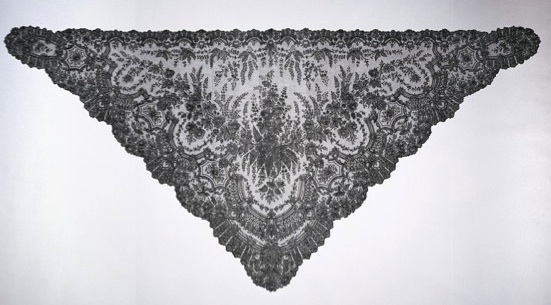
Figure 4. Unknown maker, Black Lace Shawl, silk bobbin lace, 142.5 X 290 cm, 1860-1870, Victoria &Albert Museum, London.


Assuming that the First Lady would have been in style, I researched fashionable scarves of the day. While there were many different options and styles, the dominant theme seemed to be large triangular wraps [Figure 4]. When I examined the scarf I found that it was rectangular in shape with scattered reddish brown stains. However, the stains mirrored each other along a vertical axis, indicating that the scarf was folded into a narrow rectangle at the time it was stained.

Lastly, I read up on details of the assassination and tried to figure out exactly how “splattered” with blood Mrs. Lincoln might have been.  The light pattern on the scarf implies an impact—as you would expect someone to receive as a bystander to a violent event. But President Lincoln didn’t actually bleed much initially and it was only after a doctor removed the bullet that there was substantial blood from the head wound. I am certainly no blood spatter expert, but the sources implied that the initial act would not have created a splash of blood, but if Mrs. Lincoln held her husband’s head after the bullet was removed (as some accounts state) her clothing would have substantial stains rather than light spots.

In the end, I determined that the scarf’s connection to the assassination was unlikely. I did however find out that the owner of the home in which Lincoln died, later did a brisk business in allowing “souvenir” seekers to take bloody relics from the house. Museums across America have scraps of sheets, curtains, and floorboards that were supposedly taken from the room in which Lincoln died. It does not seem to be much of a stretch to imagine that at some point, someone started making fake souvenirs.  Since the style of the scarf seems inappropriate for the time, it is possible that this “relic” was created decades after the event—when the fashions of a particular year were forgotten and a lace scarf seemed sufficiently “old timey” to be believable.

Select Bibliography:

Baker, Jean H.  Mary Todd Lincoln: A Biography. New York: W.W. Norton & Company, 1987.

Clinton, Catherine. Mrs. Lincoln: A Life. New York: Harper Collins, 2009.

Good, Timothy S. We Saw Lincoln Shot: One Hundred Eyewitness Accounts. Jackson: University Press of Mississippi, 1995.

Keckley, Elizabeth. Behind the Scenes: Thirty Years a Slave and Four Years in the

White House. New York: Arno Press and The New York Times, 1968.

Levey, Santina M. Lace: A History. London: Victoria & Albert Museum, 1983.

Posted in Uncategorized | Tagged , , , , , | Leave a comment

Then&Now

Yves Saint Laurent, Mondrian dress 1965. v&A             Sarah Schofield, Mondrian Swimwear Collection 2009.

Posted in Then&Now | Tagged , , | Leave a comment

Then&Now

Coronation mantle of Roger II of Sicily 1133-1134                                                             Alexander McQueen fall 2010 RTW

Posted in Then&Now | Tagged , , | 1 Comment

Christian Dior and Charles James

After the spring 2010 Christian Dior haute couture show, John Galliano cited a trip to the Costume Institute at the Metropolitan Museum of Art as the inspiration for his collection. Galliano explained, “I was reading that, actually, it was Charles James who influenced Monsieur Dior to come up with the New Look. And then I was looking at a photo of Charles James doing a fitting…And that was it!” Galliano’s collection brought Dior and James together, referencing their shared history as leading contributors to the history of fashion design. It is not surprising that Galliano connected James and Dior, a relationship that has been a source of interest ever since presentations of both of their collections in Paris in 1947.  Exploring the relationship between James and Dior more fully will connect them through friendships, places and clients. Plotting the points of intersection between their careers and lives contributes to a more comprehensive understanding of two of the most influential designers of the twentieth century.

When comparing their design styles it becomes clear that James and Dior shared some stylistic preferences.  For example, Christian Dior’s dinner dress “Chérie” from 1947 and Charles James’ dinner suit from 1951 (figure 1 and 2) reveal design similarities, primarily in silhouette. Both designs reflect the fashionable silhouette of the “New Look,” by combining sloping shoulders with a cinched waist and a full skirt, but each designer then used material differently in order to arrive at the desired shape. Dior creates volume in the skirt by using considerable amounts of fabric, whereas James’s use of fabric is more restrained and the skirt retains its shape by means of complex seaming and intricate understructures.  James’ design is like a sculpture in the sense that it does not need a body in order to hold its shape. Dior’s dinner dress, on the other hand, sculpts the wearer’s body making the body an anchor by tacking the fabric at the waist. How they chose to work defined the look of their designs, making it relatively easy to differentiate a Charles James from a Christian Dior. While their work is distinctive, James and Dior did not create in a vacuum and were connected as part of the same generation of designers, inevitably tapping into the same influences and reflecting the spirit of the time.
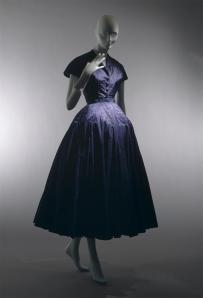
Figure 1: Christian Dior, "Cherie", Dinner Dress, Silk, 1947, Metropolitan Museum of Art
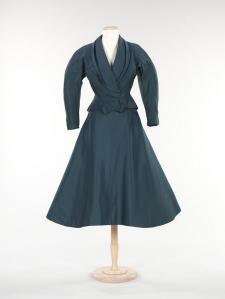
Figure 2: Charles James, Dinner Suit, Silk, 1951, Metropolitan Museum of Art

Putting the issue of design preferences aside, James and Dior viewed each other as colleagues and undoubtedly respected each other as designers and innovators. James wrote enviably of Dior’s position as a designer in Paris, where he was supported financially as well as creatively. James argued that this support, paired with Dior’s talent as a designer, had allowed Dior to create himself in the context of the French couture.[1] James viewed Dior as a fashion leader whose opinions were valued and whose design choices were followed, unlike in America where “fashion leadership…is not in the hands of fashion creators, but in the hands of stylists, fashion coordinators, buyers and salespeople.”[2] Dior held a similarly grim view of the state of the American couture: “couture, in the Parisian sense, scarcely exists in America,” except for the “undoubted talents of Mainbocher, Valentina ,Charlie James, and others…[who] keep [the American couture] in existence.”[3]

In 1929, James had established himself in London as a designer but was frequently traveling between Paris, London and New York. James’s records indicate that in 1934 he established a Paris residence, salon and workshop at the Hotel Lancaster. Concurrently, Dior was in Paris where he had opened a gallery in 1928 along with several artists, including fashion illustrator Christian Bérard. However, the gallery enjoyed only a few years of success, opening as it did just a few years before the Great Depression, and was forced to close its doors in 1934. Jobless and penniless, Dior was forced to look for other work. Encouraged by a friend, Dior began selling fashion sketches to Paris-based designers. Dior’s meticulous records show that between 1935 and 1938 he was sketching for couturiers including Madame Grès, Cristobal Balenciaga and Jean Patou and had accounts with many great milliners of the day including Suzy, Agnès, and Rose Valois. Interestingly, during these years James worked as a milliner and dress designer. Further research would be useful in order to compare Dior’s sketches with Charles James designs, to see if a match could be made.

During the final years of the 1930s, both men were immersed in the world of the Paris couture. On the one hand James had his first showing in Paris in 1937, for which he received much attention and praise, including from an aging Paul Poiret who announced, “I pass you my crown, wear it well.” Dior’s reputation as a talented fashion illustrator garnered him a job, and in June 1938, Dior was hired as a modéliste for the couturier Robert Piguet. Both James and Dior continued designing in Paris until the fall of 1939 when James returned to New York, “with the idea of devoting his talents to the styling of American women,”[4] and Dior was drafted in the French army, leaving the fashion world far behind.

By October 1941, Dior had returned to Paris and began work as a designer (along with Pierre Balmain) at the house of Lucien Lelong, where he was to stay until December 1946. That same year the French textile millionaire Marcel Boussac, proposed to finance a couture house under Dior’s design direction, an offer which Dior accepted. In February 1947 Dior unveiled his inaugural collection, which was christened the “New Look” by the fashion press. Five months later, in July, Charles James returned to Paris to show a selection of day and evening creations. The show was a success and attendees included “distinguished members of international society,” most importantly Dior. The New York Times reported that Dior, Jacques Fath and Elsa Schiaparelli lent James their “loveliest manikins [sic],” while Paulette lent her latest hats. The article describes James’ reputation in Paris as having been established prior to the war and as “a great friend of the French couture.”[5] This article makes explicit that James was respected by the French couture; so well respected that Paris’ top couturiers were willing to lend him their mannequins and designs. Clearly, Dior knew James by reputation and as a designer, but this article supports the idea that they also knew each other personally, and may have been friendly. The following year the columnist “Austine” (Mrs. William Randolph Hearts) wrote in the introductory text to the exhibition “Decade of Design” at the Brooklyn Museum, that Dior had credited James as inspiring the “New Look,”[6] further evidence of their collegiality.

The House of Dior began its foreign expansion in 1948, when it opened a ready-to-wear branch in the United States at 730 Fifth Avenue at Fifty-Seventh Street in New York City. Unfortunately, the new premises had no workspace and consequently Dior was forced to rent a brownstone a few blocks away at Sixty-Second Street. Here he established his workrooms and dressing rooms.[7] Virginia Pope reported the “wholesale” opening for the New York Times, an atypical fashion story, but one that was told “because it is of news importance to have a great Paris couturier, one who has created such a furore [sic] during past seasons, venture in New York competition with our own seasoned and expert designers.”[8] One such seasoned American designer was Charles James.

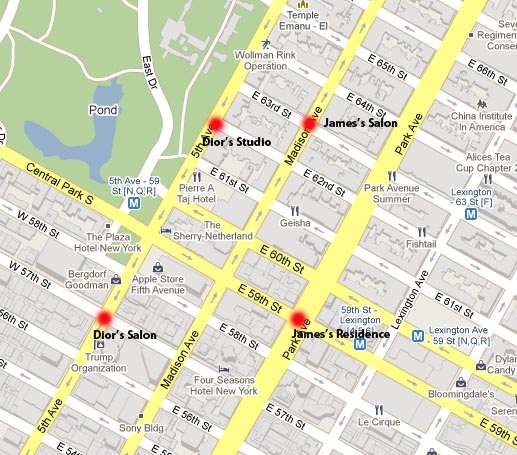
Charles James had a fragmented business. James was constantly moving his shop, studio and personal residence. However, we know that in 1948 James was located at 699 Madison Avenue, where he had been since early in World War II.[9] The cross street at 699 Madison Avenue is East Sixty-Third Street, a mere two blocks from Dior’s work rooms and six blocks from the Dior salon. Additionally, James was living at the Hotel Delmonico, now the Trump Park Avenue, located at Park Avenue and East Fifty-Ninth Street, just two blocks from the Dior salon. Plotting the addresses on a map of New York makes visible the incredible proximity of the two designers at this time (figure 3).

Figure 3: Map showing business and personal locations of Dior and James, Midtown, New York

Dior came to New York twice a year to work on his American ready-to-wear collections, which were presented in October and in April. These designs were specific to the American market and were designed by Dior in New York as they were “independent of his Paris couture collections…exclusively for American women, keeping in mind her mode of living.”[10] During these month-long trips, Dior designed outside of the French couture for a different, less exclusive, North American market. Dior must have frequented New York social functions, interacting with American designers and society in order to better understand his new market and their “mode of living.” That Dior and James were in such close proximity and were part of the same milieu makes it likely that the two couturiers found themselves at the same social gatherings, a possibility supported by Dior’s own words:

The first discovery I made was that New York – one of the great capitals of the world – is in fact nothing but a village. It is also a village with strict geographical limits…There, and there only, will you find the three hundred people who make up New York. As the problem of going any way by car has become insoluble, you will meet them every day, strolling along the pavement, exactly as one parades along the boulevards in Paris. If you stray far from Fifth Avenue and Park Avenue, you leave the village.[11]

Dior goes on to describe the predictability of living in New York, a city that lulled him into a rhythm where he inevitably saw the same faces in the same places. Perhaps one of those faces was that of Charles James.

James attended Harrow School in Middlesex, England for three terms, where he made several life-long friends, including the photographer Cecil Beaton.[12] In his diaries Beaton describes his fraught, but lasting, friendship with James:

Years passed and in New York we became friends again. His talent was marvelous. His wit bitter! I could not but be his friend. A terrific row fell upon us. We fell apart. The letters he wrote me filled a volume. After a time I became a friend again, and so it went on. I never knew if we were “on” or “off.”[13]

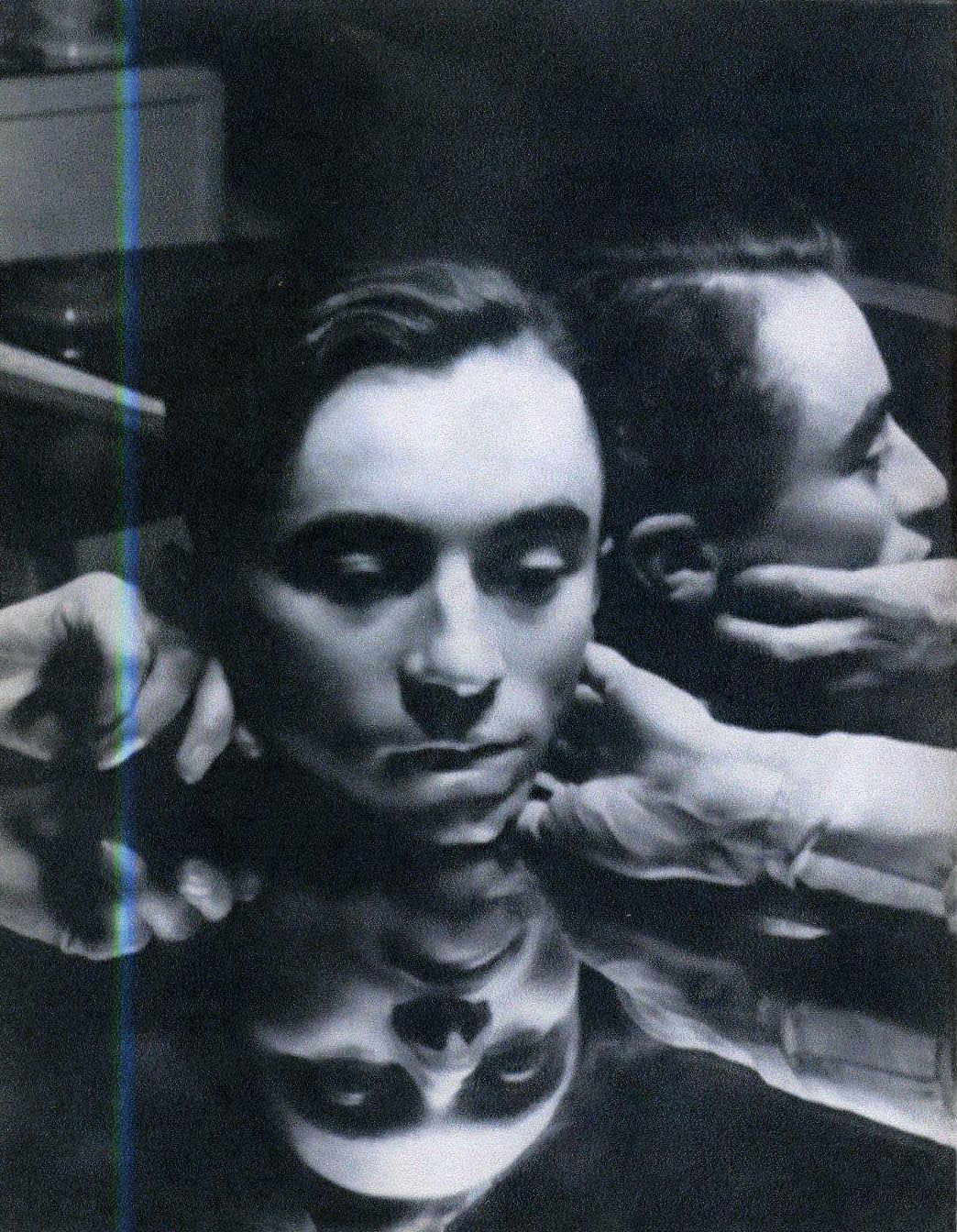
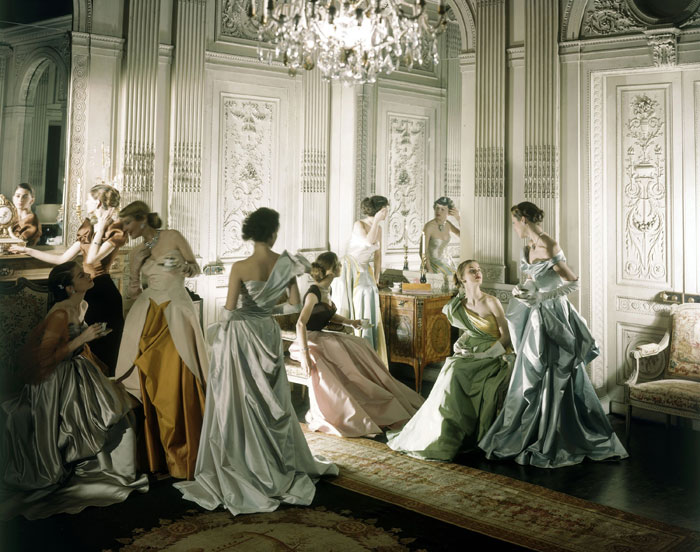
Despite their complicated friendship, James and Beaton were to collaborate often. This early portrait of James, taken by Beaton in 1929 (figure 4), reveals a tenderness between sitter and photographer. As a photographer for Vogue for over half a century, Beaton took countless fashion photographs of couture designs, including this photograph of Charles James gowns for Vogue from 1948 (figure 5). Beaton also photographed Mrs. Charles James in a design by her husband, underscoring their professional, as well as personal, relationship (figure 6).
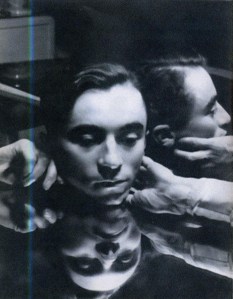
Figure 4: Cecil Beaton, Portrait of Charles James, 1929
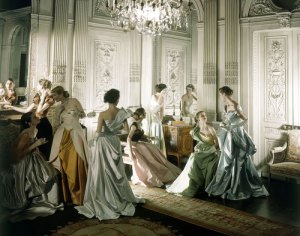
Figure 5: Cecil Beaton, Photograph of Charles James Govns, Vogue, 1948
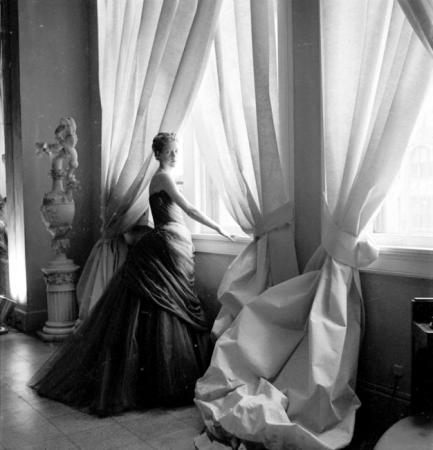
Figure 6: Cecil Beaton, Mrs. Charles James, 716 Madison Avenue, New York, 1955

Considering Beaton’s prominence in the fashion world it is no surprise that Dior and Beaton also shared a friendship. Dior wrote the preface to the French version of Beaton’s 1954 book The Glass of Fashion, in which Beaton dedicated an entire chapter to Dior and Balenciaga, whom he referred to as the “King Pins” of fashion.[14] As further evidence of their affinity, Dior named a dress from his spring/summer 1951 collection, “Cecil Beaton” (figure 7).

Figure 7: Christion Dior, "Cecil Beaton" Evening Dress, Silk, cotton, Spring/Summer 1951, Metropolitan Museum of Art

Another important figure in the lives of both designers as well as Beaton was Christian Bérard, painter, set and costume designer and fashion illustrator. Dior and Bérard were close friends and it was Bérard, Dior’s “big brother,” who gave the toast at Dior’s celebratory dinner on the eve of his first collection in 1947. In his memoirs, Dior remembers Bérard’s toast: “savor this moment of happiness well, for it is unique in your career. Never again will success come to you so easily: for tomorrow begins the anguish of living up to, and if possible, surpassing yourself.”[15] Bérard was also important to Dior’s work as a designer, often contributing design ideas, sketching his collections and influencing the décor for the Dior boutique at 30 avenue Montaigne.[16] According to Cecil Beaton, after Bérard’s death in 1949, friends worried that “Dior would not be able to exist without him.”[17]

In 1947 James was the first American designer to show in Paris after the war. James’s show at the Hotel Plaza-Athénée was a triumph. James’s “old friends” Christian Bérard and Comte Etienne de Beaumont sent out invitations to the event.[18] This photograph, published in Vogue in 1936, further connects the mutual friends: the designs are by Charles James, photographed by Cecil Beaton and the background painted by “a friend of both the photographer and the designer,”[19] Christian Bérard (figure 8).
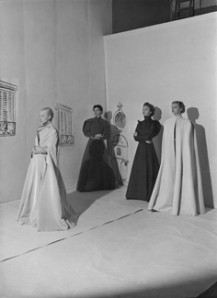
Figure 8: Cecil Beaton, Four models wear Charles James Mantles, Vogue, 1936

The Comte Etienne de Beaumont was a prominent society figure and one of the great hosts of the 1920s and 1930s. As was mentioned, the Comte sent out invitations for James’s 1947 Paris showing, but according to another article for The New York Times, James was to exhibit his collection at the Comte’s palace.[20] Further, the Count’s wife, Comtesse Etienne de Beaumont, is found on a list of known Charles James clients.[21] References to the Comte also appear in Dior sources. Much like Bérard, de Beaumont was in the habit of dropping by Dior’s studio on the avenue Montaigne in order to comment on the status of the renovations.[22]

Earlier in his career, in 1934, James lived at the Hotel Lancaster along side his friend Jean Cocteau.[23] More than neighbours, James established a competition at the Paris branch of the Parsons School of Design for the best adaptation of Cocteau’s motifs for printed scarves.[24] Cocteau figures in Dior’s life as well. In his memoirs Dior describes his circle of friends, who were brought together “purely by chance, or rather in obedience to those mysterious laws christened by Goethe with the name of elective affinities…We were just a simple gathering of painters, writers, musicians and designers, under the aegis of Jean Cocteau and Max Jacob.”[25] One wonders if Dior’s gathering of artists ever met at their leader’s residence – an address Cocteau shared with Charles James – at the Hotel Lancaster.

It is important to note the particular relationship that formed between client and designer. The act of buying a couture design was an investment, in both time as well as money. Couture garments were, by definition, not ready “off-the-rack” and consequently clients came to the designer’s studio for multiple fittings before a garment was ready to be worn. The process of producing couture was expensive and, particularly after World War II, accessible only to a few. Consequently, it is useful to consider the dynamic between society women and designers as mirroring that of a patron and artist. James was saved from financial ruin (on more than one occasion) because of the support of a few clients, who were not prepared to witness the demise of an artistic genius. Mrs. William Randolph Hearst, one of James’ most devoted clients, writes of her dedication to James: “we must forgive geniuses their transgressions…influential, responsible leaders at the peak of the fashion pyramid, store owners, editors, commentators – even customers – must dedicate themselves to searching for and developing American’s designing talent.”[26]

In light of these observations, it is telling to note a sampling of the clients that patronized both Charles James and The House of Dior. This shared clientele included, but was not limited to, Marlene Dietrich, Mrs. Byron Foy, Marie-Louise Bousquet and Mrs. Hearst. These women were considered arbiters of style and accordingly, were photographed in James and Dior designs for fashion periodicals and other publications. Having their garments publicized on the backs of stylish society connected the designers as colleagues and artists. This camaraderie is best illustrated through one particular client, Mrs. Hearst, who was referred to Dior by James himself.[27]

The points of intersection between Charles James and Christian Dior are undeniable. They frequented the same social circles and shared close friends and clients. They lived in the same cities – from Paris to New York – mere blocks from one another. They collaborated with the same artists and had their work lauded and featured in the same publications. Beginning in the 1930s, they certainly knew of each other and were probably acquaintances or even friends. However, the exact nature of their relationship and the details of how they may have influenced each other’s work remains unclear. For now, their designs live on in museum collections, their stories continue to be told as part of the narrative of fashion history and their legacies continue to inspire new generations of designers.

Bibliography

Beaton, Cecil. The Glass of Fashion. New York: Doubleday, 1954.

——. The Unexpurgated Beaton. New York: Alfred A. Knopf, 2002.

“Charles James Exhibits Styles in Paris; Society Acclaims U.S. Designer’s Artistry.” The New York Times, July, 1942.

Coleman, Elizabeth. The Genius of Charles James. New York: The Brooklyn Museum, 1982.

Dior, Christian. Dior by Dior: The Autobiography of Christian Dior. London: V & A Publications, 2007.

“Mainbocher Back, Winces at Corset.” The New York Times, October, 1939

Palmer, Alexandra. Dior: A New Look, A New Enterprise. London: V & A Publishing, 2009.

Park, Eun Kyung. “From Couture to Ready-to-Wear: The 1950s Designs of Charles James.” Master’s Thesis, Fashion Institute of Technology, 1994.

Pochna, Marie-France. Christian Dior: The Biography. New York: Overlook Duckworth, 1996.

Pope, Virginia. “Designer Taking Creations to Paris.” The New York Times, July, 1947.

—–. “Dior, At Opening, Copies Himself.” The New York Times, November, 1948.

—–. “Styles of Decade in Museum Exhibit.” The New York Times, November, 1948.

Endnotes


[1] Charles James, “Fashion Foibles,” Dioplomat (May 1955): 59.

[2] Charles James, “Fashion Foibles,” 59.

[3] Christian Dior, Dior by Dior: The Autobiography of Chrsstian Dior, (London: V&A Publications, 2007): 30.

[4] “Mainbocher Back, Winces at Corset,” The New York Times (Oct, 1939): 22.

[5] “Charles James Exhibits Styles in Paris; Society Acclaims U.S. Designer’s Artistry,” The New York Times (July, 1942): 16.

[6] Elizabeth Coleman, The Genius of Charles James (New York: The Brooklyn Museum, 1982): 84.

[7] Marie-France Pochna, Christian Dior: The Biography (New York: Overlook Duckworth, 1996), 192.

[8] Virginia Pope, “Dior, At Opening, Copies Himself,” The New York Times (Nov, 1948): 32.

[9] Virginia Pop, “Styles of Decade in Museum Exhibit.” The New York Tmes (Nov, 1948): 34.

[10] “Christian Dior Will Design Clothes Here; Wholesale Salon to be Opened in October,” The New York Times (Aug, 1948): 18.

[11] Dior, 49.

[12] Coleman, 78.

[13] Cecil Beaton, The Unexpurgated Beaton (New York: Alfred A. Knopf, 2002), 478.

[14] Pochna, 262.

[15] Dior, 32.

[16] Dior, 149.

[17] Cecil Beaton, The Glass of Fashion (New York: Doubleday, 1954), 263.

[18] Coleman, 84.

[19] Coleman, 16.

[20] Virginia Pope, “Designer Taking Creations to Paris,” The New York Times (July 1947): 28.

[21] Coleman, 173.

[22] Pochna, 120.

[23] Coleman, 81.

[24] Coleman, 81.

[25] Dior, 176.

[26] Mrs. William Randolph Hearst in Elizabeth Coleman, 115.

[27] Pochna, 168.

Posted in Uncategorized | Tagged , , | 11 Comments

From Rags to Riches- Israeli fashion rediscovered

As a teenager, and later as a fashion-design student, I always looked to European and American designers for inspiration and fashion direction. The fashion of my homeland, Israel, seemed poor and mundane, it didn’t seem to offer anything new and exciting, it wasn’t glamorous or edgy.  Only in my senior year at Shenkar College for Engineering and Design I first became aware that Israel actually had a rich and diverse fashion tradition. For my under-grad thesis I researched the swimwear company Gottex, and I came to realize that Israel in fact was once a global fashion force. In the 1970s and 80s fashion was only second to diamonds in export.  But, like me, most people in Israel do not even know how prized and coveted was once the fashion created by Israeli designers. Very little historical sources are available. The Book Halifot Ha’itim (“Changing Styles: 100 Years of Fashion in Eretz- Israel”) (Yediot Books, 1996) by Ayala Raz was for many years the only one from which you could learn on the subject, if you so desired. Ms. Raz is my former professor and thesis instructor and her book is a comprehensive history of Israeli fashion, but was published more than 10 years go and copies are very hard to come by.

Recently I was happy to discover that the Israeli fashion editor Nurit Bat-Yaar published the album-book Israel Fashion Art 1948-2008 (Resling), a compilation of images collected through her long-time career. Ms. Bat Yaar was the fashion editor of Yedioth Aharonot (Israel’s most-widely circulated daily newspaper) from 1975 to 2001, she curated the exhibition Glimpses of Glamour- Fashion Photography in the Mirror of a Century which inaugurated the millennium at Israel Museum of Photography at Tel-Hai and graduated Summa Cum Laude in art from Upsala College, NJ.

Ms. Bat-Yaar was kind enough to answers my questions and to share her experience  putting together this extensive overview, the challenges she faced and her point of view of Israeli fashion then and now.

K.BH.: Please tell us about the research process for your album-book? What were the challenges you faced in the research and material gathering?

N. BY.: My starting point were the visuals which I have been saving during several decades since the time Maskit multi-cultural’s designer Fini Leitersdorf convinced me to become her model on whom she created some of her fabulous creations in which she incorporated the handicrafts of the Hebrew tribes gathered from over 100 diasporas. These crafts, hand-woven beduine wool, Yemenite embroidery and jewelry etc. were applied to avant-garde cosmopolitan designs. Later, while I lived in the U.S. I saved the photos of leading Israeli designers of the 60s and 70s who participated in the Israel Bonds great fashion shows. And during my position as “Yedioth Ahronoth”‘s fashion editor I had saved the additional visuals, some of which I had art-directed and styled myself for the paper. Since 2002 I updated my visuals selection and would order photos from photographers and/or newspapers which I thought would fit into the subjects of the chapters I’ve decided on. The visuals of typical Israeli designs such as embroidered ones, coin decorated ones and kafia fabric ones, as well as art-to-wear ones, and Israel’s leading industries (beach wear, leather, knits) were the main subjects I had chosen for the chapters. As far as the text goes I used info from my personal knowledge, from my own thousands news paper reports, embellishing it with info I had gathered from the books and papers indicated in the book’s bibliography.  I had also interviewed several leading figures such as the unique visionary (and international expert on the use of hand crafts in marketable fashion items) Rut Dayan, who founded and was the president of Maskit; leading haute-couture designer Gideon Oberson; Rozi Ben-Yosef, creator of the Kafia fabric fashion and other uniquely Israeli designs; Shenkar‘s Fashion Dept. Chairperson Lea Peres  and Tamara Yovel Jones among others. One of the main challenges was locating some of the visuals’ photographers and getting their written permission for the use of their photos in the book.

K.BH.:Please explain what was behind the decision to dedicate the chapters to design concepts, rather than to organize them in a chronological order

N. BY.: I thought that the design concept was more original and creativity-oriented than the common familiar pattern. Yet, in each design chapter the subject is dealt with chronologically. In each chapter I explore the specific design’s historical sources and then follow its development decade after decade. The other option would have comprised of 6 chapters only (instead of the 28 chapters of the book) dedicated to the 6 decades I’m covering, would have limited the number of the visuals, and would not have emphasized all the creative and  typical Israeli aspects I wanted to bring out.

Head piece by Yaron Minkowski, 1989. Photograph by Gadi Dagon. Stylist and Art-Director: Nurit Bat- Yaar.

K.BH.:What do you think Israelis will find in the book that they did not know about Israeli fashion?

N. BY.: Present day Israelis know very little about the heritage of Israel’s fashion industry and its fabulous success on the international arena. I’ve even encountered a Bezalel (Academy of Arts and Design, Jerusalem. K.BH.) fashion student who did a project using a kafia who knew nothing about  Kafia fabric lines of the 60s and 70s which were a phenomenal success abroad. And before the book was published I had to send her one of its pictures to give her an idea about what has been done in that area of creativity in the past.

Rozi Ben-Yosef for Rikma, 1967. Photograph by Ben Lam; On the left embroidery decorated caftan from the Kafia fabric. On the right a design made of a fabric that up until then was only used for hand towels, which Ben-Yosef upgraded by adding colorful stripes.

K.BH.:Once the book is translated to other languages, what do you think non-Israelis could learn from it about Israeli fashion?

N. BY.: Once the book is translated to other languages non-Israelis –  in addition to enjoying the uniquely Israeli visuals – could learn that leading international fashion icons such as Jacky Kennedy, Princess Diana, Katherine Hepborn, Elizabeth Taylor, and “Sex & the City”‘s Sarah Jessica Parker wore Israeli creations by Beged Or, Gottex, Maskit, and Israeli Alber Elbaz of Lanvin.  That Israeli designer Tamara Yovel Jones and Victor Bellaish were among Roberto Cavali‘s designers, Yossi Katsav was head designer at DKNY Men, that Kobi Halprin designs for Eli Tahari. That Israeli fabric designer Zuri Guetta invented the use of silicone incorporated fabric whose clients include leading haute-couture Paris designers such as Jean-Paul Gaultier. And many others international success stories. Also, that Bagir goes green and offers wash and wear men’s suits which require no dry-cleaning as well as suits made of plastic bottles. That leading U.S fashion chains such as Saks Fifth Ave and Bloomingdale’s invented new words combining fantastic and fabulous to describe Israel designs in their newspaper’s ads. And of course, the rags to riches story of Israel’s fashion. How the unique Israeli style was developed in Maskit whose purpose was originally to provide livelihood to the newcomers, how the style was enriched by additional designers and companies who followed in Maskit‘s footsteps. Gottex becoming the leading beach-wear of the world, Beged Or becoming the most innovative leather company of the international arena, etc. The various aspects of Israeli art-to-wear creations, such as the use of sea-shells, jeweled gowns, sculptural inspired designs, the use of hand-paint and painting inspired creations, etc. And how Israel’s first leading fashion figure, Lola Ber started out in the 40s and 50s by buying Dior’s patterns believing there is only one fashion in the world – that of Paris, and how today this turned over, and it is the Israeli Alber Elbaz who is leading Paris fashion and (according to Vogue)  turned Lanvin into the world’s most desired label.

K.BH.: How do you think Israeli fashion is perceived in the world?

N. BY.: Presently, not much is known about Israeli fashion due to the effects of globalization. The reason is that since production moved to the far-east and the industry lost its price leverage – many manufacturers closed down and the export institute stopped organizing fashion weeks here and abroad.  Instead fashion chains such as Castro are opening branches overseas, and young designers are being represented abroad by local showrooms. However, Israel is known, especially in Europe for being a very trendy and innovative place where things are happening all the time, and people such as Sonia Rikiel’s daughter who visited  here a couple of years ago did a lot of shopping in some of the local designers’ stores as do other fashion oriented figures. Also, many Shenkar students who participate in international students competitions win prizes. And figures such as Donna Karan, Jean-Paul Gaultier, and John Galiano’s studio’s assistance (who visited Shenkar for design-critics) often offer the students apprenticeships in their studios.

K.BH.: Which piece in the book you most personally relate to? And which do you think best captures the essence of Israeli fashion?

N. BY.: I especially relate, professionally and artistically to Fini Leitersdorf Designs for Maskit which exemplify the crème de la crème of unique Israeli creations, such as her one design in which a modern interpretation of the traditional Moroccan  Hamsa is incorporated in a very artistic and whimsical way in the outfit which captures the essence of Israeli fashion. Also to Rozi Ben-Yosef’s designs which also derive from Israel’s cultural heritage and to some of the Gottex printed designs which reflect the Israeli melting-pot/multi-cultural approach based on the variety of the Hebrew tribes.

Lea Gotllieb for Gottex, 1976. Photograph by Ben Lam

I personally as well as artistically relate to some of the Bezalel, Shenkar, and Wizo‘s students’ creations which I chose to photograph for my newspaper’s editorials styling and art-directing them myself  as well as to some students’ photos I’d just picked for the book such as Mor Hemed’s futuristic-sculptural image and  Aschola‘s ( Israeli design academy that closed in recent years KBH) Shani Ben-Hur design  which exemplifies texture and fabric creativity which derives from and compensate for the lack of a wide variety of textile choices here.

Mor Hemed's futuristic-sculptural designs, 2004. Photographer by Dafna Grossman.

K.BH.: What difference do you see in the Israeli fashion of the 60s, 70s and early 80s and that of today’s?

N. BY.: In those decades many fashion manufacturers existed and exported Israel’s fashion to countries around the world. Leading fashion stores buyers and journalists would come to Israel’s fashion weeks organized by the export institute. Designers were more oriented to the country’s cultural resources and used them as an inspiration. Today, on the other hand, globalization has taken over. Companies go to far-eastern low-cost labor manufacturers. Young designers (once hired by the export industry) now work on a small scale in their own studios.

K.BH.: Is fuchsia really your favorite color? if yes, why?

N. BY.: Fuchsia is one of my favorite colors, in addition to black, green, red, purple, wine, and off-white. I like it because (in the correct shade) I find it to be a very happiness-inspiring color as well as a sophisticated “statement-color” alternative  to the lovely red (Diana Vreeland’s favourite color) combining both pink and violet. Also, because it is very becoming to most women, adding energy to one’s appearance.

The Cover of the album-book "Israel Fashion Art 1948-2008" (Resling) by Nurit Bat-Yaar

Ms. Bat-Yaar’s  book was not translated to English yet, but you can find all about it in here blog http://nuritbatyaar-fashionart.blogspot.com/. It  is a huge contribution to the very limited sources of the history of Israeli fashion and fashion design.

Top image: Fini Leitersdorf for Maskit, 1968. Photograph by Peter Herzog.

All images are courtesy of Nurit Bat-Yaar and belong to Nurit Bat-Yaar & Resling Publ. Any commercial or other use of the imges without prior written and expressed permission of Copyright Owner is strictly forbidden.;


Posted in interviews | Tagged , , , , , , , , , , , , , , , | 6 Comments

Then&Now

Gabrielle Coco Chanel by Man Ray, 1935                            Sur La Plage by Bea Szenfeld, 2010

Posted in Then&Now | Tagged , , | Leave a comment

Style Icons

Today is the opening of Notorious & Notable:20th century Women of Style at the Museum of the City of New York. The exhibition, in collaboration with The National Jewelry Institute, explores the lavish attire of eighty New York socialists such as Mrs. Cornlius Whitney Vanderbilt, Jacqueline Kennedy Onassis, Babe Paley and the Duchess of Windsor. In a promotional interview she gave in the September issue of W magazine, curator Phyllis Magidson is quoted saying that the women featured in the exhibition were selected for their “personal and professional status in New York City- stature in society, culture, profession….. These women coincidently share unique aspects of appearance- attire, hair, jewelry- which make them distinctive and recognized either today or in their own time. Their names and faces are iconic in the social history of New York City”. Some of the dresses on the exhibition were purchased for astronomical sums, more than $200,000 in today’s value, jewelry rising up to $1,000,000. As I am sure I will see and enjoy the exhibition, it got me thinking- is money, expensive gowns and fabulous jewelry are enough to turn one into a style icon?
I can think of at least one example that proves other wise.
As a child I was obsessed with anything Spanish. I remember myself, at 7 or 8, listening to a record of the opera Carmen with my father. As we listened to the mesmerizing music my father described the plot scene by scene, in my mind’s eyes I could see it all – the beautiful Flamenco dancers, their traditional costume in bold colors, the drama, emotion and tragedy. I also had a collection of traditional hand fans and porcelain figurines of which many were of Flamenco dancers. Looking back I realize not much have changed, the opera Carmen still brings tears to my eyes and I still find the Spanish culture to be one of the most fascinating in the world. It is no wonder than that my favorite Couturier is Spanish (Cristobal Balenciaga), my favorite music is Spanish (Flamenco), one of my favorite filmmakers is Spanish (Pedro Almodovar) and my ultimate style icon is also known for her resemblance to Cubist portraits pioneered by the most famous Spanish artist (Pablo Picasso).
Rossy de Palma was born September 16, 1964 in Palma de Mallorca, Spain. In the early 1980s she was a singer and a dancer for the band Peor Imposible (“Worse impossible”). Her big break came in 1986 when she was discovered by Pedro Almodovar at a café in Madrid. Almodovar gave her a small role in the film Law of Desire with Antonio Banderas and the nick name “the cubist beauty”. Over the years they collaborate in iconic films such Women on the Verge of a Nervous Breakdown, Tie me up! Tie me down! and of course Kika. Like most Spanish artists, Almodovar is notable for his ability to create distinctive visual imagery, de Palma’s strong features and personality fits right in.

Rossy de Palma in Kika (1993) and Picasso's woman in blue hat

She is by no means an ordinary beauty, in fact most people will consider her ugly, but she inspired fashion designers, photographers and of course film and theater directors because of the confidence with which she carries her unique features.

beautiful or ugly?


She has a distinct personal style, and it surfaces even when she plays a character on stage and screen. She is in fact better known for her persona than she is for her acting or singing.
In 2009 she designed a collection of hand fans for Louis Vuitton, and earlier this year she stared in a viral campaign for the promotion of their Spanish online store.

Rossy promoting her hand fans collection for Louis Vuitton

At first it seems a surprising decision to use de Palma for the campaign, as Louis Vuitton’s aesthetic is synonymous with luxury and slick style while de Palma is somewhat perceived as a quirky gimmick. I believe that Marc Jacobs is attracted to the fact that Rossy de Palma is in itself a product, a product of her unique sense of style. Jacobs is certainly not the first designer to appreciate a woman of personal style and confidence. Dior had Mitza Bricard, Yves Saint Laurent had Loulou de la Falaise and Karl Lagerfeld finds a new muse every few years (Cat Power, Lily Allen, just to name a few).

Style, unlike mere beauty, is a true talent, and somewhat elusive. What is it that makes one stylish? How come one person who is groomed by an army of stylists and has access to the most expensive and coveted clothes still lack all personal style (Gwyneth Paltrow anyone?), While others can simply throw on a fuzzy thrifted sweater and look so stylish and unique (Kurt Cobain)?
I think it all comes down to personality; Rossy de Palma simply cannot be anyone else but herself.

photograph by Herb Ritts

So, who is your own, dead or alive, style icon? Please share!

Posted in Uncategorized | Tagged , , , , | Leave a comment