Two-Part Harmony: Fashion & Music

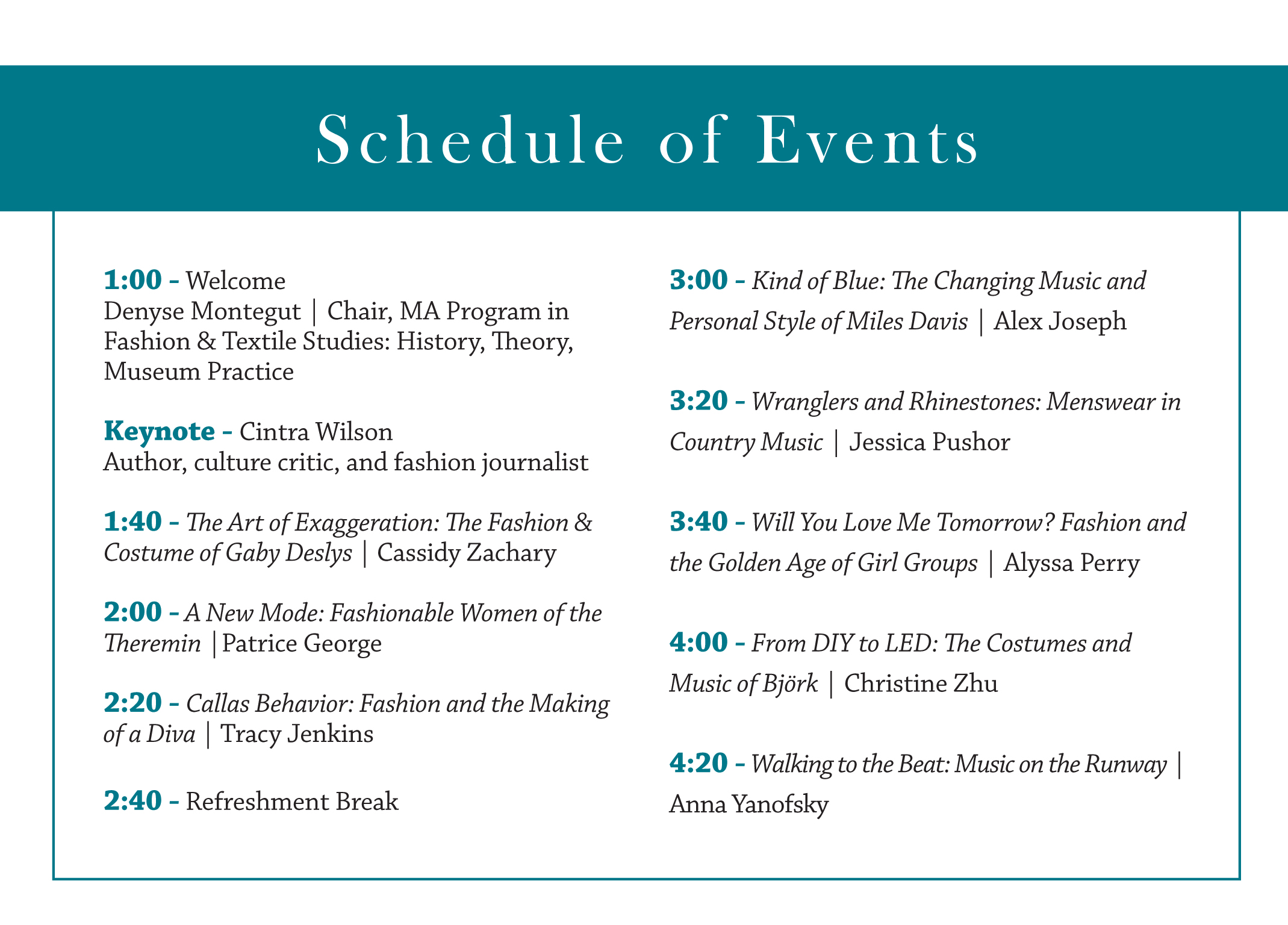
We are thrilled to invite you to our program’s annual symposium. This year papers will address the special relationship between fashion and music.

In the next couple of weeks we will post the abstracts of the papers to give you a taste of what’s coming!

Please join us on Saturday May 5th. The symposium is free and open to the public.

Posted in Symposium | Tagged , , | 8 Comments

Textiles and Politics- TSA 13th Biennial Symposium

Registration is now open for “Textiles and Politics” the Textile Society of America’s 13th Biennial Symposium being held in Washington D.C., September 19-22, 2012.   The symposium promises to be the TSA’s largest and most comprehensive to date.  Keynote speakers include Joyce Scott and Rosamond Mack and workshops will be offered by:  Jorie Johnson, Michel Garcia, Ann Hedlund, Ann Rowe, and Julie Holyoke.  Set amidst DC’s world-class museums, many of which will open their backrooms to participants, the symposium promises to offer a once-in-a-lifetime opportunity to learn, share, and experience textiles and politics.  To register and view the program, please visithttp://www.textilesociety.org/symposia_2012.htm.

Posted in Symposium | Leave a comment

Links Links Links

Here are some links to some new and interesting websites and blogs:

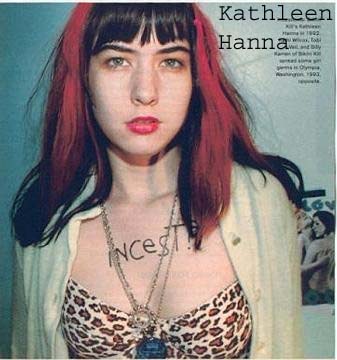
First is a new Tumblr called Grrrl Style Now. It was created by Michelle Pronovost, from our program. While researching the Riot Girrrl style she accumulated wonderful images which she shares here.

Kathleen Hanna. Source not available.

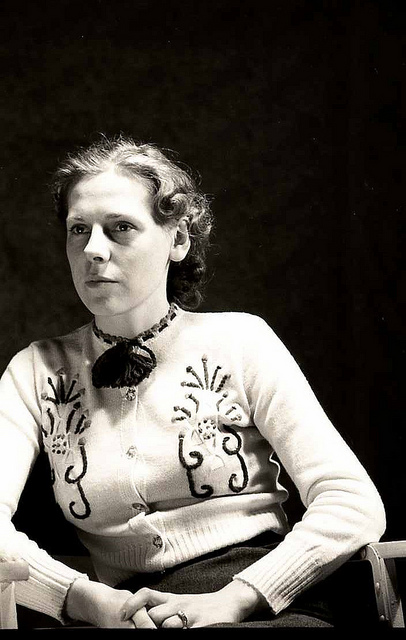
Another wonderful source for primary material,  is the Lively Morgue , the New York Times’ new Tumblr.  Every day they post a few photographs out of the 10 Million they have in their archive. In some cases they also show the reverse side of the photograph so viewers can experience the picture in context, find out when it was used, how many times in was used, and read comments by the photographer.

March 1940, Sarasota, Fla. the New York Times

The back of the above picture, as seen in the New York Times blog The Lively Morgue

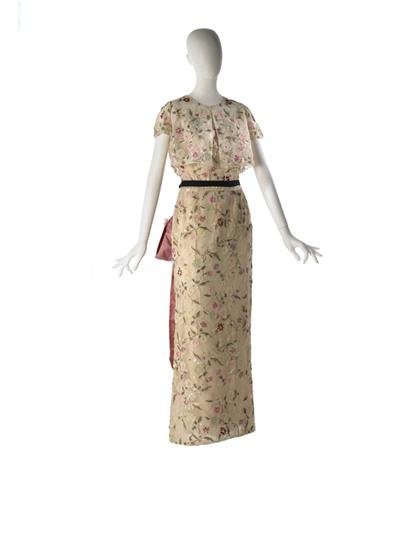
The Museum of the City of New York has an online exhibition, titled Worth & Mainbocher. It includes 119 dresses from the museum’s costume and textile collection, designed by these two genius designers.  I personally found the interface to we quite annoying, but once you get over that you’ll find that This online exhibition really does what a good exhibition should- educate the viewer. Each photograph comes with full description, alternative views, and detailed background for each designer and each collection. Anyone who loves fashion and appreciates fashion’s great masters is sure to enjoy this.

Evening Dress, Bolero and "Glamour" Belt. Mainbocher, Spring-Summer 1944. The Museum of the City of New York.

Evening Dress, House of Worth, 1908. Museum of the city of New York.


Posted in Uncategorized | Tagged , , , , , | 1 Comment

April treasure of the Month

This month’s treasure comes from an unexpected source- the Flickr account Lynne’s Lens. One set in particular caught my attention. The set- titled  World’s Fair Photographer– includes scanned 35mm negatives Lynne purchased in a flea market, assuming they were just your ordinary collection of “people lined up in front of a house smiling at the camera, a blurry car or two, maybe (if you’re lucky) an interesting snap of a street scene or interior.” However, they proved to be quite a treasure. The pictures, judging from their quality, were probably taken by a professional photographer. They depict not only New York City in the 1930s, but also, as the name of the set implies, the 1939 New York World’s Fair in Flushing Meadows. I am particularly enamored with the portraits, but I do recommend to view the entire set, as the architectural photographs are spectacular. Below are some of my favorites images,

Abstracted Perisphere. This is Lynne's favorite picture. Taken by the New York World's Fair photographer

"I found a collection of old negatives taken during the photographer's trip to New York for the World's Fair of 1939-40. There are some great snapshots of some of the daily goings on, as well as images of some of the more iconic structures at the fair. They are a great glimpse into the last few calm moments before the storm."

Headed for the Statue of Liberty. Taken by the New York World's Fair photographer

Lovely. "She is too stunning for words." Taken by the New York World's Fair photographer.

Taken by the New York World's Fair photographer

Another wonderful set in Lynne’s account is of Dallas photographer from the 1050s- 80s Tom Collins.  “By the time I met him, he was a frail man in his 70’s who had lost an eye (to cancer, I believe) and wore a black eye patch over it. He lived in a dark front room of the color lab because he and his wife didn’t get along very well, and, frankly, I think he loved that lab better than anything and was happiest when he could hang out there and smell the chemicals, hear the machines at work, and troubleshoot in his very quiet and patient way.
Mr. Collins’ best friend was his bulldog, Pete, who used to run around the lab like he owned the place and went everywhere Mr. Collins went. The only time I ever saw the normally very stoic Mr. Collins laugh was when Pete did a trick or in some other way endeared himself to all of us.
Mr. Collins died not too long after I stopped working at the lab in 1986. After he died, the lab closed, and the ancient old house that was home Mr. Collins’ pride and joy is now an art gallery on busy McKinney Avenue.”

I chose some photographs that caught my eye personally, but if you have the time I really do recommend to go over all of them. It is a good reminder that great primary sources can be found in an unexpected places.

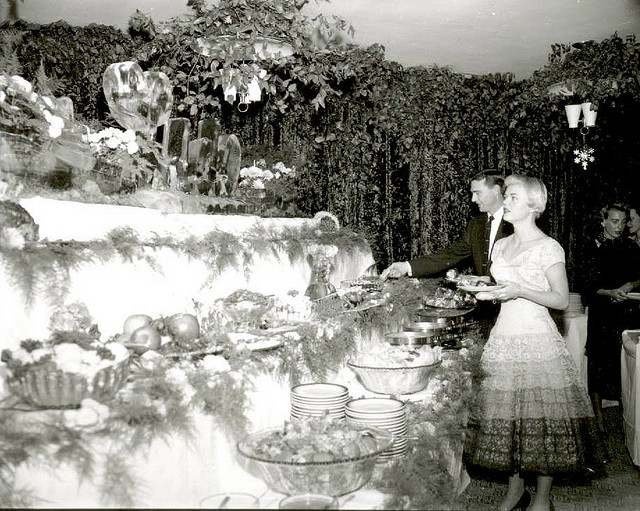
The Big Spread at the Lido. At the opening of the Lido Hotel, Dallas, 1950s.
Photo by Tom Collins.

“In 1985-86, I worked at Collins Color Lab on McKinney Avenue in Dallas. When I worked there, the lab mostly did prints of huge architectural renderings for firms all over the city.Located in a turn-of-the-century house that hadn’t been updated since Mr. Collins set up shop there in the 50’s, the lab contained file cabinet after file cabinet of 4×5 negatives.One day, Mr. Collins daughter, Beth, who ran the business end of the lab, asked me to help her go through the file cabinets; they were going to purge old negatives to have the silver extracted from them to make way for more room in the lab. Well, when I opened the first package of negatives, I was shocked. I had expected to see architectural renderings, but instead, I found negatives of Dallas from the 1950’s and 60’s. Apparently, Mr. Collins spent his early years as a photographer taking photos for businesses, advertising firms, architects, and newspapers. There were tens of thousands of negatives of this great stuff, and I wanted to keep every single one. However, that wasn’t the goal of the project, so I got to work going through every negative in one file cabinet, tossing 98% of them in a trash bag to be taken for extraction. It was a painful job to do. While we were going through the negatives, I did ask Beth if I could keep some that I really liked, and she agreed, which is how I ended up with these.”

Lido Hotel Grand Opening. Photo by Tom Collins.

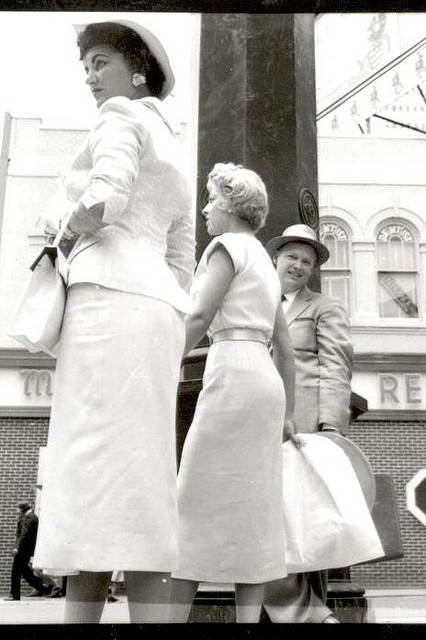
Eyeing the Ladies
"Here we are in 1950's downtown Dallas with shapely ladies (no size 0 back then!) in their lovely suits, matching purses and shoes strolling confidently down the street and a man in a straw hat giving them an appreciative nod."
Photo by Tom Collins, 1950's.

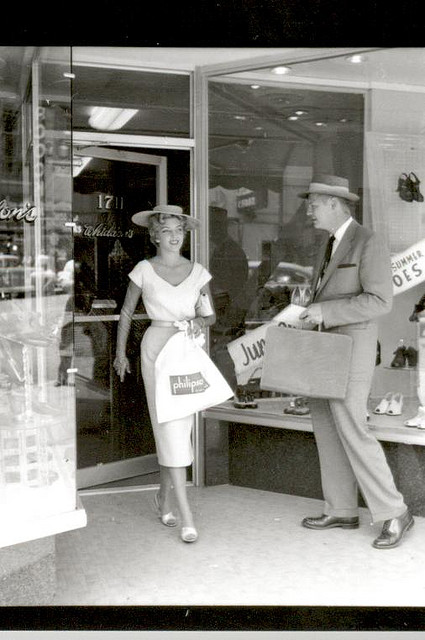
Dallas, 1950s. Photo by Tom Collins

Mid-Century Modern in Dallas
"I want every single thing in this room, from that great clock to the fantastic sofa to the HUGE lamp! What a WOW space this is." Photo by Tom Collins, 1950's.

Mr. Collins’s negatives were donated to the Dallas Historical Society.

All photographs courtesy of Lynne’s Lens.

Posted in Treasure of the Month | Tagged , , , , | 1 Comment

Then & Now on Tumblr

I am so excited to announce that Then & Now can now also be found on Tumblr, thanks to our loyal readers and their great ideas! In the next coming weeks I will upload past posts. Please visit us and spread the word. As always your comments and suggestions are welcome!

Posted in Then&Now | Leave a comment

Interview with the curators of Youthquake! The 1960s Fashion Revolution- Part II

Welcome to the part-two of our interview with Cassidy Zachary and Tracy Jenkins, curators of the exhibition Youthquake! The 1960s Fashion Revolution , open now through April 7 at the Museum at FIT. check out part one here.

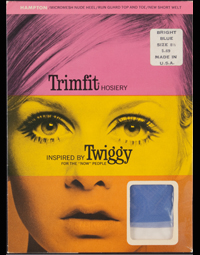
Trimfit, tights “inspired by Twiggy” in
original packaging, nylon, paper, 1967-68, USA, gift of Dorothy T. Globus. The Museum at FIT

Keren Ben Horin: Can you talk a bit about the design of the exhibition?

Tracy Jenkins: The color scheme was based on a package of a Twiggy trimfit tights, which are in the exhibition, and also a Bridget Riley painting of the time. We have blocks of color coming in from different directions; in the first section we have boutiques and we have a  block  of color coming up, so we were sort of thinking about influence coming up from the street, and at the high fashion section of course it’s coming from the top down. In the mannequins section the backdrop to the Hippies is a yellow circle which could be the rising or the setting sun, but they are very abstract, they have rounded corners, they sort of allude to the molded plastic furniture of the time, they are very bright and very intense colors. The platforms are metallic silver to allude to the space age, and to reference the look of the time but not to be too literal.

Cassidy Zachary: And we also have large quotes on the walls which was really a fun element to liven up the space.

KBH: Now let’s talk about music, it was very important to both the Hippies and the Mods.

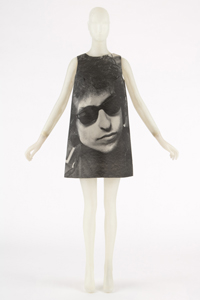
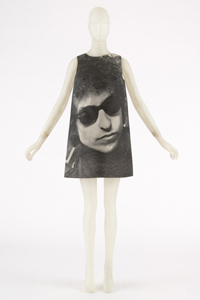
CZ: Music was, of course, an inseparable element of both the Mod and Hippie subcultures, so it plays a really important role in the youthquake fashion revolution. rock ‘n’ roll music is also transforming the traditional fashion show, so where models really used to walk in a uniformed procession down the runway, they are now dancing to -sometimes live- rock ‘n’ roll bands. It’s a very exciting, energized time. Of course musicians are essential in spreading these looks to their fans. A literal manifestation of that relationship is the fantastic Bob Dylan “poster dress” that is in the exhibition. It’s from a graphic artist Harry Gordon’s “Poster” dress collection that premiered in the US in 1968. At that point, paper dresses had been a fad for a couple of years- Gordon wanted to exploit the fact that you were wearing paper and used this geometric flat shift as a canvas for his art. He had bold graphic images such as Bob Dylan, but also a blown up Allen Ginsberg poem, a cat, and an eye.

Dress with photograph of Bob Dylan by Harry Gordon, paper, black ink, 1968, England, gift of Estelle Ellis. The Museum at FIT.

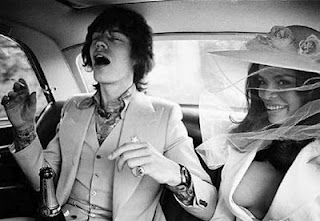
TJ: This is also a time where you had people working simultaneously in several genres, so someone like Françoise Hardy who was a French pop star, was also a model. She is featured in the pages of Vogue, and really they are not heralding her as a musician, they are showing her wearing everything from a $8 micro mini skirt to a Courrèges and Paco Rabanne, which she was known to wear in her real life.  You also have someone like Jimi Hendrix who is traveling between London and the West Coast and popularizing the psychedelic style of the so called “jet-set” Hippies, and also people like Mick and Bianca Jagger who are young and fashionable, and have money to spend. In the latter part of the 60s they bring in these really opulent flowing garments that are influenced by non-western cultures.

Françoise Hardy. American Vogue January 15, 1967.

Mick and Bianca Jagger on their wedding day, 1971. Bianca is wearing an Yves Saint Laurent suit.

KBH: You bring me to a great point, the decade started with a linear, modern style, but as we approach the 1970s we see a completely different style, even the fashionable body has changed in the course of that decade.

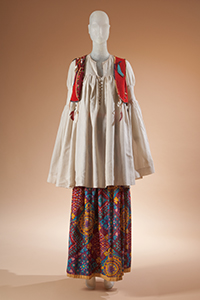
TJ: Hippies are almost the antithesis of the Mods in terms of style, and the subculture of Hippies is anti-technology and anti-establishment, they want to return to traditions of hand-craftsmanship and natural materials, so they are using leather and cotton and these kinds of things, they want nothing to do with plastic or technology or the future. They are not participating in fashion, but of course they are very influential. Fashion almost immediately co-ops their style, a real Hippie would be wearing denim and a political t-shirt, and a Hippie style for a high fashion person would be someone like Giorgio Di Sant’angelo, who has very similar garments- printed cotton skirts, peasant blouses, leather vests- but these are extraordinarily expensive. The Giorgio Di Sant’angelo ensemble we have was worn by Marina Schiano, who was the vice president for Yves Saint Laurent beginning in 1971, so this is obviously a successful business woman now dressing in this fashion.

even Mary Quant adopted the Hippie style. Mary Quant, 1970s. source: style.com

Giorgio di Sant’Angelo, ensemble, cotton, suede, shell, feathers, 1968, USA, gift of Marina Schiano. The Museum at FIT.

CZ: Prior to the youthquake the Parisian couture really set the pace of fashion, the style then trickled down to the masses at all price points. After the youthquake, you have young designers who are creating fashion at a level that more people can afford, and you see it trickle up from the street and influencing high fashion designers such as André Courrèges , Yves Saint Laurent, who himself is a very young at this time,  and Pierre Cardin.

TJ: Another huge change is that by the end of the 1960s many couturiers open ready-to-wear  boutiques, which was not done prior to this. Couture doesn’t go away, and its influence is still felt, but there is no longer a single fashion authority or a single way to dress. I think the most revolutionary aspect of the 1960s is that you have now a big soup of all styles, by the end of the decade you can wear a mini skirt, you can wear a maxi skirt, if you are a man you can wear a skirt, if you are a woman you can wear pants, there are no more roles.

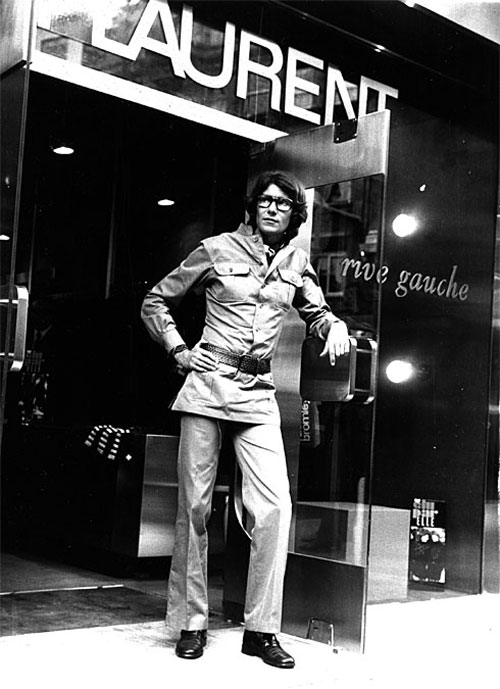
Yves Saint Laurent in front of his Rive Gauche RTW store, wearing Safari suit.

Twiggy in Yves Saint Laurent, Vogue, March 15, 1967, photographer:Bert Stern.

CZ: The breakdown of rules of gender barriers, of time a day formality, all of these things  that we take for granted today are a product of the 1960s youthquake revolution.

TJ: Not only the styles, but also the way people can participate in fashion, so how it’s produced and  consumed. You can be a young designer, you don’t have to work in a couture house for years and come out through the ranks, you can open a small shop, design a small line for a few of your friends and become world famous.

KBH: It’s interesting that even the way fashion is delivered is now different. If prior to the 1960s, couture houses had intimate presentations to fashion editors and buyers, the ready-to-wear runway shows were open to everyone and often for free, it was a “democratic” way of showing fashion. It must have influenced how styles were interpreted for the mass market.

TJ: Right, in Paris previously you had shows only two times a year, and now you can create smaller runs, you can really be more whimsical and experimental.

KBH: Why do you think people are so fascinated with the 1960s even today:

TJ: It’s a time when everything was possible, and there’s such an energy and a spirit to these fashions. It was a time of revolutions, social revolutions, political revolutions, a whole host of events going on around the world that made people question the way everything was done, it was exciting time of possibility and initially of idealism that is really reflected in these styles.

CZ: So many of the silhouettes today -miniskirts, pant suits, and of course we see this resurgent of a slim cut silhouette for men’s wear- were products of the 1960s, and I am not sure that many of these silhouettes ever truly went away.

KBH: Thank you very much ladies, this has been a pleasure.

TJ and CZ: You are welcome!

Posted in Exhibition, interviews | Tagged , , , , , , , , , , , , , , , , | 1 Comment

Then & Now

(left) Gustav Klimt (1862-1918) Judith mit dem Haupt Holofernes (Judith with the head Holofernes), 1901. Oil on Canvas. (right) Dress by Tim Rhys-Evans, photo by Martha Boxley. Pigeons & Peacocks, issue 4. via Laura McLaws Helms, http://instagr.am/p/IXlh7wMg-y/

Posted in Then&Now | Tagged , , , , , , | 1 Comment

Interview with the curators of Youthquake! The 1960s Fashion Revolution- Part I

The exhibition Youthquake! The 1960s Fashion Revolution , open now through April 7, is a collaboration between the students of our program and the Museum at FIT. Last week I sat down with curators Cassidy Zachary and Tracy Jenkins to talk about how it was created. I bring you our conversation in this two-parts post. I hope you’ll enjoy reading it as much as I enjoyed doing it.

Dress with photograph of Bob Dylan by Harry Gordon, paper, black ink, 1968, England, gift of Estelle Ellis, Museum at FIT.

Keren Ben-Horin: What is the premise of the exhibition?

Cassidy Zachary: Youthquake! The 1960s Fashion Revolution explorers the dramatic impact of young people on fashion in the 1960s. We started by looking at the styles generated by the two leading subcultures of the day: the Mods and the Hippies, and how those styles influenced fashion, from the mass market to the haute couture.

KBH: And what did you find?

CZ: We found that “the world was all for youth now,” to quote Twiggy who wrote her memoirs in 1968. It was a really exciting time.

Tracy Jenkins: We were given the broad topic of 1960s fashion with regards to Mods and Hippies. Our entire class began researching, an early angle that we perused was boutiques in London. We found that London was the epicenter of  the youthquake and fashion revolution influenced by the Mod style. Mods were young men, in the mid to late-1950s, who were commissioning custume tailored suits based on costumes they have seen in Italian films, they were very fashion conscious and very specific about details, such as length and placement of vents and the fabrics used. Young designers really began to copy and emulate these looks, for men that was tighter fitting colorful clothing, for women it was styles like mini skirts and pants for all times of day.

KBH: Did you find that the American market also adopted some of these styles?

TJ: Absolutely. Boutiques were not only promoting new styles, it was also a new way to shop for these young people. England was slow to come out of the war, and young people finally had money to spend on consumer goods, so these are young men and women who are demanding a fashion of their own, and they are also using these stores as places to hang out, to see and be seen, to listen to music. The shops were often open very late, they would close up and the salespeople and the customers would go out together. So it’s really all about the life style. Prior to this, as a young person, you would go shopping with your parents, and you would dress very much like them in a junior size, so this was a radical transformation in that way. Then the boutique culture spread internationally, to places like New York and Paris.

 CZ: By 1965 there are over 90 million young people under the age of 24 alone, and they have all that money to spend, and so mass marketers are catering to them directly. The enterprising British businessman Paul Young comes to America, following a stewardess that he has falling in love with, they break up and he stays, and gets hired by JC Penny to open their new junior line. He is already realizing that Britain is the place to look for these young and exciting designs, so he hires Mary Quant to design for JC Penny in 1962. By 1965 he opens one of the first “Youthquake boutiques”- Paraphernalia in New York City. So mass market companies are realizing young people have money to spend and they are hiring hip new designers such as Mary Quant and Betsey Johnson, who begins her career in the sixties, to market to this powerful consumer class.
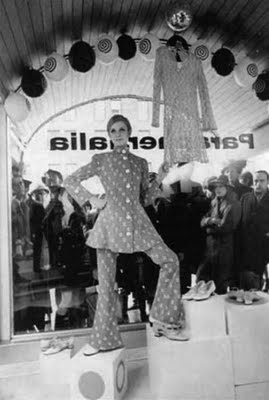
Twiggy at Paraphernalia, New York City
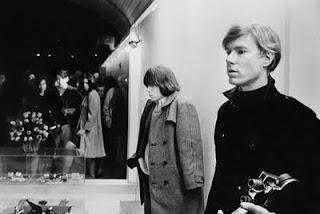
Brian Jones with Andy Warhol, Paraphernalia, New York City

TJ: Another way these styles are traveling back and forth across the Atlantic is on the backs of musicians, the Mod style particularly is associated with bands like the Beatles and the Who. The ways that fashion is being disseminated are expending, so there is not only the traditional fashion press like Vogue magazine, but there are television shows like The Ed Sullivan Show or Ready Steady Go! in Britain where people are seeing these young musicians, and emulating not only the clothing, but also the hairstyles and really the attitude.

KBH: And also the movement. Now it’s no longer just a picture in a magazine.

TJ: Yes, one thing to remember about these styles is that they are built for movement, for dancing. Mini skirts are very freeing, simple shift dresses are hanging away from the body, there is no structure, or the neo-corsetry of the 1950s. These are styles for young, active bodies.

KBH: What can you tell me about the research you did for the exhibition? How was the work divided between the students in class?

CZ: A lot was happening in the 1960s, so we initially divided it into different subjects, so people were looking at artists from the time, musicians, journalists, photographers, fashion designers, style icons, and trying to get an understanding on really who were the image makers of the decade and who was responsible for this youthquake revolution.

TJ: In the beginning, everyone in the class did research, and then when we broke off into our more specific roles, Cassidy and I, as the curators, continued to research and we also had a team of three researchers to whom we assigned both subjects area and particular publications and certain types of media.

CZ: Life magazine was a really surprising find for us, there are a few examples featured in the exhibition, so where you might expect to see Vogue or Harper’s Bazaar you really see Life magazine, which has a broader readers base. [The examples in the exhibition] show this kind of democratization that happened in the fashion in the 1960s. Life was at the fore front of the revolution, they were reporting on Mary Quant as early as 1961 and their fashion editor, Sally Kirkland, really had an eye for what was happening internationally.

KBH: How were the tear sheets chosen?

CZ: It was about impact, how can you portray these concepts immediately, without even saying anything?

TJ: Because we had limited space and limited budget every object had to count and had to make its point emphatically. We went for the most iconic things. There were certain people we knew we wanted to include like Mary Quant, André Courrèges and Twiggy. Also we wanted to represent certain photographers like Bert Stern, William Klein, and musicians like Françoise Hardy and we have the Rolling Stones in a fashion spread.

CZ: And also they served us where we wanted to represent a really iconic designer, Mary Quant for instance, was very influential on designers of the 1960s, we did not have an object that we could show from her so we decided to show a photograph.

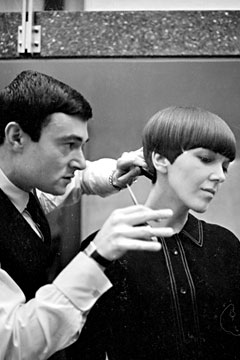
Mary Quant gets a touch-up from Vidal Sassoon in November 1964. source:style.com

TJ: In the case of Mary Quant it was almost better to have the photograph because we got to show her kneeling amongst her designs, she is wearing a very quintessential Mary Quant dress and she has a Vidal Sassoon haircut. We have a wonderful  Paco Rabanne evening bag [in the exhibition], but of course he also did dresses, which were arguably even more revolutionary. The examples that MFIT has are too fragile to be shown, so we were able to represent that in a tear sheet which was also a wonderful opportunity to show Donyale Luna, the first African American model to appear in Vogue.
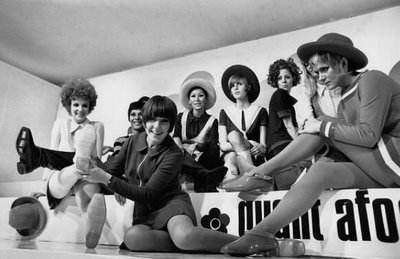
Mary Quant and models wearing the mini skirt
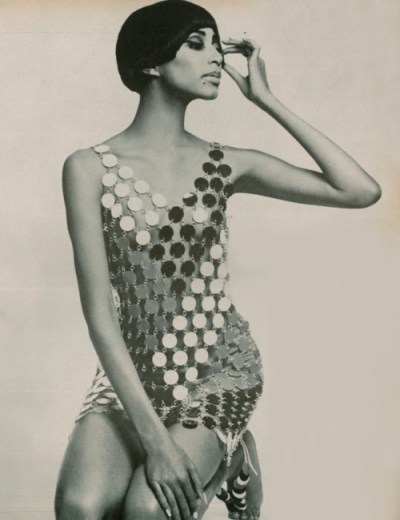
Donyale Luna in Paco Rabanne dress, 1966. Photograph: Guy Bourdin

KBH: What are some of the other objects in the exhibition?

CZ: There are over thirty objects and mixed media throughout the exhibition, and that includes tear sheets, videos, garments and accessories. The garments and accessories are pulled exclusively from the Museum at FIT’s extensive collection of over 50,000 objects. Objects selection was one of the most fun and probably, at the same, the hardest. MFIT has such a vast collection of 1960s fashion and there are so many designers, so it was really a matter of pin pointing who were the most influential designers, and how can we display key concepts with the eleven mannequins we have.

TJ: Half of the garments on display were never before exhibited, so it was a wonderful opportunity to juxtapose mass market items that seem very humble, but they tell an important part of the story of the mass production and they are made of fabulous materials. One of my favorite items are the Miss Wonderful boots, they are tight-high vinyl bright yellow boots, they actually look like they are still wet. They really show you in a snap shot how short the skirts are getting, how the emphasis is on leg, and how materials like plastic is now heralded for what it is, it’s something desirable, it’s not replacing leather it’s actually what people want to wear.
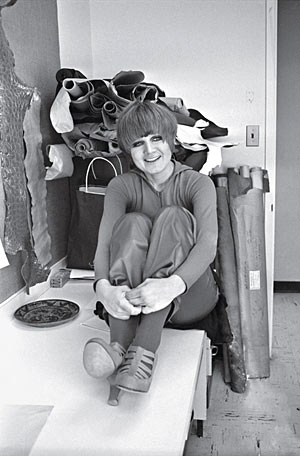
Betsey Johnson. source: halfaplanet.com

CZ: This idea of new, unorthodox materials being introduced into fashion was something that was an innovation of these young youthquake designers. You are seeing all these concepts that are originating with this new generation of young designers who were coming straight from art colleges, and fashion design schools and bypassing traditional  apprenticeship programs and opening their own businesses, they have small overheads, inexpensive shops to rent, so they are proving to be breeding grounds for innovation. You have all these radical new styles, like mini skirts and pant suits for women, as well as these introduction of unorthodox materials in fashion. We were very fortunate to interview Betsy Johnson who started her career at 21, she was hired as in-store designer for New York’s groundbreaking Paraphernalia boutique. She really is known for her innovative use of material, using plastics and metals. She says that this was the most exciting time of her work life.
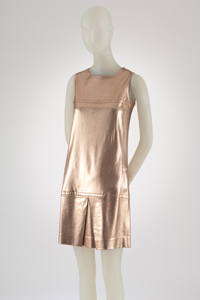
Paraphernalia, dress, copper lamé knit, circa 1967, USA, gift of Mrs. Ulrich Franzen. The Museum at FIT

Please visit us again in two days to read the rest of the interview

Posted in Exhibition, interviews | Tagged , , , , , , , , , , , , | 3 Comments

Then & Now

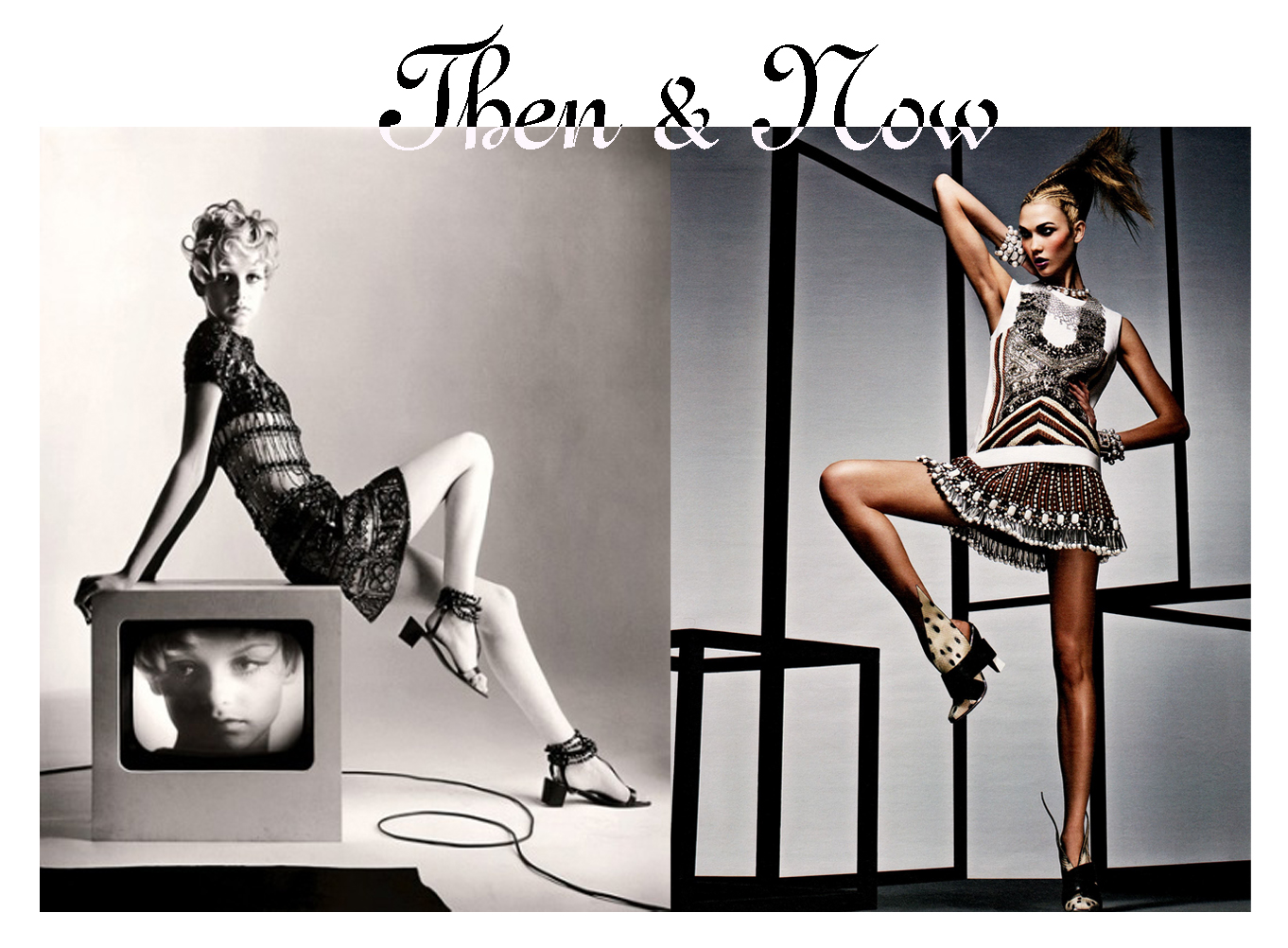
(left) Twiggy in Yves Saint Laurent, Vogue, March 15, 1967, photographer: Bert Stern. (right) “Drama Queen,” W Magazine, April 2012, Karlie Kloss in Marni, photographer: Craig McDean, styling: Lori Goldstein.

Posted in Then&Now | Tagged , , , , , , , , , , , | Leave a comment

March Treasure of The Month- André Studios

I am especially thrilled to introduce this month’s treasure, as I was one the many who worked on this wonderful project. This is a collaboration between the Picture Collection of The New York Public Library  and FIT’s Special Collections. It consists of a vast collection of original, hand-colored fashion illustrations from André Studios, a design studio that sold fashion sketches to clothing manufacturers in the US and Canada. From 1930 through the early 1970s they produced about 20 sketches weekly, mostly of children’s coats, and ladies coats and suits. The first decade of the company is showcased on a website that was recently launched. The digitized sketches are searchable by subject (for example collar, pleats, dress, etc.) or by collection (FIT or NYPL). Below is just a small taste of what you should expect to find when you browse this terrific site.
Coat with fur collar and animal faces on shoulder. Designer:Pearl Levy Alexander. Winter 1933 André Fashion Illustrations from FIT's Special Collections

The site explains that André Studios was a sketch subscription service for garment industry professionals, with offices located at 570 Seventh Avenue in New York City. The company was founded by designer Pearl Levy and her business partner, salesman Leonard Schwartzbach, sometime during the year 1930. André Studios was one of the many design services that copied or adapted existing designs, especially of couture models from Paris.

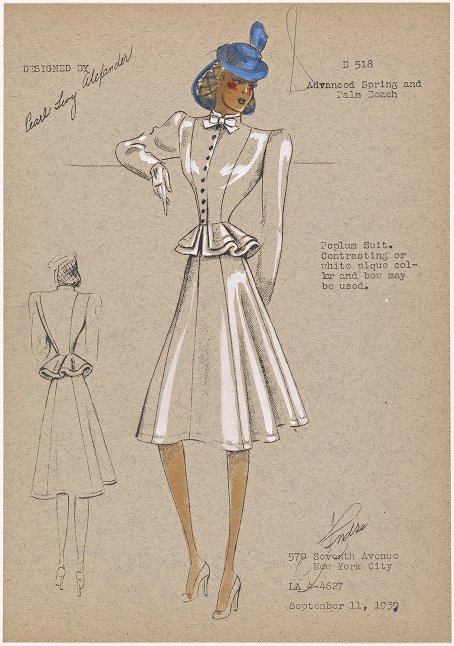
Peplum suit.Designer: Pearl Levy Alexander. Spring 1939. André Fashion Illustrations from NYPL Picture Collection

The volume of the collection of André Studios sketches reveals how a whole industry operated in NY, and underlines the dependence of the American market on Paris imports, pre- World War II.  The collection is a major primary source for students, scholars and researches of fashion history in general, and of the American garment industry in particular.

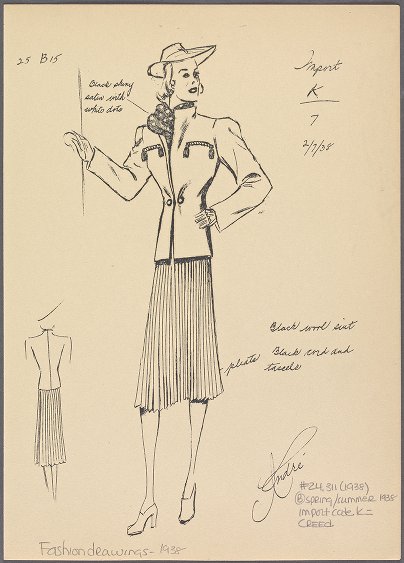
Black wool suit. Designer: Pearl Levy Alexander. Spring/Summer 1938. Adaption of Creed design.André Fashion Illustrations from NYPL Picture Collection

If you wish to learn more about André Studios, the growing NY garment industry  in the 1920s and 30s, and the copying of Paris couture models, the website offers this fascinating paper.

Coat with triangle buttons.Designer:Pearl levy Alexander.Winter 1934. André Fashion Illustrations from FIT's Special Collections.

Short straight coat. Designer: Pearl Levy Alexander. Spring/Summer 1938. NYPL Picture Collection

Colored sketch and newspaper clipping of Arnold Constable's ad for cape suit. October 1936. 1937-1939 Scrapbooks-Spring/Winter. André Fashion Illustrations from FIT's Special Collections

Colored sketch and Look magazine ad for dark fur cape. August 1 1939. 1937-1939 Scrapbooks-Spring/Winter
André Fashion Illustrations from FIT's Special Collections

The Department of Special Collections is and FIT Archives acquires, preserves, and provides access to a wide range of primary research materials in their original formats, including archives, scrapbooks, oral histories, fashion sketches, illustrations, books, journals, and other items. Subjects include the apparel industry, fashion and regional costume, textile design and the textile industry, the FIT Archives, and, to a lesser extent, art, architecture and interior design. Department personnel are committed to supporting research by FIT students and faculty as well as designers and researchers from the apparel and textile field, other industry professionals, and scholars.

Posted in Research, Treasure of the Month | Tagged , , , , , , , , , , , | 3 Comments