Exhibition Review: Fortuny y Madrazo: An Artistic Legacy

Red, aqua and gold surround visitors at the Queen Sofia Spanish Institute, punctuated with swirls of silk turbans and gowns of apricot and cornflower blue. All is framed by Fortuny fabric, paintings, photographs and Fortuny lamps.

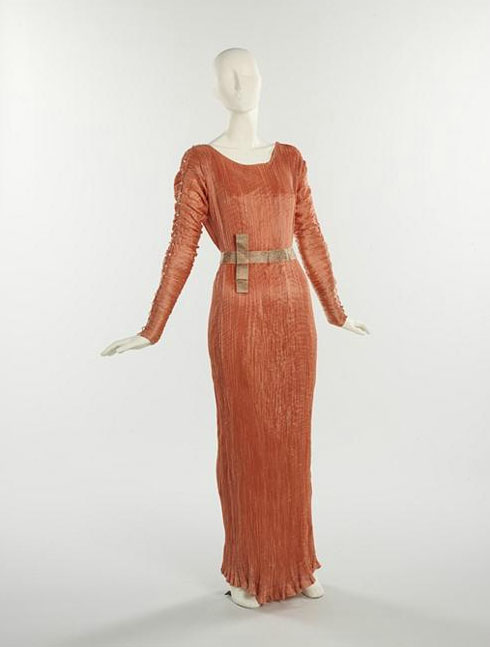
A Delphos dress greets visitors; it is Fortuny’s most familiar design, which he based on the chiton, a linen garment worn in Classical Greece. With its pleats and soft, columnar shape, Fortuny used the Delphos dress as a caryatid to visually support the patterns on his more substantial robes and scarves. These dramatic patterns, like the timeless silhouette of Delphos gown, recalled the past but were both a product of Fortuny’s innovative textile design methods; the complex technique Fortuny used to create the pleats is still not fully understood.

Fortuny, Mariano. Delphos dress, c1930. Peach pleated silk gown with Venetian clear glass beads. From the Collection Brooklyn Museum Costume Collection at the Metropolitan Museum of Art, Gift of the Brooklyn Museum, 2009.

Fortuny y Madrazo, Mariano. Delphos dress, circa 1930. Peach pleated silk gown with Venetian clear glass beads. From the Brooklyn Museum Costume Collection at the Metropolitan Museum of Art.

Mariano Fortuny y Madrazo (1871 – 1949) was an artist, an innovator, and a collector. His hand-printed textiles and iconic Delphos dress are steeped in the patterns and designs of the past, recreated with a romantic and initially shockingly feminine shape.  Fortuny y Madrazo: An Artistic Legacy links his work in fashion to the past while sharing Fortuny’s contributions to modern fashion design.

Hailed as an artist who painted fabrics, Fortuny’s artistic heritage shares much of the exhibition space. Etchings, photographs, and paintings represent an artistic legacy that began with Fortuny’s great grandfather, José de Madrazo, whose portrait of Ingres hangs beside the work of his son, Federico de Madrazo, a central figure in Spanish Romanticism. Fortuny’s photographs of his time in Morocco, in Greece, and in Egypt pair well with his designs, and evoke a similar turquerie style and mood to his fashion photographs on display in the second gallery.  In these photographs, a woman poses artistically to record Fortuny’s Delphos design.

Oh, the many variations of Delphos gown! Fortuny disregarded fashion trends, instead created gowns of a similar style for over twenty years for clients like the Marchesa Casati, Isadora Duncan, Gloria Vanderbilt, and others. He designed the gowns in a multitude of colors, including soft pastels and the deepest jewel tones. Most striking are the small finishing details of each dress, like the delicate Murano glass beadwork that follows the edge of a neckline or a side slit. These details complete the first layer of Fortuny’s signature look, which was only complete with the addition of a colorful patterned scarf or robe.

The patterns of the scarves and aljubas used as Fortuny’s canvases recall Sassanian motifs and designs from the Islamic and Coptic worlds. The kimono sleeves, the silk velvet, and the deliberately faded garments are both opulent and dramatic; one can imagine their fluid lines taking the shape of the women who wore them as they walked, talked and danced through elegant soirees, as gathered robes billowed at the smallest step, sleeves moved at the slightest wave of  a hand, and metallic patterns shimmered with every turn. Fortuny’s recreated designs reveal our own fascination with the past, they reveal the glamour we place on the ephemeral.

Fortuny y Madrazo: An Artistic Legacy will be at the Queen Sofia Institute until March 30, 2013.

Queen Sofía Spanish Institute
684 Park Avenue
New York, New York 10065
T 212-628-0420

Gallery hours:
Monday–Thursday 10am–6pm
Friday 10am–8pm
Saturday 10am–5pm

Posted in Exhibition | Leave a comment

These Boots Are Made For Walking?

Our exhibition, Boots: The Height of Fashion, opened on March 4. And now comes the video… the talented Alex Joseph and Fiona Tedds, went out to the street, to find out how women today feel about their boots.

Huetoo, FIT’s Alumni Magazine’s blog, also posted it today, with some pretty witty commentary.

If you are in New York come see our exhibition!

Posted in Exhibition | Tagged | 1 Comment

Lady of the Daisies

I have mentioned here and here that for quite some time I have been researching the history of the luxury beachwear brand Gottex, and specifically the work if its founder and designer of many years Lea Gottlieb.

Lea Gottlieb 1919-2012

Lea Gottlieb 1918-2012, co-founder Gottex

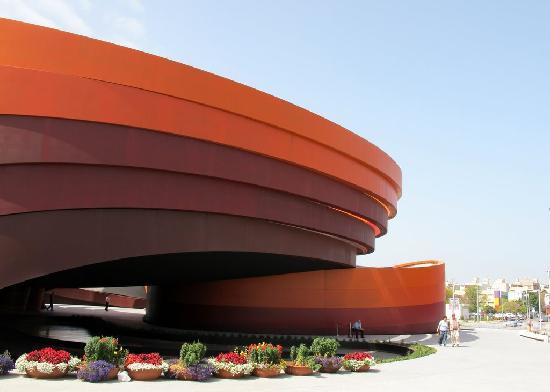
I am thrilled to share with you that Design Museum  Holon in Israel is having an exhibition in tribute to this great lady. I had the privilege and honor to contribute research and writing to the history portion of the exhibition, curated by my mentor Ayala Raz. 

Design Museum Holon, designed by Ron Arad

Design Museum Holon, designed by Ron Arad

The exhibition, Lady of the Daisies, includes more than eighty objects from Gottex’s fifty years, as well as catalogs, advertisements,  photographs and personal material.   

Models: Nechama Lev and Louisephoto: Ben Lam

Models: Nechama Lev and Louise
photo: Ben Lam

In addition, I will be giving a talk in this year’s CSA Symposiumin Las Vagas, on Lea Gottlieb’s work. This will be my first time at the CSA Symposium, so I am very excited for the opportunity to share all that I have discovered in the process of writing my thesis.

I am grateful for the amazing people I have met on the way- Mrs. Gottlieb’s right hand for over thirty years Sisi Rosenblum , who has contributed so much to my research and was so generous in sharing her memories and knowledge, Ayala Raz, who has taught me so much in the ten years that I have known her, and of course to Lea Gottlieb herself, who opened her home to me, and created a complex and rich body of work, a true legacy to those who love beauty, art, culture and fashion. 


Lady of the Daisies: A Tribute to Lea Gottlieb 1918-2012. March 19 –   May 04, 2013. Pinhas Eilon St. 8 Holon, Israel


Posted in Exhibition, Symposium | Tagged , , , , , | 9 Comments

Boots: The Height of Fashion

banner

This coming Tuesday will mark the opening of the exhibition Boots: The Height of Fashion, curated by the students of our program in collaboration with the Museum at FIT.

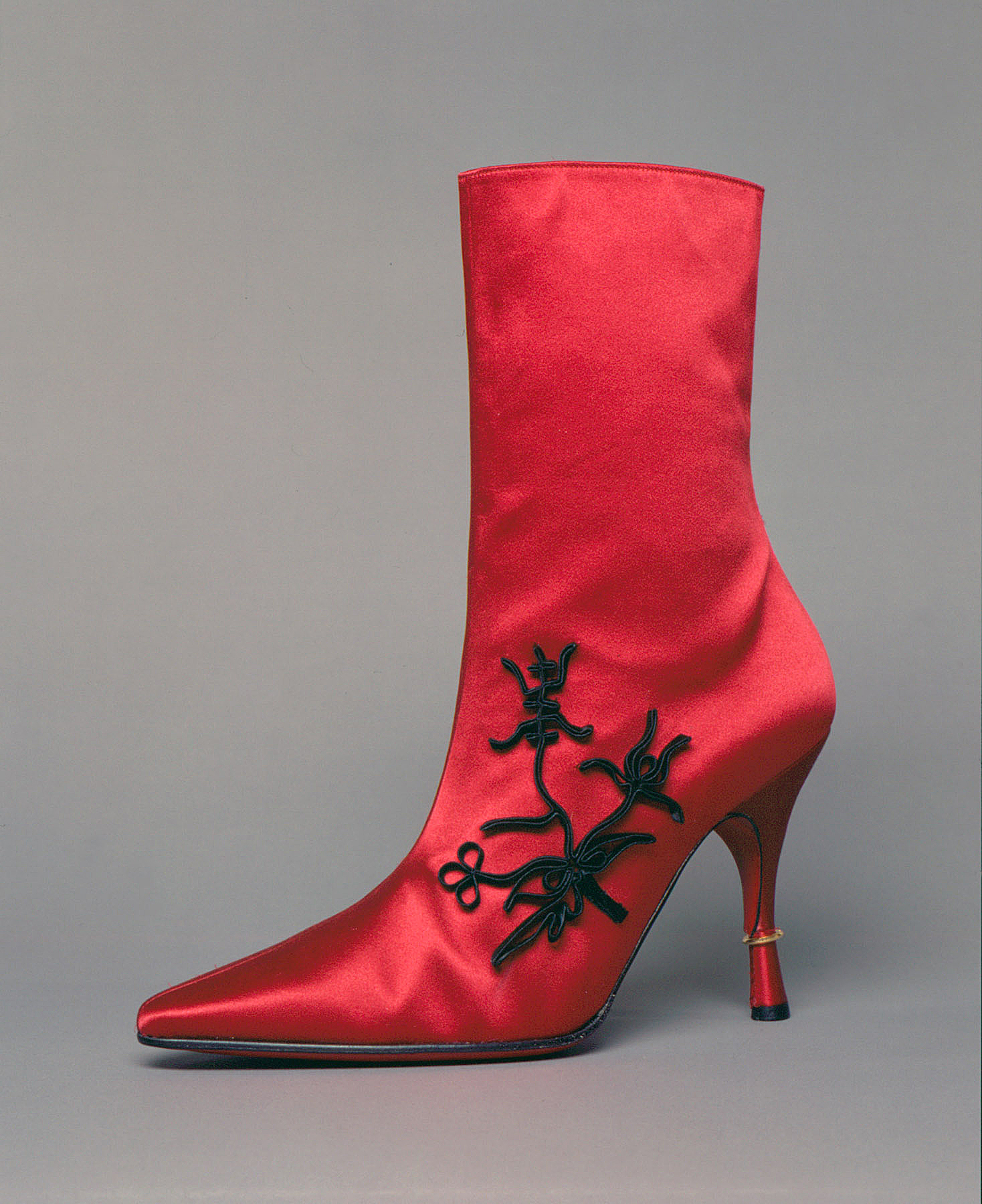
Satin evening boots by Christian Louboutin , fall 1994-95,France, MFIT, gift of Christian Louboutin

Satin evening boots by Christian Louboutin , fall 1994-95,
France, MFIT, gift of Christian Louboutin

The exhibition will feature twenty pairs of women’s boots from the Museum’s permanent collection, including designs of  innovators such as  Paul Poiret, Martin Margiela, and Christian Louboutin.

Walking boots by Jack Jacobus, c.1900, England,MFIT. gift of the Victoria and Albert Museum

Walking boots by Jack Jacobus, c.1900, England,
MFIT. gift of the Victoria and Albert Museum

In addition, for the first in the history of the graduate students exhibitions, Boots: The Height of Fashion, includes a special section which offers visitors behind-the-scenes view of the practices involved in choosing, preserving, and preparing boots for exhibition. 


To learn more about the exhibition, here is the press release

Boots: The Height of Fashion
Gallery FIT
March 5 through April 6, 2013

Seventh Avenue at 27th Street
Tuesday-Friday: noon-8 pm
Saturday: 10 am-5 pm
Closed Sunday, Monday, and legal holidays
Admission is free and open to the public


Posted in Exhibition | Tagged , , , , , , | 1 Comment

Foundations in Vogue:1953-1963

The third post in the series of Fashion Photography. Read Landis Lee’s post on the innovative street photographer Edward Linley Sambourne  and Kathryn Squitieri’s post on street-style fashion photography before 1920.

By Larissa Shirley King

Foundation garments are functional undergarments, which mold the wearer’s body into the fashionable shape of the time. These garments include corsets, brassieres, girdles, “waspies,” and “all-in-ones.”

During World War II, the production of foundation garments was severely restricted in the United States and Great Britain, due to the amounts of steel and rubber used in their manufacture.[1] After the war ended, they rose to fashionable prominence, thanks to the ultra-feminine wasp-waisted silhouette of Christian Dior’s “New Look” of 1947.[2] While the desired effect of these undergarments was to give a corseted hourglass look, new stretch fibers such as Lastex (introduced in 1929) and Lycra® (introduced in 1959)[3] made these twentieth century garments far less rigid than the boned coutil corsets of the nineteenth century.

One of the most fascinating things about looking at fashion photography featuring foundation garments is how explicitly the shifting shape of the fashionable body is communicated to the viewer. In many lingerie editorials, the editor will describe the new proportions that these undergarments will help you achieve in order to attain the ideal figure of the moment.

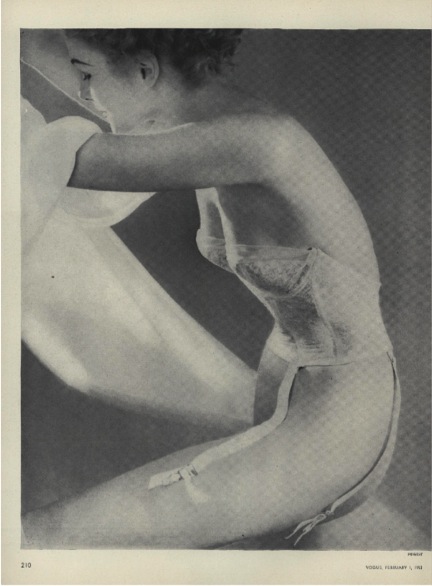
In the February 15, 1953 Vogue editorial, “For the New American Fashions: New Framework , photographer Roger Prigent has posed the model in profile, forming an arc with her body. This C-shaped pose creates the fashionable body by rounding the model’s shoulders, and emphasizing the curves from bust line into waist and back out to hip. The roundness of the pose also shows off the features of the garment itself—the model’s exposed back, shoulders and décolleté are emphasized in her strapless, low-back brassiere.

 Roger Prigent, For the New American Fashions: New Framework, Vogue, February 1, 1953, 210.

Roger Prigent, For the New American Fashions: New Framework, Vogue, February 1, 1953, 210.

It is also interesting that the model appears to be wearing nothing else with her strapless low-back brassiere. The garter straps follow her leg, as if they are attached to stockings, but the stockings are nowhere to be seen. The only other accessory in the photograph is a draped piece of fabric, which forms a diagonal in the frame and wraps around the model’s arm. This piece of drapery also serves to draw the eye to the sharp curve of the model’s waist.

In the May 1, 1958 Vogue editorial, “Shape Revolution—From Within,” photographer Jerry Schatzberg has also posed his model in profile, in a modified C-shape. Again, this pose serves to deemphasize the shoulders, and emphasize the waist. However, this much more playful, standing pose with one leg out is also serving to communicate the swingy flare of the model’s “trapeze” petticoat, which according to the accompanying description, “hold[s] the line from side to side (the trapeze swing), without puffing it fore and aft.”[4]

Jerry Schatzberg, Shape Revolution—From Within, Vogue, May 1, 1958, 179.

Jerry Schatzberg, Shape Revolution—From Within, Vogue, May 1, 1958, 179.

Showing the model in profile also communicates the story of the new shape in brassieres, which “soften and round the bosom line” with “subtle young shaping.”[5] The apex of the model’s bustline is considerably lower than it was in photograph from 1953, and has a slightly more “natural” proportion.

The March 15, 1960 Vogue editorial, “The New Thread of Weightless Matter,” photographed by Italian photography team Leombruno-Bodi featured girdles paired with helium balloons. The fashion news in this editorial was Lycra® spandex, the new, lightweight synthetic elastomer fiber. To illustrate how lightweight these garments were, the central photo pictures a panty girdle tied to a helium balloon, floating in the Manhattan skyline. The models in this spread continue this theme. They are each holding a bunch of helium balloons and looking skyward. These models are slimmer and straighter than those in the 1950s, and have smaller bust lines.

Leombruno-Bodi, The New Thread of the Weightless Matter, Vogue, March 15, 1960, 136-137.

Leombruno-Bodi, The New Thread of the Weightless Matter, Vogue, March 15, 1960, 136-137.

Lycra® spandex was a revolutionary development in undergarments. According to Eleri Lynn, Lycra® spandex is “three times more powerful than previous elastics with twice the recovery power.”[6] These fibers make foundation garments capable of firm yet flexible shaping without excessive weight. The accompanying text to this editorial claims that the combined weight of the nine brassieres and girdles featured in the editorial was only one and three-quarters pounds.

In the February 15, 1963 Vogue editorial, “The New Curve in Lingerie”, this humorous photograph by Louis Faurer appeared. The model is posed standing straight, while holding the Sunday comics open, obscuring her face and upper body. All that is visible from the waist-up is a hand, an elbow, and the top of the model’s head. This helps to draw the eye to the garment being modeled, a lightweight, Lycra® spandex power net panty girdle.

Louis Faurer, The New Curve in Lingerie, Vogue, February 15, 1963, 100.

Louis Faurer, The New Curve in Lingerie, Vogue, February 15, 1963, 100.

The colorful comic strips on the newspaper echo the quirky multicolor confetti print on the panty girdle, which according to the accompanying text should be worn with “skimmy clothes—possibly southern clothes.”

The straight, crossed-knee pose of the model emphasizes the slim, youthful body, which was fashionable at the time. The introduction to the editorial describes the 1963 body as “[n]arrow but rounded, substantial, but at the same time slight, the body is the figure of the moment, and its condition, not its set of proportions is what interests.”[7] Along with the foundation garments, fitness was the focus of this spread, and exercise tips accompanied each photograph, so that the reader could firm up what her girdle couldn’t cover. This foreshadows fashion’s abandonment of girdles and most other foundation garments through the late 1960s and 1970s.


[1] Valerie Steele, The Corset: A Cultural History (New Haven : Yale University Press, 2001), 157.

[2] Ibid, 158.

[3] Eleri Lynn, Underwear Fashion in Detail, (London : V & A Publishing), 2010, 221.

[4] Shape Revolution—From Within, Vogue, May 1, 1958, 179.

[5] Ibid.

[6] Eleri Lynn, Underwear Fashion in Detail, (London : V & A Publishing), 2010, 110.

[7] “The New Curve in Lingerie,” Vogue, February 15, 1963, 98.
Posted in Research | Tagged , , , , , | Leave a comment

The Art of Exhibiting Fashion History- Part I

La Belle Époque: The Art of Exhibiting Fashion History at the Costume Institute of The Metropolitan Museum of Art

By Janet Lee

“Now I was born in the heart of the Belle Époque.  I was born in Paris.  I was born on the avenue Bois.  I mean, everything was on my side to know about it, but I was young.  I just remember the most wonderful excitement all the time and the most beautiful people.”

Diana Vreeland, La Belle Époque (1890-1914) VHS, 1983

1343662606_6082_22_cover

La Belle Époque, the beautiful era, so deemed by those who lived and recalled it, occurred at the turn of the 20th century, when rapid and dramatic changes in capitalism and technology fostered a culture of exalted extravagance.  Haute couturiers of the period designed gowns that made women sparkle as brilliantly as the electric lights that beckoned the bourgeoisie through the night streets of Paris.  All art, attention, and wealth seemed dedicated to the pursuit of beauty and thrill.

Although Diana Vreeland (1903-1989) was only a child during this period, her allegiance to the Belle Époque was life-long and expressed through her exhibitions with The Costume Institute of The Metropolitan Museum of Art.  An examination of the 1983 exhibition La Belle Époque (1890-1914) will illustrate how Vreeland was concerned less with exhibiting historic costume but with honoring her memory of the era.

vreeland portrait

A portrait of Diana with costumed mannequins before the installation of the exhibition La Belle Époque (1890-1914), 1982. Photograph by Patrick Demarchelier.

La Belle Époque (1890-1914) began its extensive nine-month run in the galleries at the Costume Institute of The Metropolitan Museum of Art on December 6, 1982.  The exhibition checklist listed Stella Blum as Curator with Diana Vreeland as Special Consultant who “conceived and organized”[1] the exhibition. The exhibition consisted of eight separate spaces and exhibited one hundred-fifty dressed mannequins, over three hundred objects in total.

LBE Maxims

A view of the first gallery space, “Large Maxim’s Gallery,” 1982

While nothing can compete with experiencing the exhibition first-hand, the checklist and installation photographs provide a sense of Vreeland’s grand vision.  In addition to what is visible and listed, the exhibition also included accompanying music and its own perfume “l’Heure Bleue” by Guerlain.[2]  Vreeland spared no expense and made use of painted backdrops, floral wallpapers, custom-made accessories, potted plants, and dog figures for a fully immersive experience.

LBE Newport

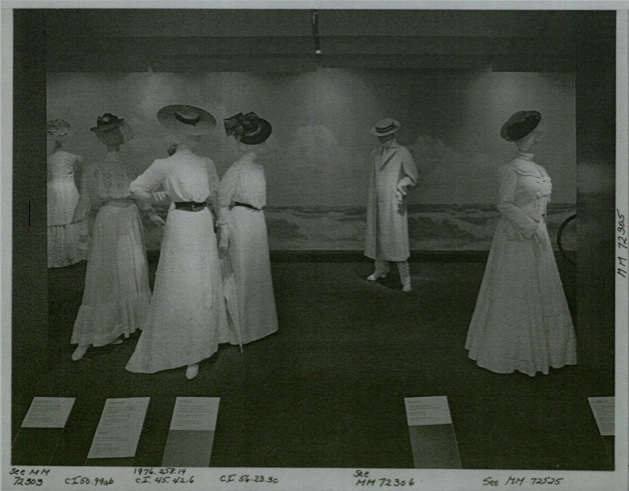
A summer scene from the “Newport/Bois de Boulogne” gallery, 1982.

Through a series of elaborate vignettes, Vreeland lead visitors on a tour of Paris’ social highlights during the Belle.  Entering the first gallery “Large Maxim’s Gallery, ”visitors found themselves in a reconstruction of the restaurant Maxim’s displaying winter garments dated from 1890 to 1910.  After leaving the swank interior, the gallery “Newport/Bois de Boulogne” exhibited scenarios of outdoor recreation in summer fashions primarily from 1900 to 1903.  From the promenade there were two wallpapered galleries the “Ballroom (Green Wallpaper Gallery)”and the “Floral Wallpaper Gallery”  filled with evening gowns from the turn of the century.  The galleries “Small Maxim’s Gallery” and “Blue Gallery/Vitrine”  showcased gowns from the end of the period.   In his review of the exhibition for the New York Times, John Duka claimed that “re-creation of period has never been more complete,” and that the investment to décor was “the perfect foil for the … costumes… that serve as a decorous guide through a period.”[3]

Aviewofthe“FloralWallpaperGallery,”	1982.

A view of the “Floral Wallpaper Gallery,” 1982.

In the midst of preparing for La Belle Époque (1890-1914), her penultimate exhibition, Vreeland began writing her memoirs with editor George Plimpton.  Born in 1903, she claimed she spent her childhood years surrounded by the cultural elite of the period.  She described how Paris gave birth to and enriched her love of fashion.

You don’t get born in Paris to forget about clothes for a minute.  And what clothes I saw in the Bois!  I realize now I saw the whole beginning of our century there.  Everything was new.[4]

While she did have first-hand experience of the period, she was only a child.  Yet according to Plimpton “whenever she talked about someone she gave the most accurate descriptions of what that person was wearing.”[5]  Still fashion for Vreeland was more than just clothes but lifestyle, charisma and inner-strength as well.

Aviewofthe“FloralWallpaperGallery,”	1982.

A view of the “Floral Wallpaper Gallery,” 1982.

For La Belle Époque (1890-1914) Vreeland was less dedicated to the garments themselves but to the personalities that wore them.  She managed to track the fur coat that Proust wore summer and winter to a Paris storage, where it had been wadded up and nearly forgotten, only to be told that if it were to be exhibited, its first appearance probably should be in France.

 But Mrs. Vreeland has persevered, clinging to her worn copy of “Swann’s Way,” and she expects to have 150 costumes, including dresses that belonged to Queen Alexandra of Britain, Sarah Bernhardt, Eleanora Duse and the Countess Greffulhe, one of several of the more conspicuous consumers upon whom Proust drew for his fictional Duchess de Guermantes.[6]

Vreeland did work her contacts and requested over one hundred-thirty objects to borrow, although the majority of the requests were for jewelry, accessories and posters.  Of the forty-three articles of clothing included in her requests, the majority came from the Brooklyn Museum, the Musée de la Mode et du Costume, and from private costume collector Umberto Tirelli.  While many were worn by famous society, not every garment was necessary in representing a period in history.  Vreeland stayed loyal to her memories of the glamorous people of her youth as she curated her exhibition.

Aviewof“SmallMaxim’sGallery,”1982.

A view of “Small Maxim’s Gallery,” 1982.

The New York Magazine’s dishy article described in detail Vreeland’s notoriety within the Costume Institute and the MET for being fluent in fashion but ignorant in history.[7]  She did honor the fashionable silhouettes of the period but did not let historical details dictate her decisions.  The accurate dressing of the mannequins was probably due to vigilant museum preparators.[8]  Clearly visible in her portrait seen at the beginning of the post, was her abstracting of the exhibition’s mannequins with different colors and textures and by “veiling” them with stockings or net.  These treatments distanced the costumes from their roles as historic representations and elevated them to dramatic objects of art.

Aviewof“BlueGallery/Vitrine,”1982.

A view of “Blue Gallery/Vitrine,” 1982.

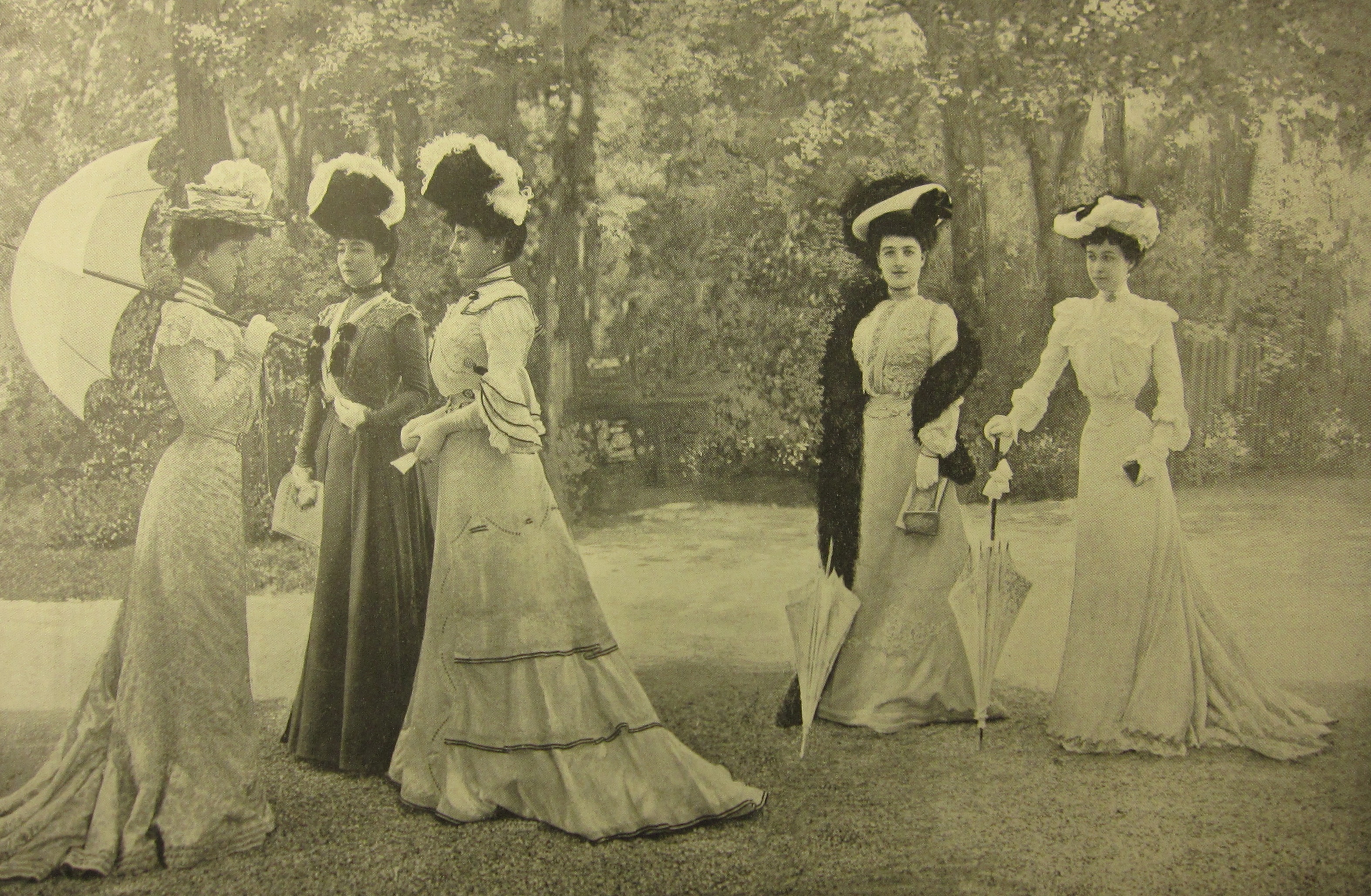
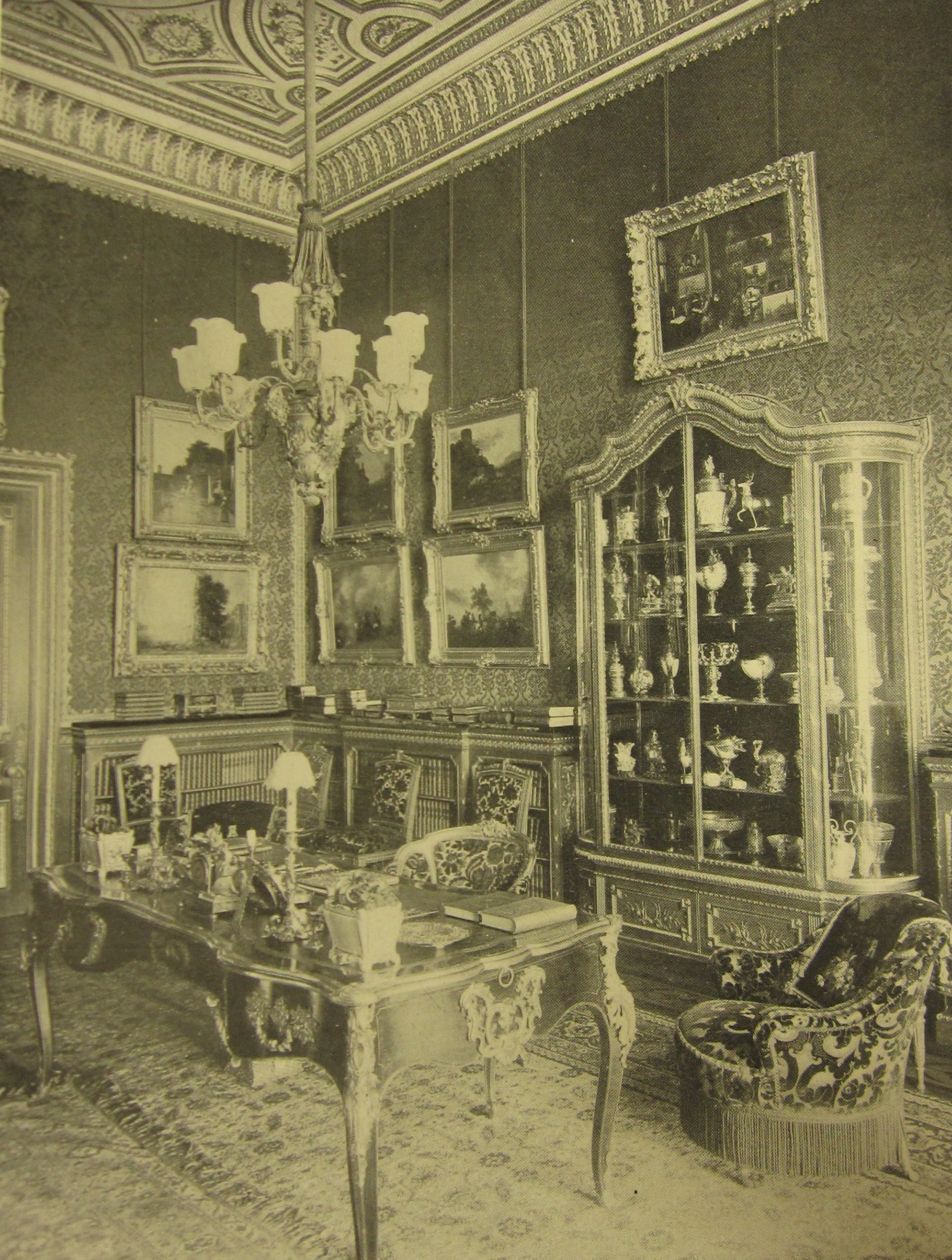
For her larger gallery treatments Vreeland kept faithful to her available primary sources, which outside of her memories included fashion plates, fashion photography, and paintings from the era.  Her use of painted landscapes in the “Newport/Bois de Boulogne” gallery mimicked fashion photographs of women in promenade  as well as the painted backdrops used in many fashion portraits published in Les Modes.  Her inclusion of graphic floral wallpaper, gilt frames and potted plants emulated the elaborate interiors she may have visited as a child. Interestingly her treatment of the gallery “Blue Gallery/Vitrine,” which exhibited 1912-1914 fashions, was less developed.  This lack in detail again relates how La Belle Époque (1890-1914) was based on Vreeland’s personal story.  By 1914 she left Paris with her family for the United States to evade World War I.

aux courses

“Aux Courses,” 1901. Retrieved from Les Modes (June 1901)

halton

“Halton – Le Salon Rouge,” 1901. Retrieved from Les Modes (September
1901),

Vreeland worked to create plot and character in her galleries.  She relied on the paintings that hung throughout the exhibition to represent the lives lived during the Belle Époque and the people and personalities she aimed to conjure.  They provided the exhibition with another dimension of drama, gesture, and human engagement.

The street photographs of Edward Linley Sambourne, although not a resource available to her then, probably depicted a version of Belle Époque fashion closest to Vreeland’s vision.  Vreeland’s descriptions of life by the Bois de Boulogne brought to mind whirlwinds of movement and vitality.  Unlike the women in fashion plates and photographs who stood stiff and rigid, the women in Sambourne’s photographs walked erect but brisk and engaged with each other.

Vreeland attempted to replicate these human qualities and instill her galleries with movement by editing the mannequins, their postures, and their proximity to each other.  One of her more engaging scenarios in “Newport/Bois de Boulogne”  depicted a woman in a motoring coat considering a child carrying a flamingo and trailed by her caretaker.  The three women in back were in the process of turning around and seem huddled in conservation.  She arranged the mannequins in close groups to suggest these human moments, unconcerned that these placements prevented visitors from seeing the costumes.   By placing the mannequins on low platforms and in gallery-large vignettes, Vreeland forced visitors to be active participants and relate to the mannequins as well.

Anengagingvignettefrom“Newport/BoisdeBoulogne.”

An engaging vignette from “Newport/Bois de Boulogne.”

Vreeland was acutely aware that she presented a subjective version of the Belle Époque.  The young girl holding the flamingo symbolized herself as a child and “her own world of childhood, ill remembered but nonetheless vivid in reflection.”[9]  By alluding to Lewis Carroll’s character Alice, she whimsically alerted viewers to the fantasy incorporated into this exhibition of historic costumes.

Vreeland understood the power in negating the barrier between fashion and reality, and while she was not the first to bring spectacle to the galleries at The Metropolitan Museum of Art, her work resuscitated public interest in the Costume Institute.[10] Vreeland’s legacy and influence has been evident in fashion exhibitions held by the MET’s Costume Institute within the recent years. Her La Belle Époque (1890-1914) marks a change in the treatment of costume in exhibition, when costumes are no longer mere representations of a period in history but mediums in fulfilling a curator’s vision.

Please come back next week, as Janet continues to examine how other exhibitions at the MET’s Costume Institute have exhibited the fashions of La Belle Époque.


[1] Jesse Kornbluth, “The Empress of Clothes,” New York Magazine 15, no. 47 (November 29, 1982). http://books.google.com (accessed December 16, 2012).
[1] Paul M. Ettesvold, La Belle Époque, Exhibition Checklist (New York: Metropolitan Museum of Art, 1983), 23.
[2] Ibid, 22.
[3]John Duka, “La Belle Europe Reigns Again a Met Museum,” New York Times (December 7, 1982). www.nytimes.com (accessed December 16, 2012).
[4] Diana Vreeland, D.V., eds. George Plimpton and Christopher Hemphill (New York: Alfred A. Knopf, 1984), 13.
[5] Eleanor Dwight, Diana Vreeland (New York: Harper Design, 2011).
[6] Charlotte Curtis, “Diana Vreeland’s Way,” New York Times” (September 14, 1982). www.nytimes.com (accessed December 16, 2012).
[7] Jesse Kornbluth, “The Empress of Clothes,” New York Magazine 15, no. 47 (November 29, 1982). http://books.google.com (accessed December 16, 2012).
[8] Ibid.
[9] Richard Martin and Harold Koda, Diana Vreeland: Immoderate Style, (New York: Metropolitan Museum of Art, 1993), 25.
[10] Jesse Kornbluth, “The Empress of Clothes,” New York Magazine 15, no. 47 (November 29, 1982). http://books.google.com (accessed December 16, 2012).


Posted in Exhibition, Research | Tagged , , , , , , , | 1 Comment

The Art of Fashion Illustration

This is a guest post by Lucinda Bounsall, fashion writer at farfetch.com

Twiggy by David Downton

Twiggy by David Downton

Throughout the 1900s everything from pencil and ink drawings to paintings and screen prints graced the front covers of some of the world’s most well renowned and revered fashion magazines including Vogue and Harper’s Bazaar. Historically, in a time before cameras, fashion illustration was one of the only means for designers to visually communicate their ideas to the public. Fashion illustration lived in a brilliant equilibrium that married design necessity and works of art that perfectly captured the esprit of their time. But what place does fashion illustration have now in a culture that is saturated with photographic editorials and digital image manipulation?

We take a brief look back into the history of the art that is fashion illustration from its inception to the present day, explore its purpose and take a look at some influential fashion illustrators from Charles Dana Gibson all the way up to David Downton.

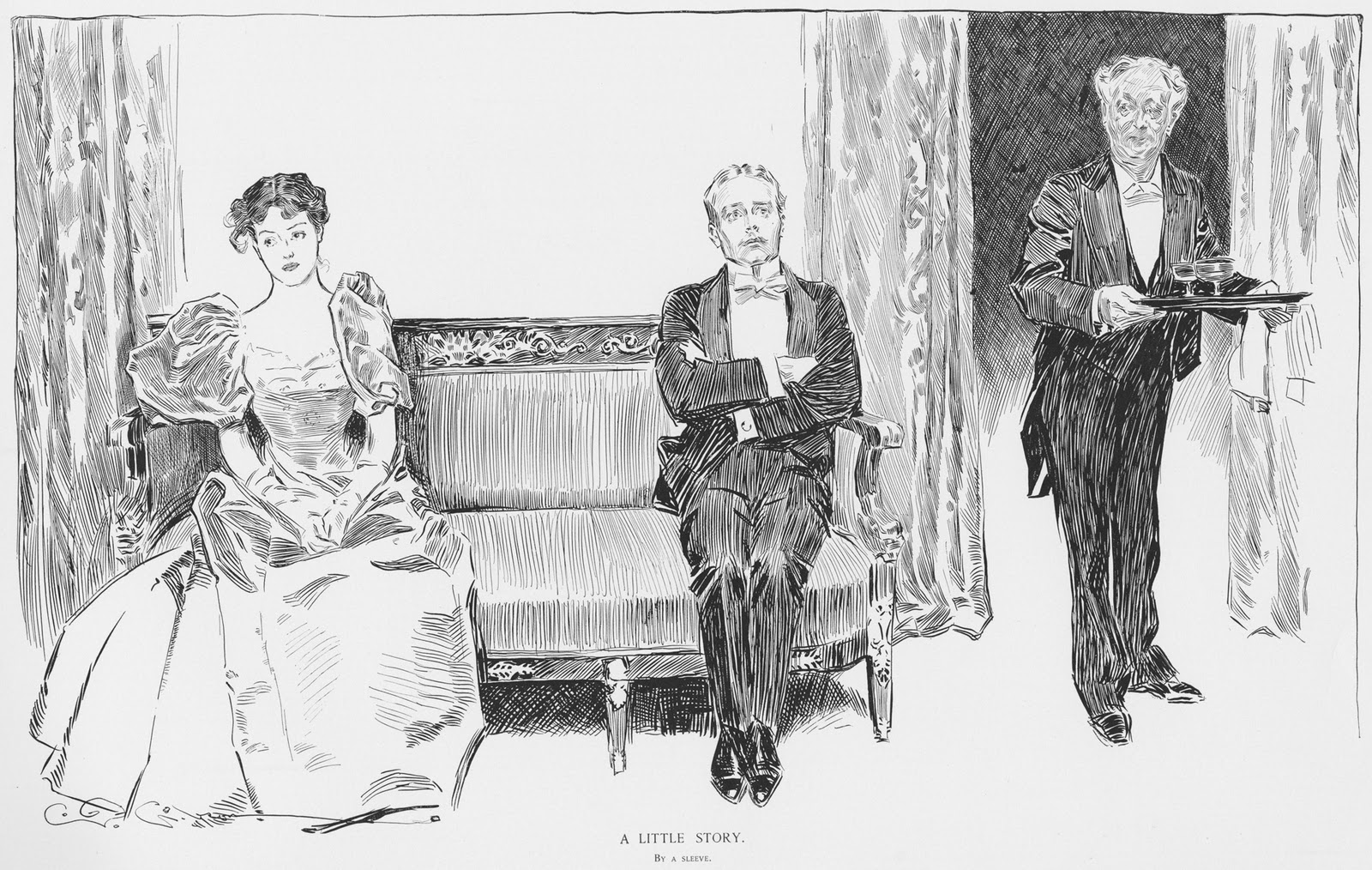
Pictures of People by Charles Dana Gibson

Pictures of People by Charles Dana Gibson

Fashion illustration has been around for the past 500 years; throughout history clothing and costumes have always been documented through drawings but it came into the forefront of the public conscious when illustrations started to be featured on front covers of aspirational fashion magazines. In the late 1800s and into the early 1900s these drawings reflected the society in which they were created; they included stiff figures; corseted and draped in layers of the clothes of the upper class. These early fashion illustrations were used as vehicles to perpetuate an ideal stereotype of ‘the fashionable man and woman’.

One of the most notable illustrators of this time was Charles Dana Gibson the creator of the eponymous ‘Gibson Girl’.  The Gibson Girl was the personification of the ideal of feminine beauty; she was a member of the upper echelons of society and was depicted as always wearing the most fashionable clothes of the time. Gibson was not a fashion illustrator per se but his girl soon became a standard which women would attempt to emulate.

 Vogue,  April 1926. Two robes designed by Coco Chanel.

Vogue, April 1926. Two robes designed by Coco Chanel.

By the beginning of the 1920s magazines such as Vogue and Harper’s began commissioning artists to illustrate features and covers, the covers of these magazines were considered as stand-alone works of art that rarely had any bearing on the content of the magazine. The style of these covers was light-years away from the stiff posed figures of their predecessors; the colours were vibrant and the figures flowed, with clothes that reflected the flapper style of their time. Designers such as Coco Chanel transformed how people viewed fashion illustration throughout the 1920s but as the war approached materials became less readily available and the concept of wearing expensive and elaborate clothes became vulgar and distasteful.

Illustrated cover of Vogue Magazine by Eduardo Garcia Benito – 1926

Illustrated cover of Vogue Magazine by Eduardo Garcia Benito – 1926


Vogue Magazine cover – October 1930 by Georges Lepape

Illustrated cover of Vogue Magazine, October 1930 by Georges Lepape


Cover of Vogue 1945 Illustrated by James de Holden-Stone

Cover of Vogue,1945 Illustrated by James de Holden-Stone

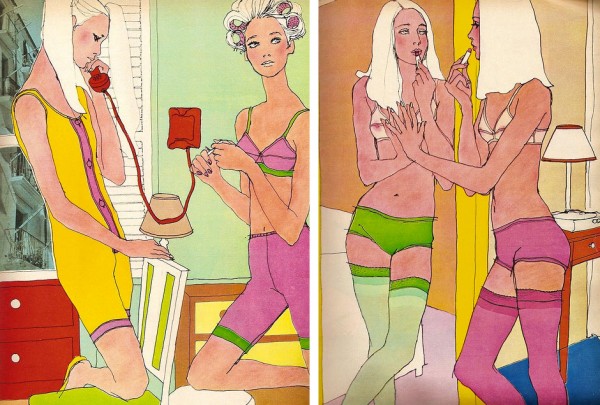
By the time the 1960s came about there was a huge shift in the public conscious, pop art was new bold and exciting, illustrations were instantly influenced by this culture shift and this can be seen through the vibrant use of colour and more creative and imaginative drawings embodied in the work of exuberant artist Antonio Lopez. Lopez, who came to be known as the Picasso of fashion illustration, worked with a wide variety of materials from pencil or pen to charcoal, watercolour or Polaroid and was often featured in the likes of Vogue, Elle and Interview Magazine.

Illustrations by Antonio Lopez for Elle Magazine 1967

Illustrations by Antonio Lopez for Elle Magazine 1967


The 1980s were represented evocatively through Tony Viramontes, who’s vibrant illustrations are still instantly recognisable today as they were twenty years ago. Viramontes’ work was identifiable by his bold and vibrant drawings layered over high-contrast photography; some of his most well-known work is from the album covers of the likes of Janet Jackson and Duran Duran.

Unfortunately as technology advanced the covers of Vogue and Harper’s were taken over by illustrations photographed counterparts. Editors soon realised that copies of their magazines sold better with photographs on the front and slowly but surely illustration started to lose popularity. Photography was responsible for the demise of fashion illustration but of course these illustrations were what influenced the photography that usurped it.

Portrait of Janet Jackson ‘Control’ By Tony Veramontes 1986

Portrait of Janet Jackson ‘Control’ By Tony Veramontes 1986


The heyday of illustrated fashion may have been over but it certainly wasn’t dead. For all of their creativity and beauty illustrations were shoved out of the limelight. Famous illustrator David Downton, who began his career in advertising and packaging, was commissioned to illustrate at Paris couture shows and In 2007 Downton launched the first ever journal completely dedicated to fashion illustration entitled Pourquois Pas?

David Downton – Alexis Mabille / Paris Coture July 2011

David Downton – Alexis Mabille / Paris Coture July 2011

So after being replaced by photographic imagery what place, if any, does fashion illustration hold in today’s society? Due to a massive rise in the use of online as a source to search and explore content it means that fashion illustration has not been doomed to extinction completely. Bloggers and online magazines have given a home to these beautiful images, this enabled illustration to become more expressive and creative and in 2012 there was a rise in the popularity of fashion illustration again. These images resonate of a charm and simplicity that highly manipulated photographs could not and illustration lent a sence of a relationship from the artist to the viewer that you could not get from a photo.

Illustration may never find itself back on the front covers of magazines like it was in it’s heyday but it’s staying power is a testiment  to it’s popularity within the fashion and indeed art world. Photography undoubtedly has the unparalleled capacity to capture its subject faithfully and exactly from its vantage point but as David Downton notes; illustration can ‘tell an alternative story and hold a mirror up to the times’.


Posted in Uncategorized | Tagged , , , , , , , , | 1 Comment

Street-Style Fashion Photography Before 1920

Last week we shared with you Landis Lee’s research on Edward Linley Sambourne, who may have been the original street fashion photographer. This week, on the same topic, here is another fascinating post by one of our students.

By Kathryn Squitieri

While most people think of “street” fashion photography as a phenomenon of the late twentieth and twenty-first centuries, in reality, the practice began in the late nineteenth and early twentieth century, the same time that fashion photography in general was beginning to be used to spread fashion news in the media. Periodicals during this time, particularly French ones like Les Modes and Femina, started featuring photos of fashionable women at society events, such as horseraces and garden parties, as a supplement to their stiff studio photographs of models or actresses posed in the latest couture designs. A few years later, around 1905, American magazines like Vogue and Harper’s Bazaar began publishing photos of “real” fashion as well, mostly taken at the French races at Longchamp, Auteuil and Chantilly.

Unknown Photographer, Toilettes á Auteuil, June 19, 1911, Image Collection of the Bibliothèque nationale de France

Unknown Photographer, Toilettes á Auteuil, June 19, 1911, Image Collection of the Bibliothèque nationale de France

The various events throughout the racing season were considered the most important places to witness fashionable society women wearing the latest couture gowns. In fact, couturiers often sent their models wearing new designs to mingle with the fashionable crowd and hopefully attract new clientele. The models can usually be recognized by their slim, elegant figures, their youth, and their characteristic poses in photographs, while the “real” women often have figure flaws and may look unsure of themselves if they know they are being photographed.[1] Besides the professional models who were paid by the day, there were other women known as “fashionables” who modeled the clothes. These were well-known society personalities who received deep discounts on their purchases from couture houses if they wore the latest models to important society events, such as horse races.[2]

The racecourses in Paris opened their season in mid-February and closed in mid-July. The most important event, as far as fashion was concerned, took place at the end of June with Grand Prix Sunday at the racecourse Longchamp.[3] That day was “when new fashion trends were established, when couturiers and fashionables observed a pause and agreed on what would be worn the coming year,”[4] writes Xavier Demange. A contemporary source also states the importance of Longchamp:

The day par excellence, the day of days, to every pretty woman, of every class, was that known as Longchamp…the day of Fashion’s great review, when all her battalions were marshaled in array. It was the pet festival of the most elegant section of society, male and female, of all lovers of novelty, and of every idler in Paris. The smart folk went to Longchamp to show off their fine clothes and carriages and prancing horses; the rest went to….speak ill of their neighbours, a practice which has always been in fashion…Longchamp was the great fancy fair, whither every fair Parisian took herself, to draw inspiration for her new gowns, and dream of their perfections.[5]

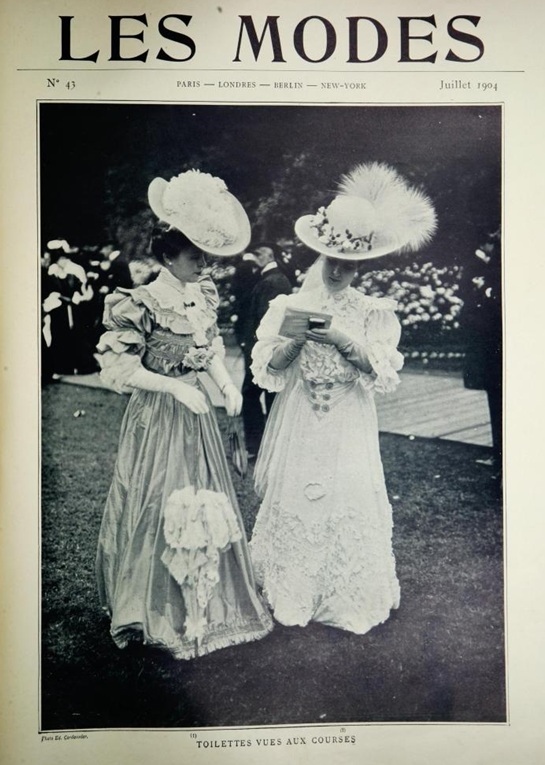
Being arguably the most important day of Paris fashion of the year, fashion magazines all over the world were required to cover it in order to give women the news of Parisian taste. The periodical Les Modes dedicated their July and August issues from 1903 until the First World War to summer fashions seen at the races. These photos were mostly taken by an obscure photographer known as Edmond Cordonnier, who seems to have specialized in outdoor photography, and who Xavier Demange credits as the first person to take trackside fashion photographs in 1901 or 1902.[6] These unposed photographs were even used for covers  at a time when magazine covers featured illustrations.

Edmond Cordonnier, Toilettes Vues Aux Courses, 1904, Les Modes, July 1904.

Edmond Cordonnier, Toilettes Vues Aux Courses, 1904, Les Modes, July 1904.

Vogue also covered fashion at the Paris races, mostly using illustrations of the latest modes seen at the racetrack combined with descriptions of the garments. The periodical does not appear to have used photographs for these stories until after 1908. The editorials proclaimed that not only were the fashions seen at Longchamp the culmination of what was fashionable that summer, but hinted at what was to be fashionable that Autumn. A fashion editorial in the June 1, 1914 issue of Vogue proclaimed “If it’s at Longchamp, it’s new; If it’s new, it’s at Longchamp”
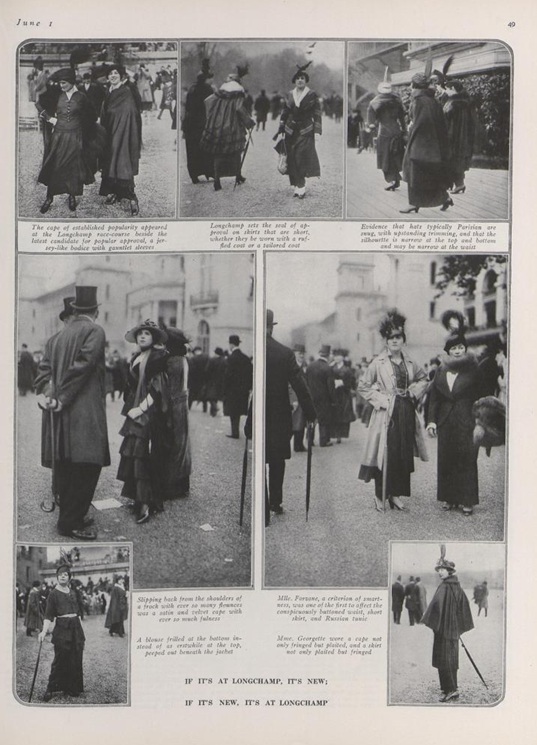
“Fashion: Seen at Longchamp,” Vogue, June 1, 1914, 49.

“Fashion: Seen at Longchamp,” Vogue, June 1, 1914, 49.

Besides the pioneering Edmond Cordonnier, the Séeberger brothers took fashion photographs of women attending the French races beginning in 1909. The brothers Jules, Henri and Louis Séeberger dedicated themselves to recording society events where the latest haute couture garments were worn. They expanded beyond the racetrack, capturing fashion at holiday resorts and beachside towns where the fashionable would travel to once racing season was over. Their first business stationary read “High-Fashion Snapshots: Photographic Accounts of Parisian Style.”[7] Unlike Cordonnier, who seems to have only worked for Les Modes, the Séeberger brothers sold their photographs to many periodicals, including several published outside of France which included Vogue, Harper’s Bazaar, Good Housekeeping and the Ladies Home Journal, although most are featured after 1917.

Fashion stories that featured photos of “real” society women and their clothes proved quite successful in Europe and America. Perhaps this is because women were interested in seeing not just what couture houses were imposing on the upper class, but what they were actually wearing. Outdoor photographs also provided the perfect background for the fashionable lingerie dresses that were worn at the turn of the twentieth century. The green grass offset the trains of the white gowns, and wind gave the gowns movement, bringing the fashions to life and likely making them even more desirable. The reader of the fashion magazine also had the chance to see how the dress was accessorized by the woman wearing it. Not only did they see the latest gowns, but they were shown the correct shoes, gloves, parasol, hat, belt, and even stockings that most complimented the dress.

While candid photos of fashionable women were published in fashion magazines, there are many existing examples that were taken by hobbyists or art photographers that were interested in fashion, women, or society in general but did not necessarily consider themselves fashion photographers. Jacques Henri Lartigue, Paul Martin, and Edward Linley Sambourne are three photographers who fit this description. Their photographs tell us a lot about fashion and what women were really wearing around the turn of the twentieth century, but their photographs were not seen in contemporary fashion magazines.

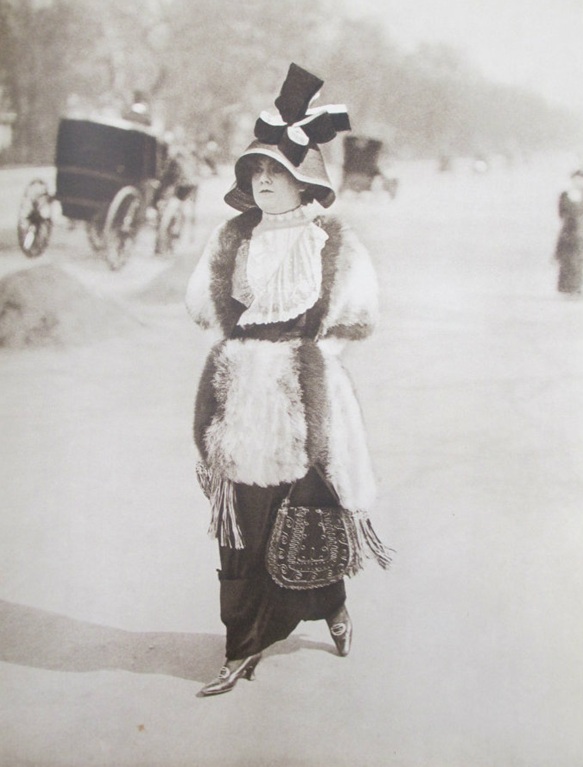
Jacques Henri Lartigue (1894-1986) was born in Courbevoie, near Paris, France to a wealthy family. His father bought him his own camera when he was only seven years old, and he began to take photographs, mostly of his family and his daily life.[8] In his teenage years, however, he became interested in women and began to photograph them out on the street as they walked by. He wrote in his diary, “Women…everything about them fascinates me—their dresses, their scent, the way they walk, the makeup on their faces, their hands full of rings and, above all, their hats.”[9] He described his process of capturing fashionable women: “The [Avenue des] Acacias has three lanes… [including] one for pedestrians. People call this third lane the ‘Path of Virtue.’ And that’s where I am…with my camera….ready for action the moment I see someone really elegant coming along. She: the well-dressed, fashionable, eccentric, elegant, ridiculous or beautiful woman I’m waiting for. ”[10] Lartigue also attended the racetrack in search of fashionable women to photograph . He wrote of one experience: “It is the afternoon of the Grand Prix horse races at Longchamp…Here, nobody seems to mind my taking photographs; on the contrary, the ladies sometimes stand still and pose for me. There are lots of elegant umbrellas around and, as always, amusing dresses…and enormous, beautiful, ridiculous hats.”[11] This quotation suggests that the stylish women at the racetrack were used to being photographed, and even desired to be captured on film, which even further reinforces how important it was for society women to look elegant and be seen at Longchamp and other horseraces. Throughout the nineteen-teens, Lartigue photographed fashionable Paris women out and about on the streets and at the racetrack, capturing the much-desired look of the French elite. However, his photographs have rarely been studied as a source of fashion, and he himself considered his work to be art photography rather than fashion photography.

Jacques Henri Lartigue, Along the Bois de Boulogne, Early 1910s, Reproduced in Jacques-Henri Lartigue. Diary of a Century. New York: Viking Press, 1970.
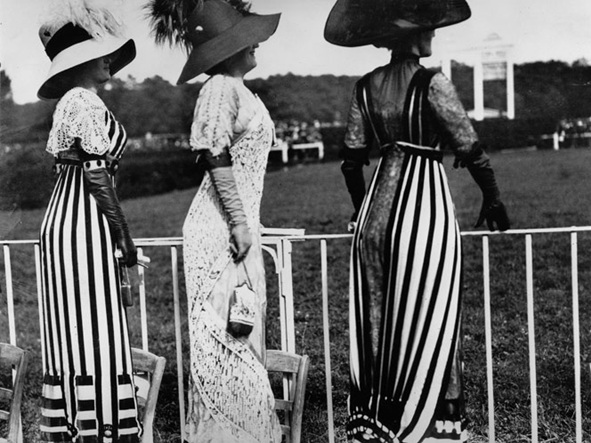
Jacques Henri Lartigue, Along the Bois de Boulogne, Early 1910s, Reproduced in Jacques-Henri Lartigue. Diary of a Century. New York: Viking Press, 1970.

Jacques Henri Lartigue, At the Auteuil Races, 1912, Reproduced in Jacques-Henri Lartigue. Diary of a Century. New York: Viking Press, 1970.

Jacques Henri Lartigue, At the Auteuil Races, 1912, Reproduced in Jacques-Henri Lartigue. Diary of a Century. New York: Viking Press, 1970.


Paul Martin was born on April 16, 1864 in Herbeuville, France, but made his life in London, England after his parents moved the family there to escape the hardships of the Franco-Prussian War. He worked as a woodcut illustrator, taking up photography as a hobby to aid in his creation of engravings.[12] He began photographing people secretly in 1892, when he purchased a camera known as Fallowfield’s Facile Hand Camera. Advertisements of the camera explained how it could be disguised in a wrapping of brown paper, making it look like a parcel, possibly containing a book or two, wrapped by a shopkeeper.[13] Without the hindrance of a tripod, and with the camera’s ability to take twelve shots before it needed to be refilled with plates, Martin was able to take his street photographs with extreme discretion. The neighborhood he lived in was poor and run down, so most of his photographs are of working class people. However, he did take his Facile camera on holiday trips to Boulogne, Paris and Yarmouth, where he captured fashionable fellow vacationers on film. The result is an incredibly relaxed, natural look that shows us with the least amount of artifice how clothes were being worn during the late nineteenth and early twentieth century. His photographs of women on the beach or the boardwalk, are particularly telling of casual attire and sportswear. 
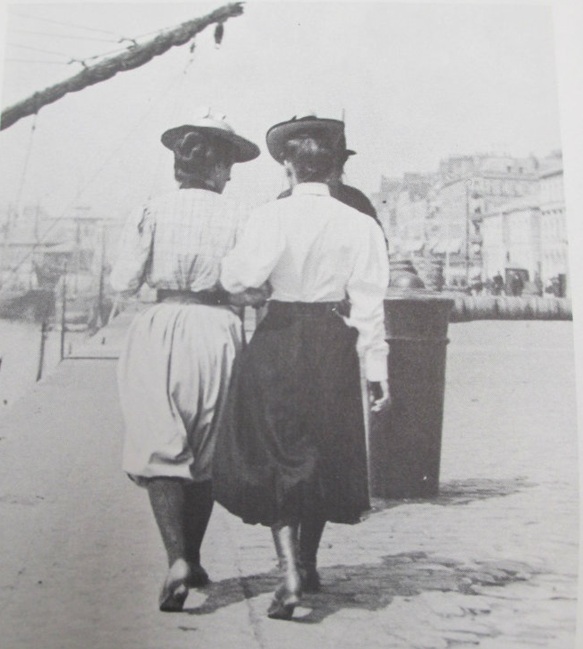
Paul Martin, Girls in Cycling Bloomers on the Quay in Boulogne, 1897, Reproduced in Roy Flukinger et al. Paul Martin: Victorian Photographer. Austin: University of Texas Press, 1977.

Paul Martin, Girls in Cycling Bloomers on the Quay in Boulogne, 1897, Reproduced in Roy Flukinger et al. Paul Martin: Victorian Photographer. Austin: University of Texas Press, 1977.

Street-style photography from the turn of the twentieth century tells a truer story about how clothes were worn than can be discovered by looking at studio portraits from the same period. Fashion was captured by artists and hobby photographers, as well as professionals like Edmond Cordonnier or the Seéberger brothers who were paid to capture society women dressed in the newest and most exciting styles for fashion magazines. The most telling photographs, however, are the ones that were taken secretively on the streets, without the subjects knowing they were being photographed, making them look relaxed, more casual, and as a result, not unlike women photographed by Bill Cunningham today.


[1] Xavier Demange. “Trend Setters at the Racetrack,” in Elegance: the Séeberger brothers and the birth of fashion photography, 1909-1939. San Francisco: Chronicle Books, 2007, 33.
[2] Ibid.
[3] Ibid, 31.
[4] Demange, 31.
[5] Octave Uzanne, Mary Loyd, and François Courboin. Fashion in Paris: The Various Phases of Feminine Taste and Aesthetics from 1797 to 1897. (London: W. Heinemann, 1898), 100-102.
[6] Demange, 31.
[7] Sylvie Aubenas. “The Séebergers, Fashion Photographers: Rediscovering their Place,” in Elegance: the Séeberger brothers and the birth of fashion photography, 1909-1939. San Francisco: Chronicle Books, 2007, 11.
[8] John Szarkowski and Jacques Henri Lartigue. The Photographs of Jacques Henri Lartigue. New York: Museum of Modern Art, 1963, 1.
[9] Jacques-Henri Lartigue. Diary of a Century. New York: Viking Press, 1970, book is not paginated.
[10] Ibid.
[11] Ibid.
[12] Roy Flukinger, Larry J. Schaaf, and Standish Meacham. Paul Martin: Victorian Photographer. Austin:            University of Texas Press, 1977, 8-11.
[13] Ibid, 24.


Posted in Uncategorized | 5 Comments

Edward Linley Sambourne: Hidden Street Fashion

By Landis Lee

Today when street fashion photography is mentioned, photographers such as Bill Cunningham of the New York Times or Scott Schuman of the blog  The Sartorialist, may come to mind. Their photographs capture seemingly regular people walking the streets of major cities around the world in their own clothes that have been deemed fashionable and/or photo-worthy by the photographer.  The aim of street fashion photography is to capture what “regular people,” going about their day are wearing, un-staged (to a certain extent), rather than fashion photography that is staged and is meant to show a particular fashion in a particular way. Roland Barthes addresses “the pose” in his book Camera Lucida, asserting that when a person knows they are being photographed, they transform themselves and their bodies by posing to create a certain image.  They are posing to convey or promote their true self, but are in fact creating an image to show a “real” image.[1]

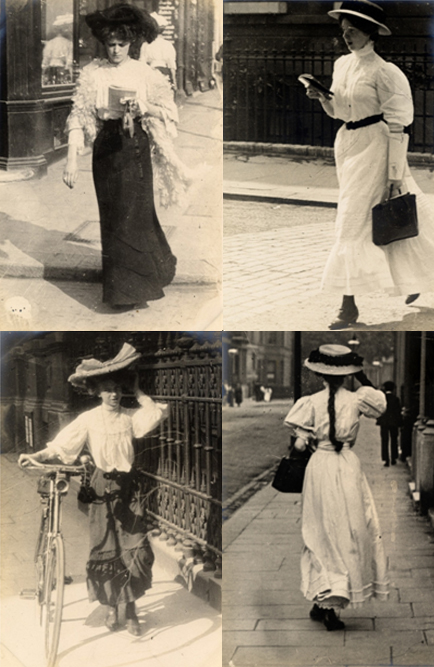
One photographer who captured street fashion truly did photograph his subjects with them (for the most part), wholly unaware they were being photographed, by use of a hidden camera.  This sly photographer was Edward Linley Sambourne.  He was not a twenty-first century photographer, and was in fact barely a twentieth century photographer (he died in 1910), making his photographs, which date to 1906-1908, the earliest known example of street fashion photography.  Sambourne’s photographs provide evidence that street fashion was captured as early as the turn of the twentieth century.

st_8_1_1_55

He was born in England in 1844.  He made his living as an artist and is most notably known for his drawings and cartoons in Punch magazine, where he eventually became a full-time artist.  At times Sambourne would have creative blocks with his drawing and found it difficult to capture the true likeness of the human figure.  In the 1880s, he found a solution for this through photography.  He had already started to use photographs taken by friends for him or ones available commercially.  However, by the 1880s photography had become an affordable pastime.
Sambourne would have certain models, his children, relatives, and domestic staff pose for him “sometimes wearing costumes borrowed from artist friends or from an agency, and would then use the prints as guides for his drawing.”[2]  If models were not available “and he needed a policeman, a brewer’s drayman, or a working man throwing a brick during a riot” he would find an original.[3]

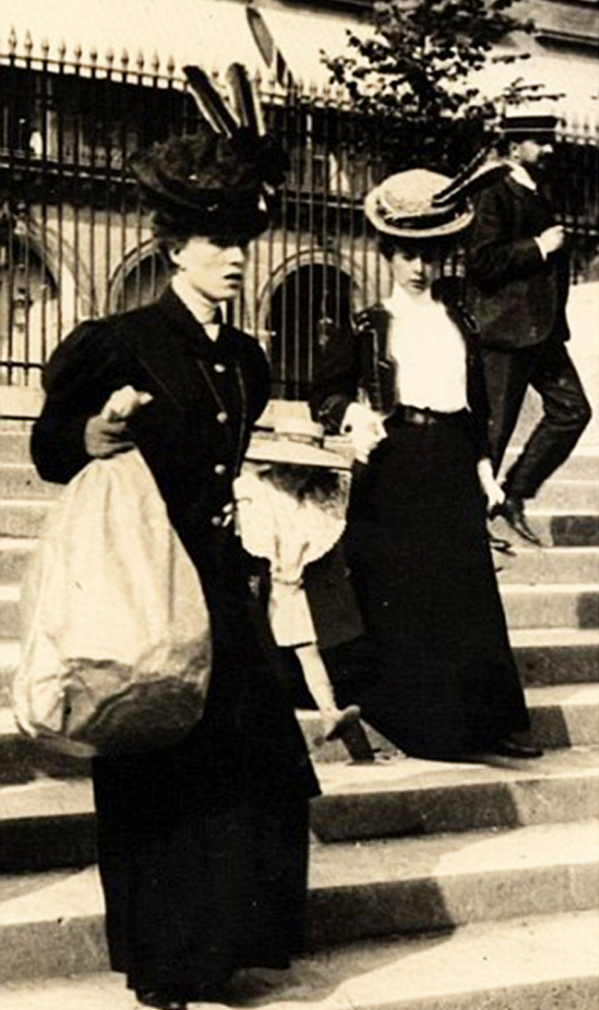
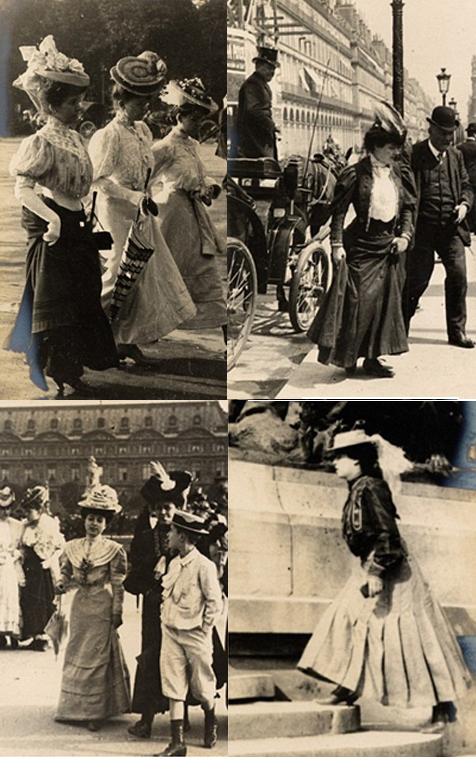
Although Sambourne was using photography for his work since the 1880s, it is the candid 1906-1908 photographs that are  important in documenting the history of street fashion.  These photographs show mainly young women walking outside, going about their daily business.  Everyday fashions that women were wearing on the streets of Paris and London at the turn of the twentieth century are documented through these photographs.  Sambourne’s photographs are extremely similar to today’s street fashion photography.


street

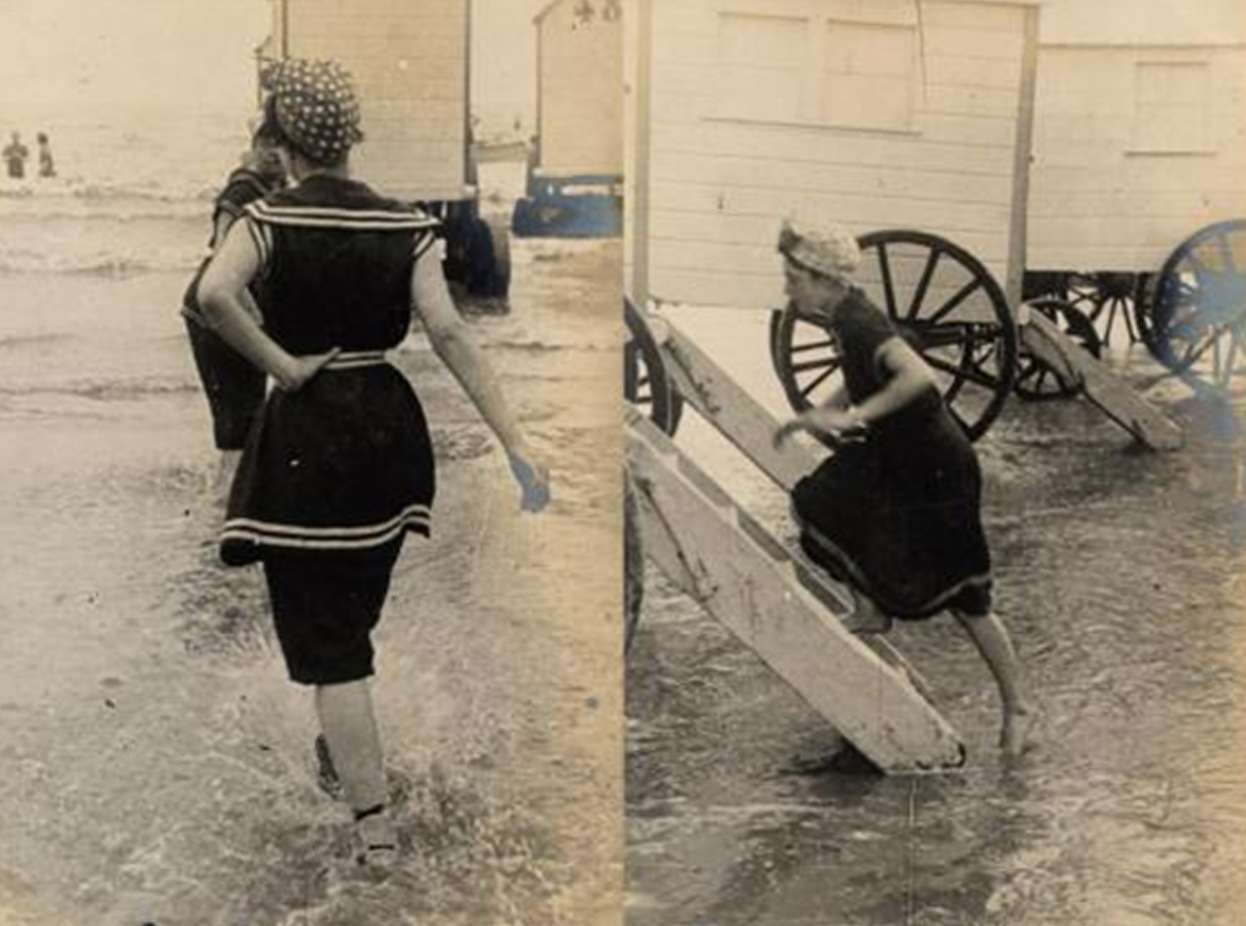
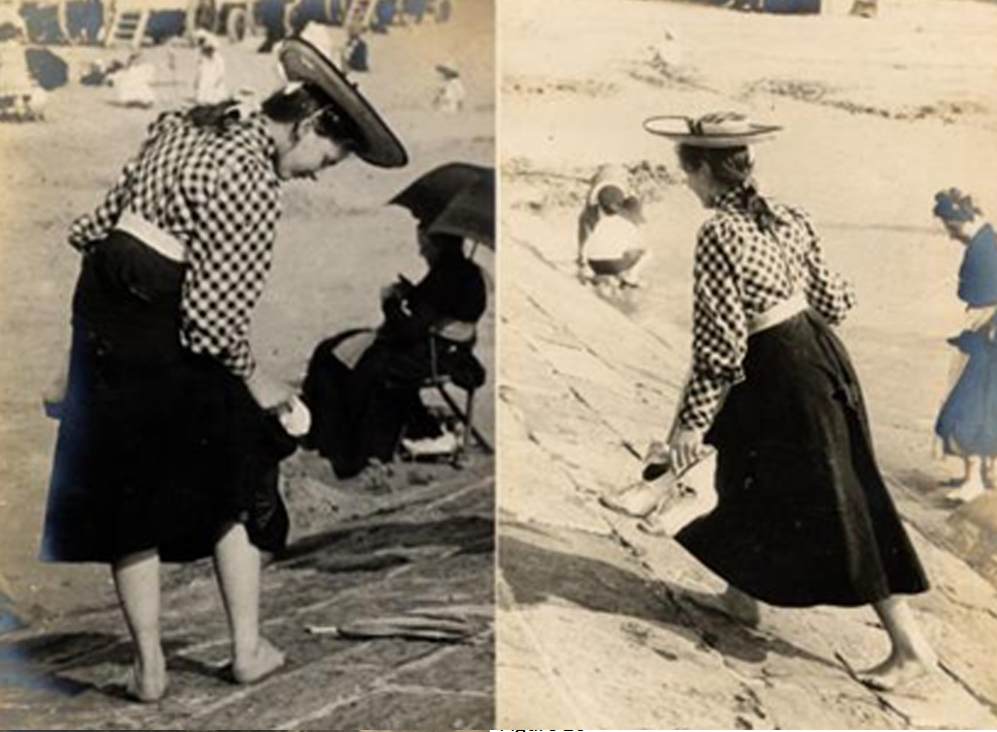
Dave Walker, the author of the post  “Street Style 1906: Edward Linley Sambourne’s Fashion Blog,” writes of street fashion blogging as being “a genuinely new phenomenon, a product of the Internet, a distinctly twenty-first century thing.”  He goes on to say, “photographers have taken pictures in the street since it was technically possible but no-one ever did a style blog in the early years of the twentieth century.  But Edward Linley Sambourne came close.  The one difference between Sambourne’s street photography and the pictures taken by modern style bloggers is that for the most part his subjects had no idea they were being photographed.  Sambourne used a concealed camera.”  Walker also points out that Sambourne’s photographs are important to fashion history because of the casual look of the subjects, which is in contradiction to the stiff, formal fashion plates and staged photos of the Edwardian period.  This echoes my view wholeheartedly about Sambourne’s photographs.  They are important to fashion history because they offer a rare glimpse of the garments in motion.  The viewer can see how the women actually moved in their dresses:  women holding their skirts up to walk or climb stairs, showing how they manipulated their dresses in order to move around in them.  Sambourne’s photographs offer more than a view of the fashion; they offer a glimpse of everyday Edwardian pedestrian life.

The photographs shown here were taken by Sambourne from 1906 to 1908 in his hometown, London, and during a trip to Paris and are available through the Royal Borough of Kensington and Chelsea Library’s website. In these photographs, women are seen walking down sidewalks, across streets, up steps, and promenading down Parisian boulevards; several photographs taken on the streets of London show women walking by themselves- a new phenomenon at that period.  Two photographs of young women reading books while walking are particularly interesting. Perhaps it was common for women to read while walking.  Not only do these two women not have a chaperone with them, they also appear to be unaware of their surroundings by being engrossed in their books.  Perhaps this helped to ward off unwanted conversation since they were by themselves?  These two women are wearing the fashionable silhouette of the time with a small corseted waist, blouse, and skirt.  Their clothes are not highly fashionable.  Another photograph shows a young woman walking beside her bicycle wearing a very large hat that she appears to be holding to steady.

Street Photo1

All of these photographs are interesting to fashion history, but one in particular in this group of young women shows the woman walking away from the camera offering a complete back view of her outfit.  Back views of garments are rarely seen in fashion photography/plates.  Her long braid is visible hanging down to her waist and the ruffle of the skirt made by walking shows just a glimpse of the hem of her petticoat.  She is also carrying a handbag and wearing an outfit very similar to the woman reading and walking.  As evident in these photographs, women were beginning to carry handbags as an everyday accessory, just as they do today.

Many of these women are wearing dresses with short hems that expose the shoe or boot and stockings.  Dresses with shorter hems were easier to walk in, but not all dress hems were short.  Sambourne took some fantastic photographs of women walking while holding up their skirts, providing evidence of how women managed their long skirts in the streets.  This allows their wonderful shoes and boots to show, these rarely seen under the long skirts.

street photo 2

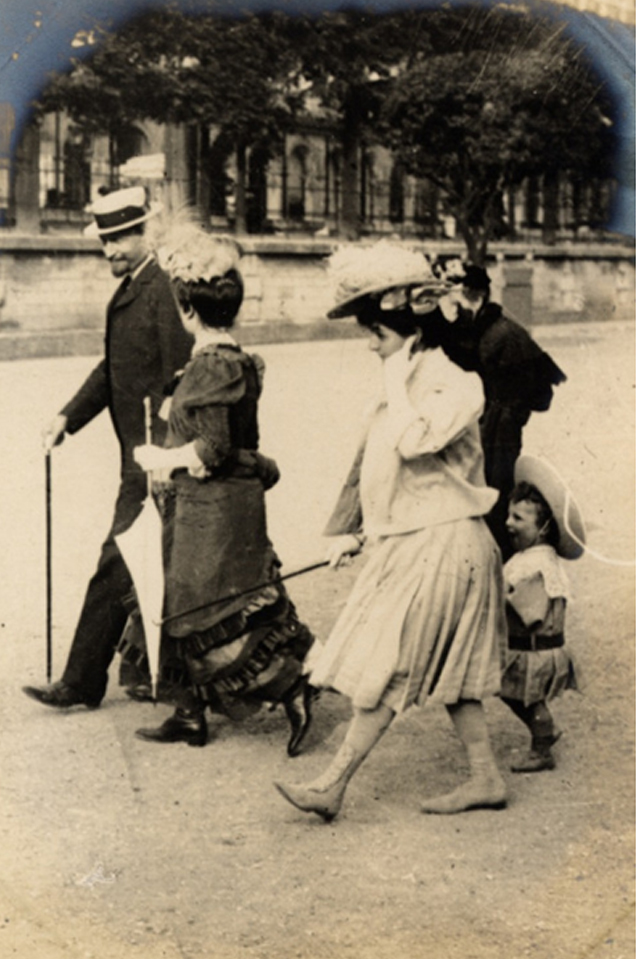
Sambourne also captured some wonderful photographs of families with children, offering a view of children and teenagers’ fashion.  The picture below shows a Parisian family out for a promenade.  The young lady in the foreground is probably in her early teens given the length of her skirt.  The rest of her outfit, including her hat, all resemble adult fashion, but an adult woman would not be wearing a skirt that short, making her outfit transitory, signaling her transition from childhood to adulthood.  The child at the right is much younger and wearing distinctly children’s clothes.

family

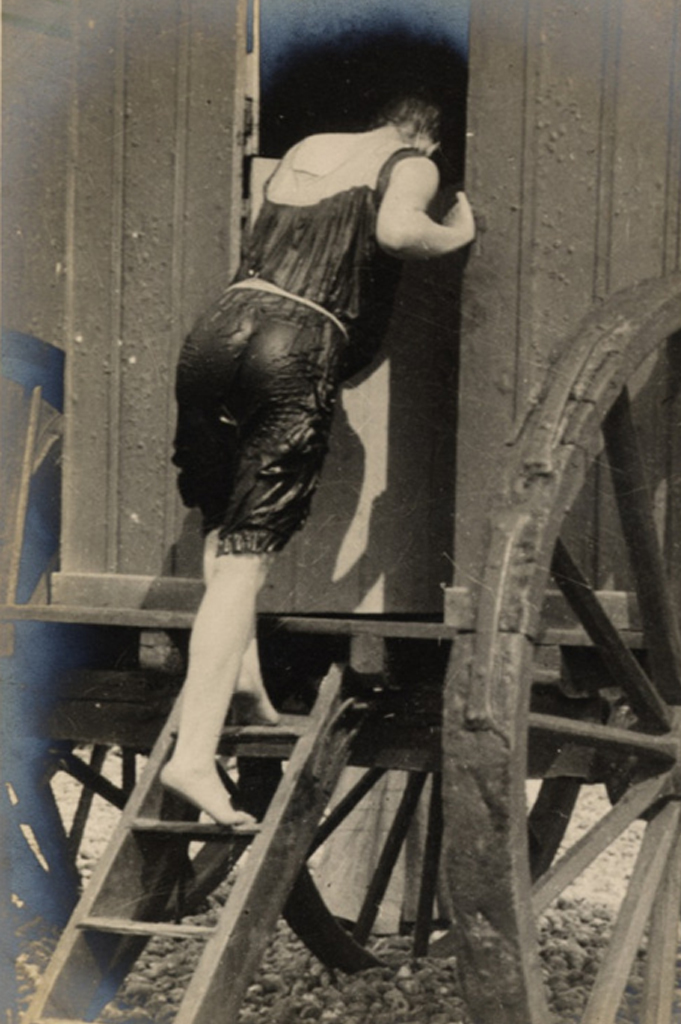
Some truly remarkable photographs were taken by Sambourne in late summer of 1906 at the English coast. The photographs below show women in typical bathing attire for the time period.  In one photograph a woman has just emerged from the water with her outfit soaking wet and clinging to her body, revealing her shape underneath.  This was a cheeky picture for Sambourne to take, and if she knew she was being photographed, she probably would not have been too happy with him!  Another great thing about these bathing photographs is the presence of the bathing machine.  Women would enter these wooden boxes on wheels and then be wheeled into the water, minimizing public view of them in their bathing outfits.

shore 3 shore 4

Edward Linley Sambourne has left behind many wonderful photographs of early twentieth century street fashion.  These photographs are gifts to fashion historians and anyone interested in early twentieth century fashion.  Fashion photography and fashion plates from this time period are wonderful resources for styles of clothing worn, but with them often comes doubt of authenticity.  Were women actually wearing this fashion?  Were they wearing this fashion in this exact style?  Has the photographer taken any artistic liberties with the photograph?

shore 5

shore 2

Sambourne has given us evidence of what women were indeed wearing on the streets of Paris and London and at the seashore in 1906-1908.  Different styles, fashions, and ages are represented in his photographs.  Much like what is seen in street fashion photography today.  The clothes are taken out of magazines, editorial spreads, and advertisements, shown on the streets on “real” people, not models in fabricated surroundings or situations trying to sell them.  The clothes in Sambourne’s photographs are caught in motion; they are being worn and lived in unlike their static fashion plate counterpart.  They are taken off the page and put onto the street. Through these photographs, I think it is easy to say that Edward Linley Sambourne can be called the earliest known street fashion photographer.

All photographs courtsy of the Royal Borough of Kensington and Chelsea Library’s website

[1] Roland Barthes, Camera Lucida: Reflections on Photography, trans. Richard Howard  [New York: Hill and Wang, 1981], 10-11.
[2] Leonee Ormond,  Linley Sambourne: Illustrator and Punch Cartoonist [London:  Paul Holbertson Publishing, 2010], 103.
[3] Ibid
Bibliography:
Betts, Kate. “Bill Cunningham: The Original Street Fashion Photographer,” Time Magazine, March 16, 2011.  http://www.lightbox.time.com/2011/03/16/bill-cunningham-new-york/#1 [accessed December 6, 2012].                
Ormond, Leonee. Linley Sambourne: Illustrator and Punch Cartoonist. London:Paul Holbertson Publishing, 2010.                 
Walker, Dave.  “Street Style 1906: Edward Linley Sambourne’s Fashion Blog,” The Royal Borough of Kensington and Chelsea Library, http://rbkclocalstudies.wordpress.com/2012/03/29/street-style-1906-edward-linley-sambournes-fashion-blog/ [accessed December 6, 2012].
Posted in Uncategorized | 4 Comments

Mystery Monday: Beth Levine

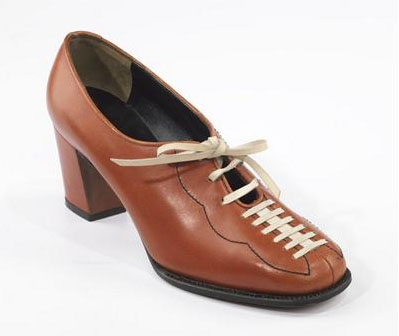
Yes, Beth Levine of Herbert Levine, Inc. designed this shoe.

Levine, Beth. Kick Off, ca 1965. Leather upper, cuban heel with a welt sole, Size 5B. Part of the Brooklyn Museum Costume Collection at the Metropolitan Museum of Art.

Levine, Beth. “Kick Off, ca. 1965. Leather upper with a Cuban and a welt sole, Size 5B. Part of the Brooklyn Museum Costume Collection at the Metropolitan Museum of Art.

Known for her elegant, witty and whimsical shoe designs, Beth Levine found inspiration in her travels, in new materials, and from runway fashions, as she sought to pair the best shoe silhouette with the rapidly changing clothing styles of the 1960s and 1970s. Her legacy is one of inspiration and determination as she sought to communicate her ideas with the public. She predicted future trends while deconstructing the shoe until it became almost nonexistent and while transforming the shoe to reach new heights and lengths.

Levine (1914 – 2006) began her career as a shoe model for Palter DeLiso in 1938. While working at DeLiso, Levine became familiar with the design process, and after four years, she left to work at a series of other footwear companies including I. Miller, the Carlisle Shoe Company, Pincus-Tobias, and Andrew Geller, where she met her husband Herbert.

After marrying Herbert in 1946, the pair decided to found a company with a mission to produce quality shoes for American women. With the desire to compete with established shoe companies, the couple chose to name their company Herbert Levine, thinking a masculine name would give more credence to their craft. However, Beth was always the head designer and the innovative force behind the firm’s clever creations.

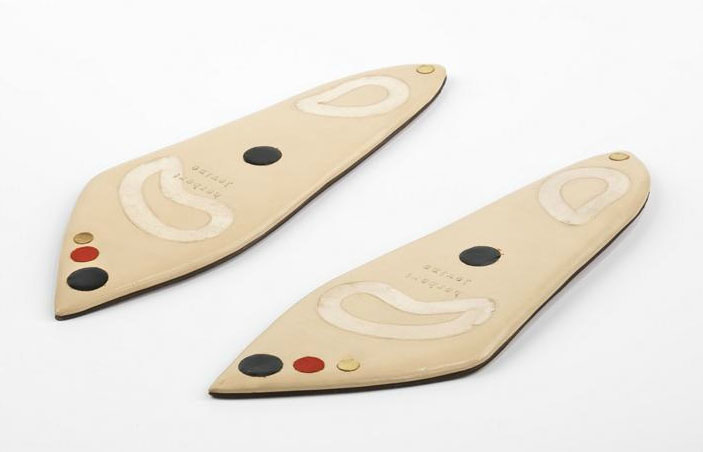
Beth Levine had many firsts over the course of her career. Around 1951, Beth Levine was the first American designer to incorporate a stiletto heel in a shoe design, and she also introduced the pointed toe to America women in 1956. Beth discovered both the stiletto and the pointed toe when she and Herbert were on vacation in Europe, on one of the many trips they made when seeking inspiration for the next collection. Later in her career, in addition to the stiletto and the pointed toe, Beth Levine designed unique heels, toes, and even a series of topless shoes, a functional design featuring adhesive pads on the sole.

Levine, Beth. Topless shoes, 1955 - 1960. Leather with adhesive pads. Part of the Brooklyn Museum Costume Collection at the Metropolitan Museum of Art.

Levine, Beth. Topless shoes, 1955 – 1960. Leather with adhesive pads. Part of the Brooklyn Museum Costume Collection at the Metropolitan Museum of Art.

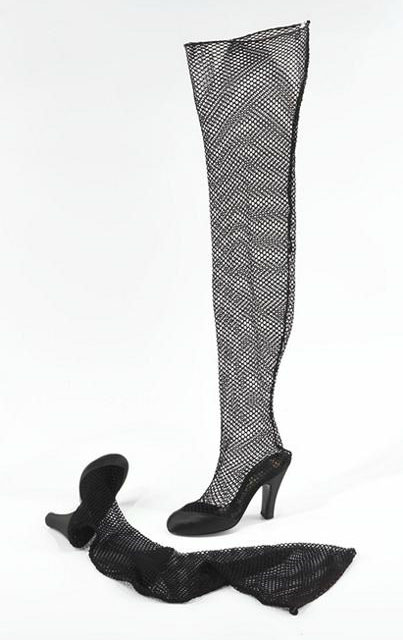
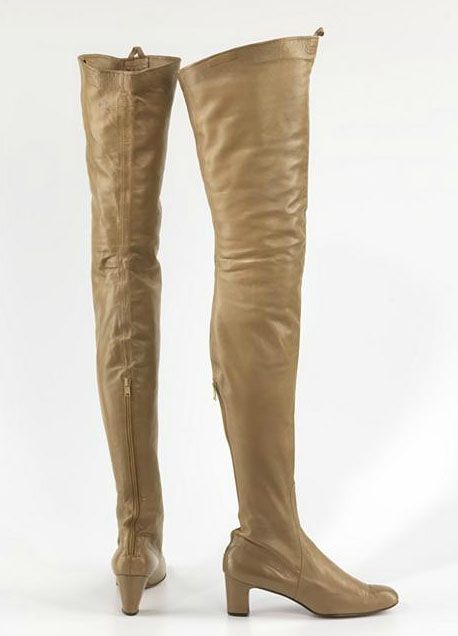
In addition to testing new materials and minimalistic designs, Levine sought to reinvent and reinterpret existing styles, including the boot. It was under Levine’s influence that the tall boot entered women’s fashion, becoming a style statement instead of a cold weather necessity. Inspired by the shorter hemlines of the 1960s, Levine created boots that rose higher and higher on the thigh in a plethora of colors and materials. This strong, sensual design became even more arresting when realized in soft, skin-hued leather and bold, black netting. Levine’s designs became a icon of 1960s fashion; in 1966, Nancy Sinatra chose to wear Levine boots while promoting her hit single, “These Boots are Made for Walking”.

Levine, Beth. Stocking shoes. Black satin silk and nylon fishnet mesh, size 4B. Part of the Brooklyn Museum Costume Collection at the Metropolitan Museum of Art.

Levine, Beth. Stocking Shoes. Black satin silk and nylon fishnet mesh, size 4B. Part of the Brooklyn Museum Costume Collection at the Metropolitan Museum of Art.


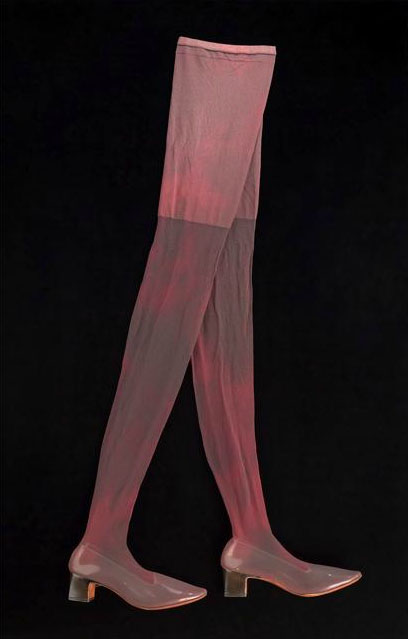
Levine, Beth. Stocking Shoes, ca 1965. Brown nylon knit, clear vinyl, and dark brown kidskin. Part of the Brooklyn Museum Costume Collection at the Metropolitan Museum of Art.

Levine, Beth. Stocking Shoes, ca. 1965. Brown nylon knit, clear vinyl, and dark brown kidskin. Part of the Brooklyn Museum Costume Collection at the Metropolitan Museum of Art.


Levine, Beth. Boots, ca. 1968. Tan Kidskin. Part of the Brooklyn Museum Costume Collection at the Metropolitan Museum of Art.

Levine, Beth. Boots, ca. 1968. Tan Kidskin. Part of the Brooklyn Museum Costume Collection at the Metropolitan Museum of Art.

 In the July 16, 1954 edition of Footwear News, Beth and Herbert Levine wrote a guest column titled “Fashion Footlights…”. The column includes the following quote: “Girls who wear frivolous shoes always have a sense of humor.” And what a sense of humor Beth Levine had! Over the course of her career, she used plastic, vinyl, egg shell, and fabric to create both elegant and whimsical designs that were far from practical but still wonderfully functional.

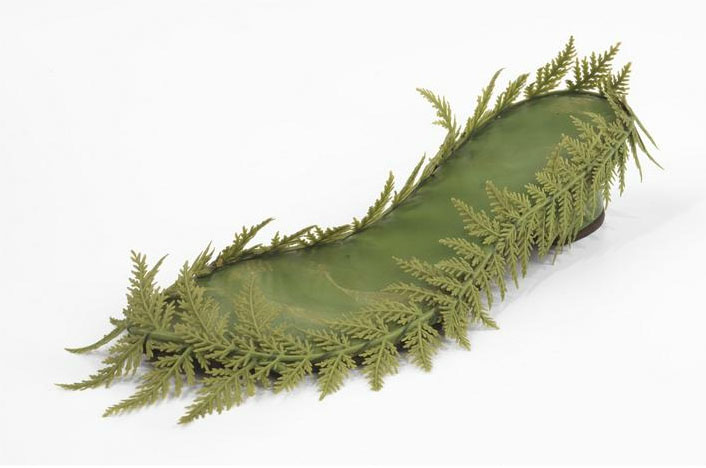
Levine, Beth. Topless shoe, 1955 - 1960. Green kidskin with green plastic fern fronds. Part of the Brooklyn Museum Costume Collection at the Metropolitan Museum of Art.

Levine, Beth. Topless shoe, 1955 – 1960. Green kidskin with green plastic fern fronds. Part of the Brooklyn Museum Costume Collection at the Metropolitan Museum of Art.


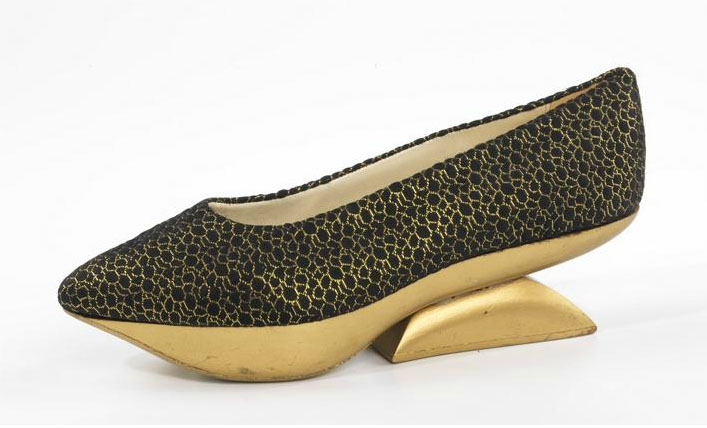
Levine, Beth. Kabuki, ca. 1965. Silk, metallic, and wood shoe with a cantilevered heel. Part of the Brooklyn Museum Costume Collection at the Metropolitan Museum of Art.

Levine, Beth. “Kabuki”, ca. 1965. Silk, metallic, and wood shoe with a cantilevered heel. Part of the Brooklyn Museum Costume Collection at the Metropolitan Museum of Art.

For detailed information and wonderful images of Levine’s designs, please see the resources listed below. Most notably, these resources contain images of advertisements, photos of the construction process, and clips from newspapers, including Footwear News.

Resources:
1.  Arlak, Vanessa (2008) . Beth Levine: The First Lady of Shoes (Master’s Thesis). Fashion Institute of Technology, New York, NY.
2. Verin, Helene. Beth Levine Shoes. New York: Stewart, Tabori & Chang, 2009.
Posted in Mystery Mondays | Tagged , | 2 Comments