Fashionista Friday – Madeleine Vionnet’s Roses

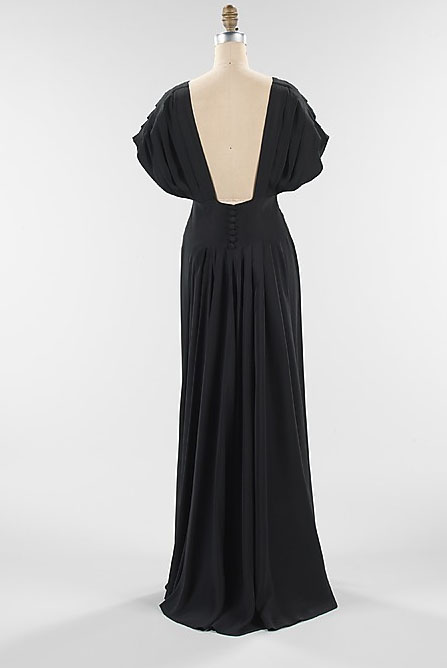
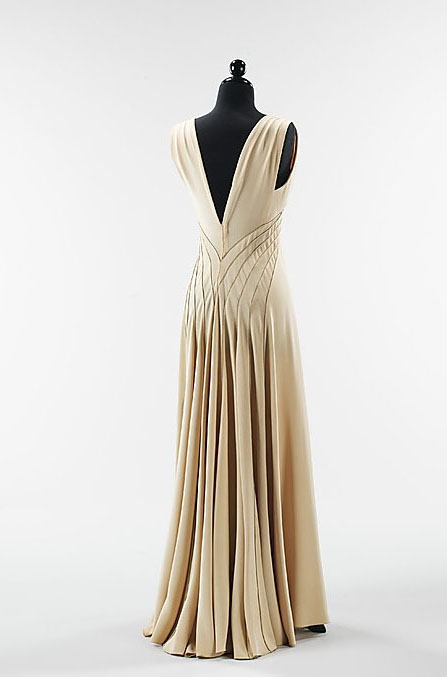
Evening dress, Madeleine Vionnet, ca. 1929, Metropolitan Museum of Art.

Every once in a while, the influence of a particular designer seems to permeate the fashion industry all at once. These days, it seems like everything is coming up roses—Vionnet roses, that is.

Madeleine Vionnet (1876-1975) was a pioneer couturiere who brought the bias-cut dress to modern fashion. Her Euclidean patterns rendered dresses that flowed and skimmed on the body, molding themselves to their wearer’s body, as opposed to contorting the wearer to fit the garment.

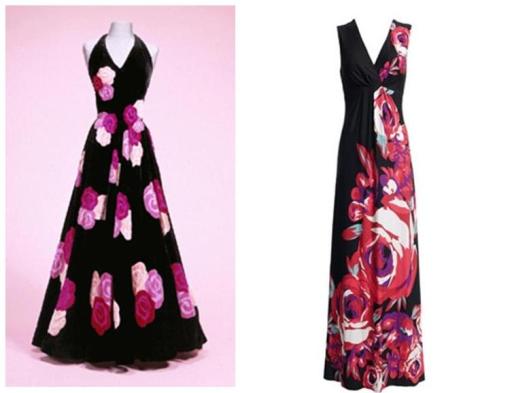
While Vionnet’s legacy is primarily due to her working with bias cuts and in the round, she had a fondness for using roses in her designs. Vionnet’s roses were often abstract and judiciously placed to taper the waist, emphasize the hips, or flatter the shoulders. Vionnet’s roses were sometimes printed, but often skillfully rendered in pintucks, appliqué, or embroidery.

In true testament to Vionnet’s artistry, it is not just her geometric patterning that reappears in contemporary fashion.  Her designs are reimagined, reinterpreted and modernized for today’s consumer.  They aren’t direct copies, and they aren’t even 1930s-esque, but there is an uncanny similarity.  Do you see Vionnet’s influence in contemporary clothing?

Left: Evening dress, Madeleine Vionnet, silk roses on tulle, 1925.
Right: Evening dress, Sue Wong, chiffon rose detail, 2012.

Left: Ball gown, Madeleine Vionnet, 1935, Victoria and Albert Museum.
Right: Amelia Rose Burnout Dress, Phase Eight, 2012.

Left: Evening Gown, Madeleine Vionnet, velvet rose applique, ca. 1938, Doyle New York.
Right: Maxi dress, Monsoon, 2010.

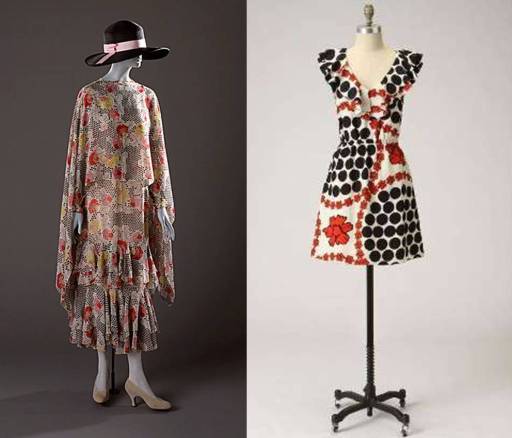
Left: Ensemble, Madeleine Vionnet, 1927, The Los Angeles County Museum of Art.
Right: Leifsdottir Abbey Rose dress, 2010.

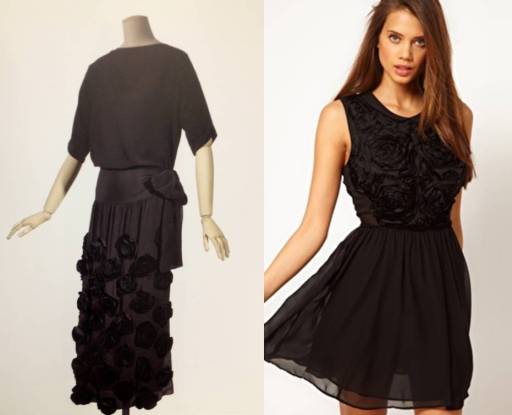
Left: Summer dress, Madeleine Vionnet, crepe de chine appliqued with panne velvet roses, 1918.
Right: Mini dress with rose applique, ASOS, 2012.

Sadly, Vionnet shuttered her doors in 1939 due to World War II, and never reopened her atelier again.  Today, the House of Vionnet is maintained by Matteo Marzotto and Gianni Castiglioni, who acquired the Vionnet brand in 2008 and since then have endeavored to relaunch “an idea of fashion that is contemporary, without forgetting the outstanding aspects of its history…by reinterpreting the extraordinary innovative elegance that distinguished the work of Madeleine Vionnet.”

Resources
Golbin, Pamela, ed.  Madeleine Vionet.  New York: Rizolli, 2009.
Milbank, Caroline Rennolds.  Couture: The Great Designers.  New York: Stewart, Tabori & Chang, Inc., 1985.
Vionnet Paris website, www.vionnet.com (accessed November 29, 2012).
Posted in Fashionista Friday | Tagged , , , , | Leave a comment

Mystery Monday: Chester Greenwood and His Ear Protectors

The Town: Farmington, Maine
The Inventor: Chester Greenwood
The Event: The Chester Greenwood Day Parade

Brownies with homemade snowflakes. Photo from “In celebration of Farmington’s Chester Greenwood”. Posted on December 5, 2009 by Bobbie Hanstein in The Daily Bulldog.

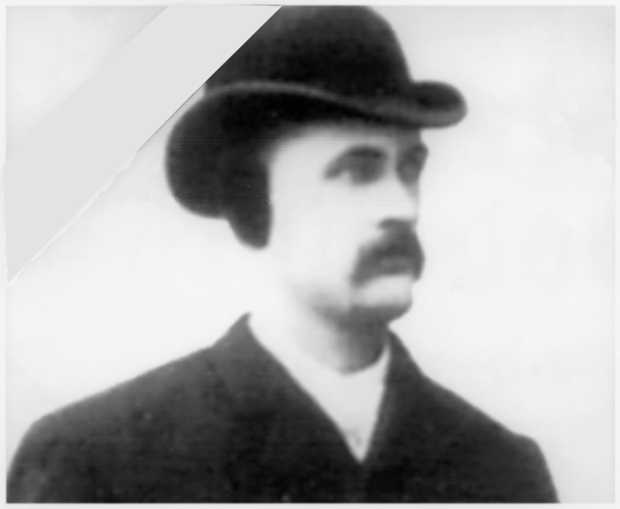
In 1873, fifteen-year-old Chester Greenwood created a new way to keep his ears warm during the cold Maine winters: ear protectors. His idea was popular with other New England residents, and by 1882, Greenwood had established a factory in his hometown of Farmington, Maine. Priced at 25 cents, the twenty six-year-old  sold 50,000 Champion Ear Protectors in 1882.

Chester Greenwood wearing his ear protectors. Found in the Franklin Sun Journal.

The Farmington factory continued to operate until the late 1930s. When Greenwood died in 1937, the factory remained open,  but it ceased production at the start of World War II when the steel needed to create the headbands became scarce.

Farmington, Maine continues to remember Greenwood with an annual parade and a day of festivity. In the past 25 years, one man has become especially familiar with Greenwood’s life and accomplishments; this man is Clyde Ross. For over 25 years, Clyde Ross has portrayed Greenwood in the annual parade and through out the year at local schools. In a recent interview, Ross described Greenwood, saying “He was a man of practicality. He would try to fashion devices that would help to make the work easier and give farmers and lumber people an opportunity to move along. He was also a man who did not use what you and I refer to today as vices: tobacco and alcohol.” Read the rest of the interview with Ross in The New York Times here.

So, as you wear your earmuffs this winter, whether they be fur or wool, the original design or a pair with speaker technology, think of Chester Greenwood and his Yankee ingenuity. What will you create to make this world a better, more habitable place?

Sources:

1. Greenbaum, Hilary and Dana Rubinstein. “The Revival of the Earmuff.” The New York Times, February 3, 2012.

2. Despres, Deborah. “New England by the Numbers.” Yankee, December 2012.

Posted in Mystery Mondays | Tagged , | 2 Comments

Mystery Monday

The holiday season is a time for parades, festivals, and celebration. And another mystery!

These girls are participating in an annual parade in Maine.
For what famous inventor is this parade named?
What practical and stylish accessory did s/he design and manufacture?

Think you know? Submit your guesses below; we will reveal the answer on Thursday.

Posted in Mystery Mondays | Tagged | Leave a comment

Mystery Monday: Happy Thanksgiving!

Mystery Monday will return next week on November 26.

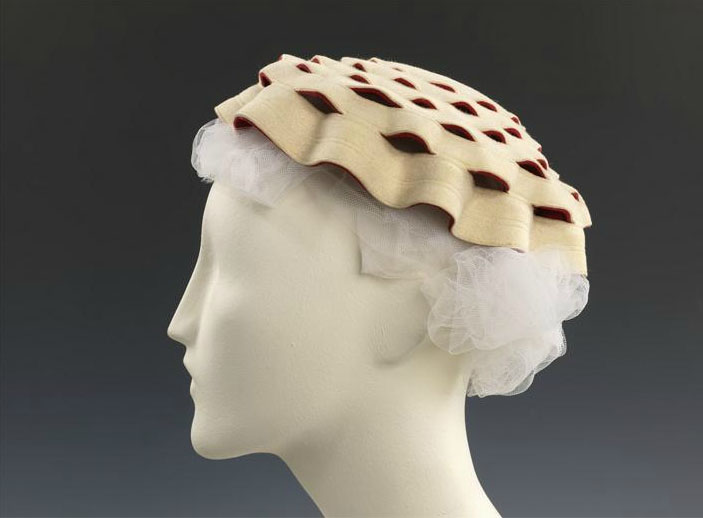
Victor, Sally.

Victor, Sally. “Airwave” hat, 1952. White and magenta felted wool strips arranged in concentric rings. Copyright The Metropolitan Museum of Art.

As you celebrate with friends and family this weekend, will you be dressed in your holiday best, looking as pretty as pie?

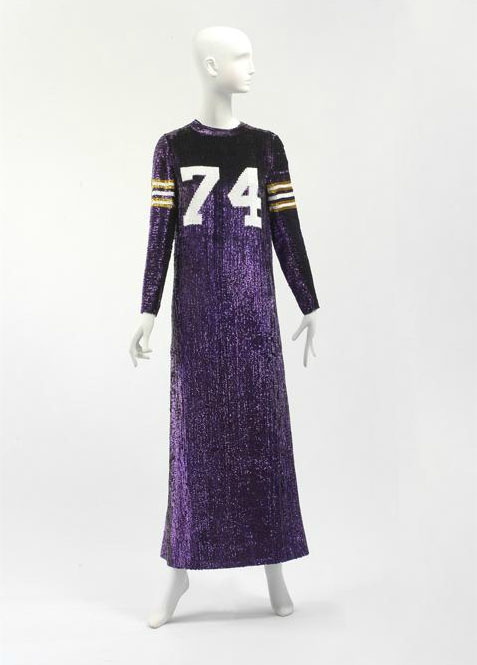
Beene, Geoffrey. Silk and plastic dress, Fall/Winter 1967-68. Copyright The Metropolitan Museum of Art.

Or will you be showing your support for your favorite team?

Whatever you decide to wear, we hope that you have a wonderful Thanksgiving!

Posted in Mystery Mondays | Tagged , , | Leave a comment

RIP Lea Gottlieb

I was so saddened by the news that fashion designer Lea Gottlieb passed away last Saturday afternoon, she was 94. She lived long and exciting life and inspired many with energy, love of life, and her relentless study of all things beautiful.

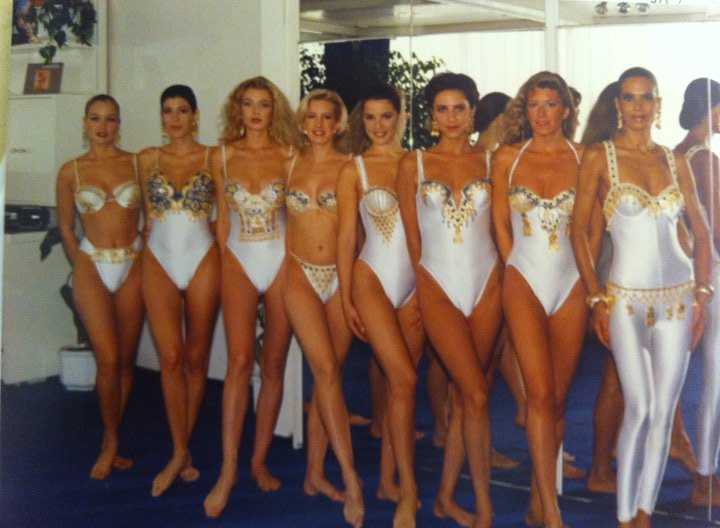
For the past few years I have studied her work for the Israeli luxury swimwear house Gottex, which she founded with her husband Armin in 1956. Together they build a fashion empire that reached its height of success during the 1990s, celebrities such as Princess Diana and Claudia Schiffer wore Gottex and the brand was soled in luxury department stores such as Harrods in England and Saks and Bloomingdale’s in the United States.

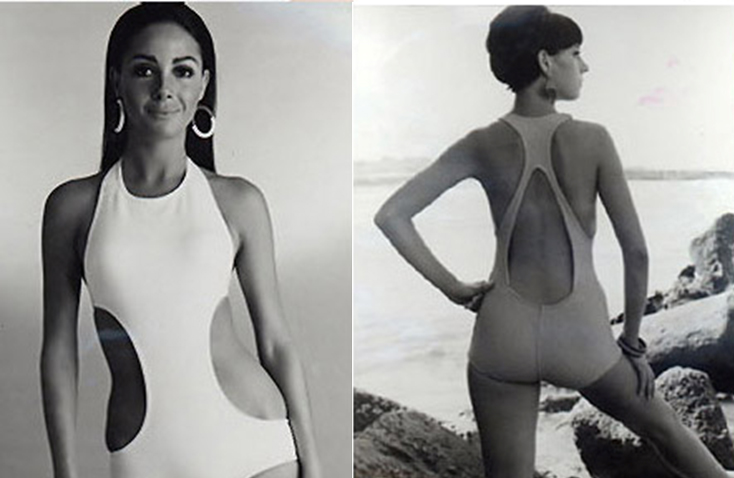
Geometric lines and shapes; Gottex designs in the 1960s are inspired by the Op-Art movement and current with international trends. It was only later in Lea Gottlieb’s career, towards the end of the 1970s, that she began to experiment with bold prints and unusual sources of inspiration for swimwear, such as art, crafts, and the cultures of the Middle East. Two cut-out swimsuits from the 1960s (excact year and photographer unknown)

My thesis paper is dedicated to Lea Gottlieb’s designs from the 1980s and 1990s and to the history of the company she established. The more I studied her work the more intriguing it became. This post would be a book length if it had to covered all the layers and depth of her work. She was inspired many different things that came from seemingly foreign world,  but she took all these visual materials, sampled elements that fit into her vision, and put them back together in the most personal and unique manner.

Python catsuit worn by Tami Ben-Ami. 1983. Photograph: Ben Lam.

One of the most memorable of Gottex’s collections was Jerusalem of Gold from 1992, Photograph courtesy of Yaron Minkowski, Private archive

Next year, Design Museum Holon in Israel, will host a retrospective exhibition of her work. I am very privileged to be part of this exhibition which has been long time coming.

Tyra Banks in the 1994 catalog which was shot in the Israeli Negev Desert. The landscapes of Israel informed Lea Gottlieb’s sense of color.

The original swimwear designs were not always meant to be dipped in water. Lea Gottlieb used materials that were unusual for swimwear and developed new materials, such as Lycra in wet look and leather look that were never before seen. Here , a suit printed with lace pattern was inspired by Spanish Flamenco. Gottex Catalog, 1997.

Here is a post I have written on Lea Gottlie in the past. I hope to continue and share what I uncovered in my research, as I consider Lea Gottlieb to be not only the most important Israeli fashion designer, but also the most interesting swimwear designer in the world. May she rest in peace.

Posted in Uncategorized | Tagged , , | 1 Comment

Fashionista Friday – the Turkey

North American wild turkey.

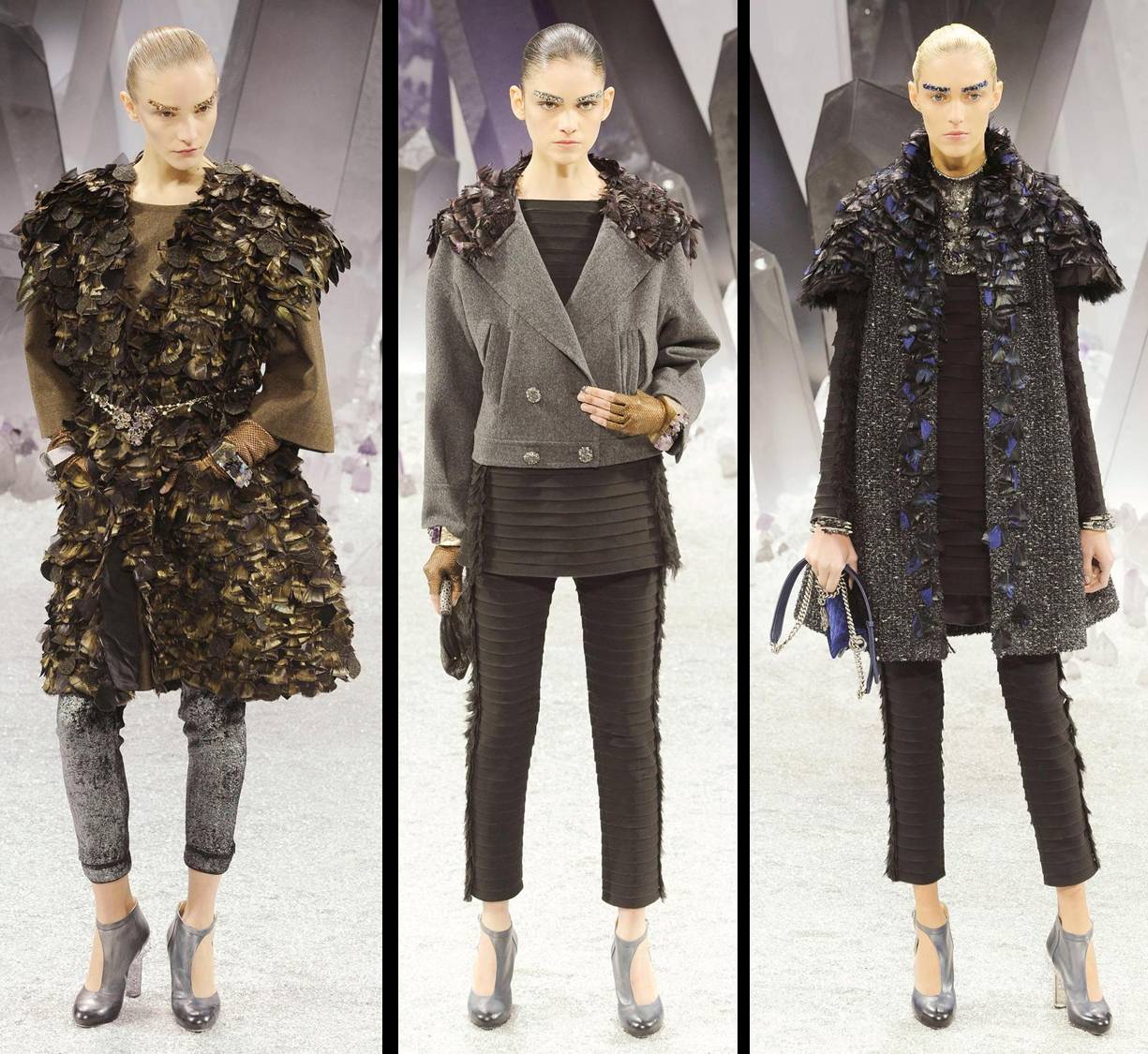
While the roasted turkey may be the star of the American Thanksgiving table next Thursday, turkey feathers have had a steady supporting role in the fashion world for centuries.  Last spring, Karl Lagerfeld introduced his Autumn/Winter 2013 Ready-to-Wear collection for Chanel, which featured an abundance of ornamental turkey pointers and flats, bringing a fresh, modern use to a material that has long been used in fashion.

Karl Lagerfeld for Chanel, Autumn/Winter 2013 Ready to Wear Collection.

Feathers of all kinds have enjoyed a ubiquitous presence in fashion across many cultures and centuries; turkey feathers in particular are often used because of their abundance and ease of dyeing.  They come in different sizes and shapes and are well-suited for a variety of purposes: flats come from the turkey’s back, pointers from the wings, and marabou, which is often used for making boas, is found at the turkey’s hip.

Different types of turkey feathers. From left: pointer, flat, marabou.

The colors naturally found on turkey feathers can be quite beautiful.

Wild turkey feathers. Credit: USFWS.

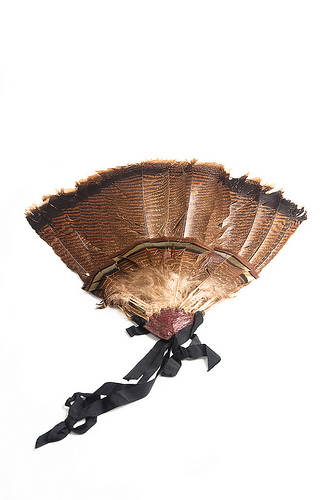
In the nineteenth century, turkey feather fans rose in popularity.  They were often made at home, especially when the blockades during the Civil War prevented fine European fans from being imported.

Turkey feather fan, mid-nineteenth century, The Mary Baker Eddy Library.

Turkey feather fan, mid-nineteenth century, Charleston Museum.

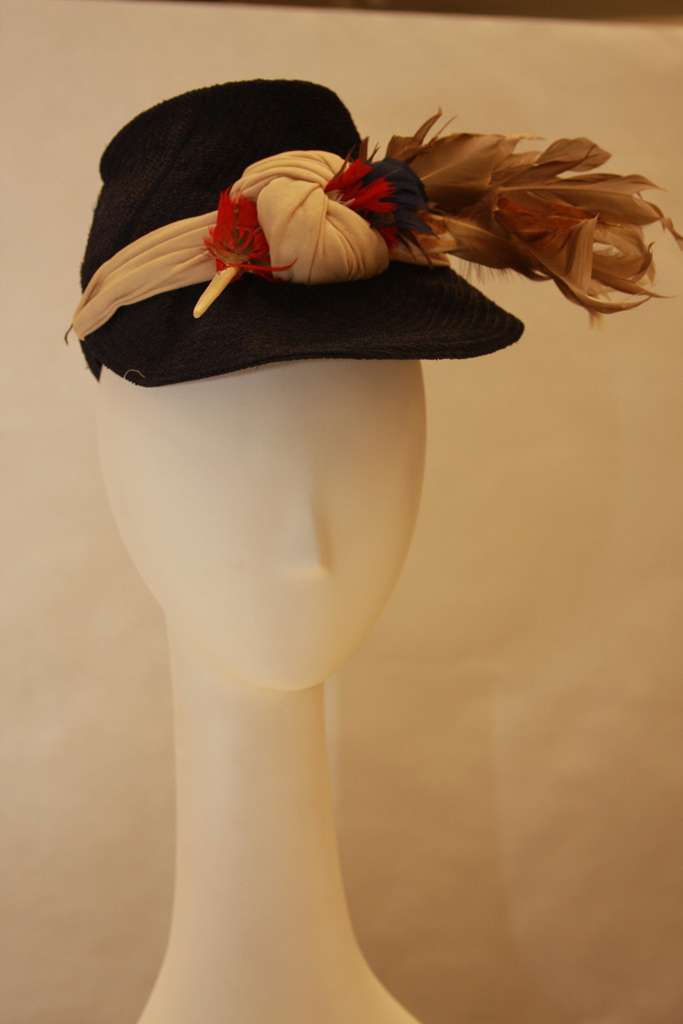
Turkey feathers have also been used as decorations on hats.

Woman’s hat, ca. 1942-1945, canvas with jersey and turkey feather trim, Kansas City Museum.

Advances in textile production have introduced new ways of using turkey feathers.  Scientists have experimented with excess feathers from slaughterhouses to remove the stiff quill from the feather and separate the fibers that make up the feather; yarns are spun from the turkey feather fibers and nylon. The fabric woven from these yarns is being tested for insular properties for use in jackets.

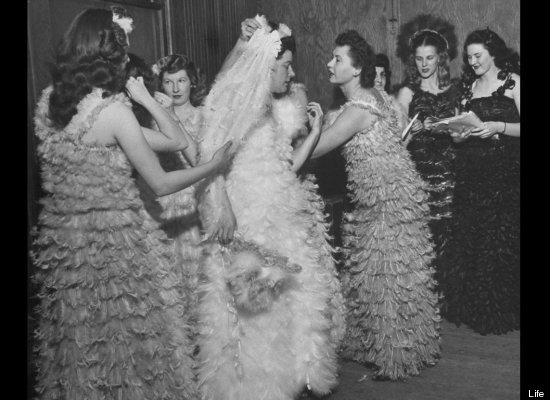
Of course, in a nod to the extreme, sometimes turkey feathers are used to construct entire garments.  In November of 1947, Barbara Ehrhart crafted her wedding gown, as well as the dresses for her bridesmaids, entirely out of turkey feathers, in line with the Thanksgiving theme of her nuptials.

Barbara Ehrhart and her bridesmaids.

The happy couple was not pelted with rice when leaving the church, but showered with turkey feathers.       Of course.

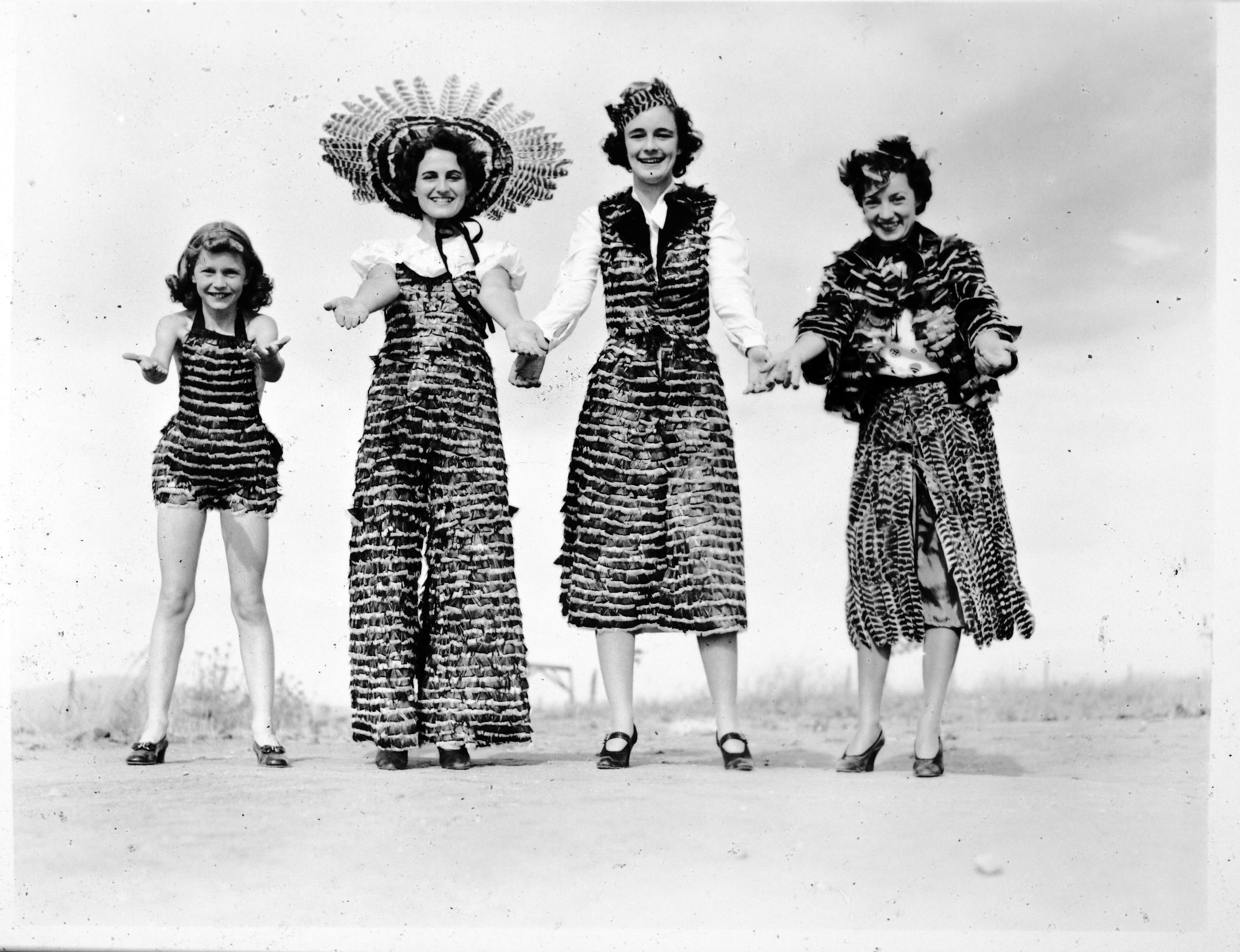
In Ramona, California, once known as the “Turkey Capital of the World,” turkey feather fashion was at a premium!  The  city’s famous “Turkey Days” enjoyed their heyday from 1933 to 1941.

Publicity photo for the Ramona Turkey Day; majorettes and people dressed in clothes made of turkey feathers.      No date. Museum of Man, San Diego.

Turkey feathers are also responsible for attiring this handsome fellow:

From High Street to Sesame Street, turkey feathers have long been used in fashion.  Chanel’s current offerings highlight just how what’s old is new again.

For our American readers, have a happy Thanksgiving.  We’ll be back in two weeks to feature another fabulous Fashionista!

Brownfield, Ann.  “Historic Hats of Kansas City.”  Kansas City Museum website.  http://www.kansascitymuseum.org/CURATOR/curator_brownfield2.html (accessed November 13, 2012).
Charleston Museum website.  “Threads of War:  Clothing and Textiles of the Civil War.”  http://www.charlestonmuseum.org/threads-of-war (accessed November 13, 2012).
Gorman, Jessica.  “Materials Take Wing: What to do with 4 billion pounds of feathers?”  From Science News, Volume 161, No. 8, February 23, 2002, p. 120.  http://www.phschool.com/science/science_news/articles/materials_take_wing.html (accessed November 13, 2012).
Himchak, Elizabeth Marie.  “Ramona’s Turkey Days had all the Trimmins.”  U-T San Diego.  November 20, 2005.  http://www.utsandiego.com/uniontrib/20051120/news_lz1mi20ramona.html#turkeyday (accessed November 15, 2012).
Mary Baker Eddy Library website.  “Turkey Feather Fan.”  http://www.marybakereddylibrary.org/collections/research/objects/item/turkey-feather-fan (accessed November 13, 2012).
Posted in Fashionista Friday | Tagged , , , , , , | Leave a comment

Mystery Monday: Elizabeth Hawes

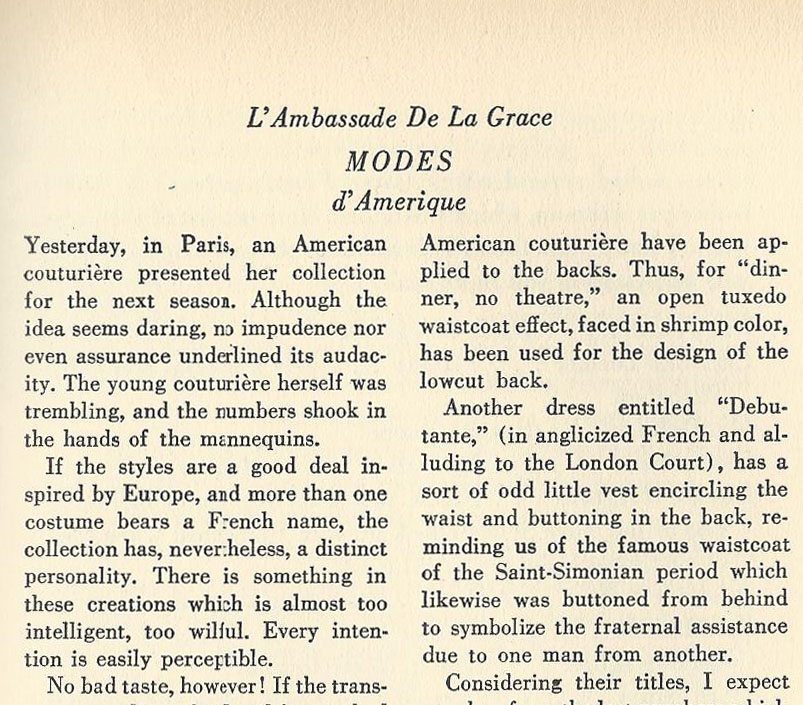
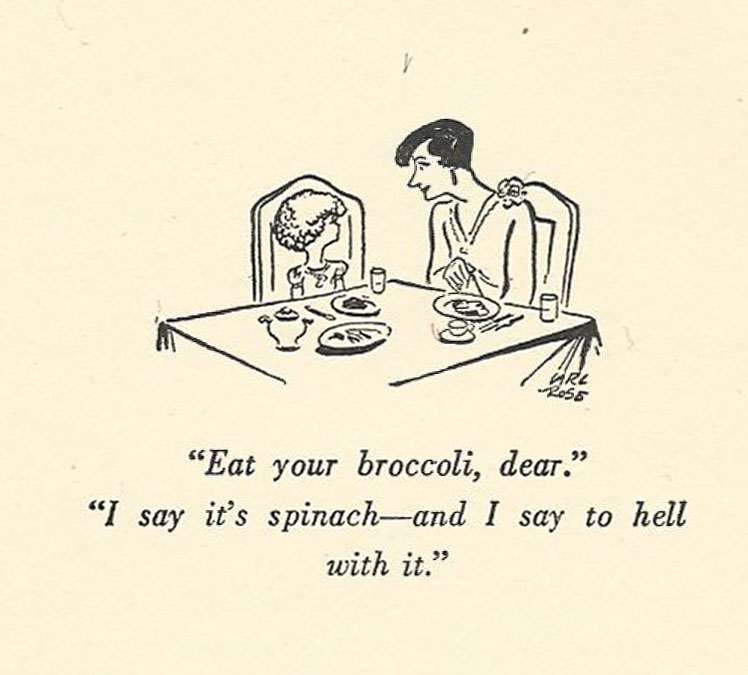
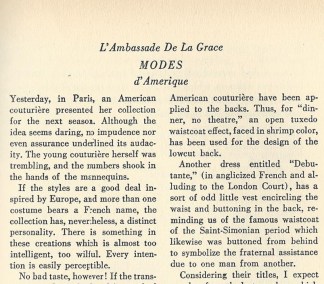
Prevost, Jean. “Modes d’Amerique” July 6, 1931. Found in Fashion Is Spinach by Elizabeth Hawes.

That’s right; this article is about Elizabeth Hawes (1903 – 1971), the fashion designer and author.

Lawrence, Mary Morris. Hawes with Models, c1936. Copyright Mary Morris Lawrence. Found in Radical by Design.

TO
MADELEINE VIONNET
the great creator of style in France
AND TO
THE FUTURE DESIGNERS OF
MASS-PRODUCED CLOTHES
the world over

…So begins Fashion Is Spinach, Elizabeth Hawes’s first book, in which she describes her career:

“I, Elizabeth Hawes, have sold, stolen, and designed clothes in Paris. I have reported on Paris fashions for newspapers and magazines and department stores. I’ve worked with American buyers in Europe.

“In America, I have built up my ivory tower on Sixty-seventh Street in New York. There I enjoy the privilege of making beautiful and expensive clothes to order for those who can afford my wares. I ran the show myself from the business angle for its first four years. I have designed, sold, and publicized my own clothes for nine years.
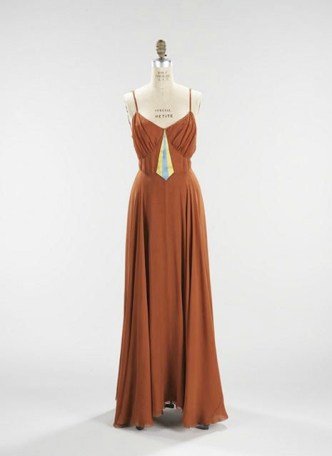
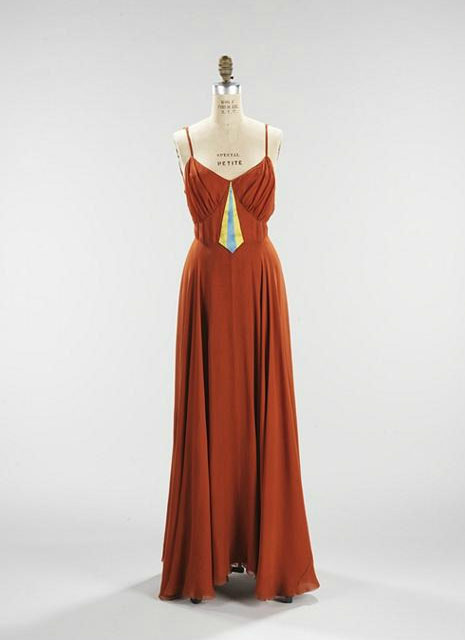
Hawes, Elizabeth. “The Moonstone.” Rust chiffon, chartreuse, and blue satin evening ensemble, Spring/Summer 1938. Copyright The Metropolitan Museum of Art.

“At the same time, in New York, I designed one year for a cheap wholesale dress house. I’ve designed bags, gloves, sweaters, hats, furs, and fabrics for manufacturers. I’ve worked on promotions for those articles with advertising agencies and department stores….

“During the course of all this, I’ve become convinced that ninety-five percent of the business of fashion is a useless waste of time and energy as far as the public is concerned. It serves only to ball up the ready-made customers and make their lives miserable”  (11).
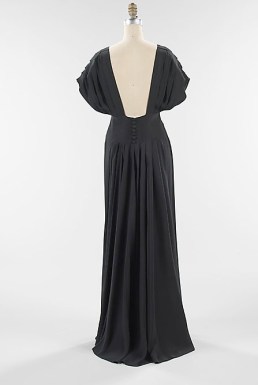
Hawes, Elizabeth. “Jolanthe” Greek-inspired sheath, Fall/Winter 1932. Copyright The Metropolitan Museum of Art.

Hawes received her education at Vassar before moving to France in 1925. With the help of a friend, she found her first job working at Doret’s, a copy house, where she sold dresses and sketches to American buyers.

“A copy house is a small dressmaking establishment where one buys copies of the dresses put out by the important retail designers. The exactitude of the copy varies with the price, which varies with the amount of perfection any given copy house sees fit to attain…. Most copy houses in Paris are upstairs, on side streets, although the one in which I worked was on Faubourg St., Honoré, just a bit up from Lanvin near the Place Beauvais. It was a very good copy house. Our boast was that we never made a copy of any dress of which we hadn’t had the original actually in our hands” (Fashion is Spinach, 38).

Hawes found her work at the copy house to be less than satisfying and found new work as a fashion journalist and a buyer. Still hoping to learn more about dress design, Hawes began working for Madame Nicole Groult, a small fashion house, in April 1928. While working with Madame Groult, Hawes learned the design process, from buying fabric to showing the finished models. Hawes worked with Madame Grout until August; after determining that she had mastered the design process, Hawes returned to New York City.

In New York City, Hawes opened a small shop with a young socialite, Rosemary Harden. Together Hawes-Harden produced its first collection in 1928, and contained some gems like the long-skirted, high-waisted dress which Hawes entitled “1929, perhaps–1930, surely”. Many of Hawes’s witty ensembles have equally clever or interesting names, including the garments described in the article above.
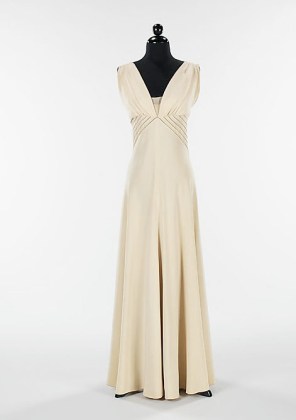
Hawes, Elizabeth. “Diamond Horseshoe” evening dress, Fall/Winter 1936-1937. Copyright The Metropolitan Museum of Art.
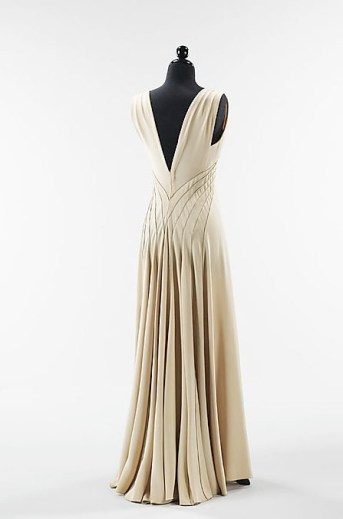
Hawes, Elizabeth. “Diamond Horseshoe” evening dress, Fall/Winter 1936-1937. Copyright The Metropolitan Museum of Art.

Hawes’s uniquely American style was totally removed from French fashion trends, with the exception of her fabric choices. Though she purchased French fabrics, Hawes ignored the latest collections from established French fashion houses, choosing instead to design for the American woman. She created elegant ensembles for the American lifestyle, with each design stemming from her advanced knowledge of construction techniques and her complete knowledge of fabric properties. Rather than relying on embellishment, Hawes created visual interest by her use of lines, color, and fit.

When Harden left the clothing business, Hawes began a successful solo career, designing clothes through the depression years under the label Hawes Incorporated. In Fashion is Spinach, Hawes describes the difficulties she faced during the depression, and how she began to discover the benefit of mass-producing ready-to-wear clothing. Unlike her contemporaries, Hawes foresaw the importance of ready-to-wear design, and as an early proponent, she worked closely with department stores like Lord and Taylor.

There is much to say about Elizabeth Hawes, and fortunately, she authored a series of books filled with her opinions on fashion, women’s rights, unions and more.

So, why is fashion spinach?

 “I had better, right here, differentiate for your between Fashion and Style, according to Webster, Hawes, and Shakespeare. Mr. Webster says Fashion is dressing in a way which is favored at the time, while Style implies a distinctive manner of dressing adapted by those who have taste. In Fashion Is Spinach, I defined Fashion as a dictator who not only forced people to dress in the way he favored at the time but also did his best to force perverse changes in women’s clothes as rapidly as possible so that American business could sell more things. Fashion, said Shakespeare, is a ‘deformed thief'” (It’s Still Spinach, 60).

From Fashion Is Spinach.

For more information please see the following resources:
Birch, Bettina. Radical By Design: The Life and Style of Elizabeth Hawes. New York: Dutton, 1988.
Hawes, Elizabeth. Fashion Is Spinach. New York: Random House, 1938.
Hawes, Elizabeth, Men Can Take It. New York: Random House, 1939.
Hawes, Elizabeth. Why Is A Dress? New York: Viking Press, 1942.
Hawes, Elizabeth. Why Women Cry; Or Wenches With Wrenches. New York: Reynal & Hitchcock, Inc., 1943.
Hawes, Elizabeth. Hurry Up Please It’s Time. New York: Reynal & Hitchcock, Inc., circa 1946.
Hawes, Elizabeth. Anything But Love. New York: Rinehart & Company, Inc., 1948.
Hawes, Elizabeth. But Say It Politely. Boston: Little, Brown, 1951.
Hawes, Elizabeth. It’s Still Spinach. Boston: Little, Brown, 1954.

Posted in Mystery Mondays | Tagged , , | 2 Comments

Mystery Monday

“Too intelligent, too wilful! …Not bad taste, however!”

…said one member of the press when this young American fashion designer dared to show her collection in Paris.

Who is the young American designer described in this article?

Think you know? Submit your guesses below; we’ll post the answer on Thursday!

Posted in Mystery Mondays | Tagged | 3 Comments

Fashionista Friday – Hélène Fourment

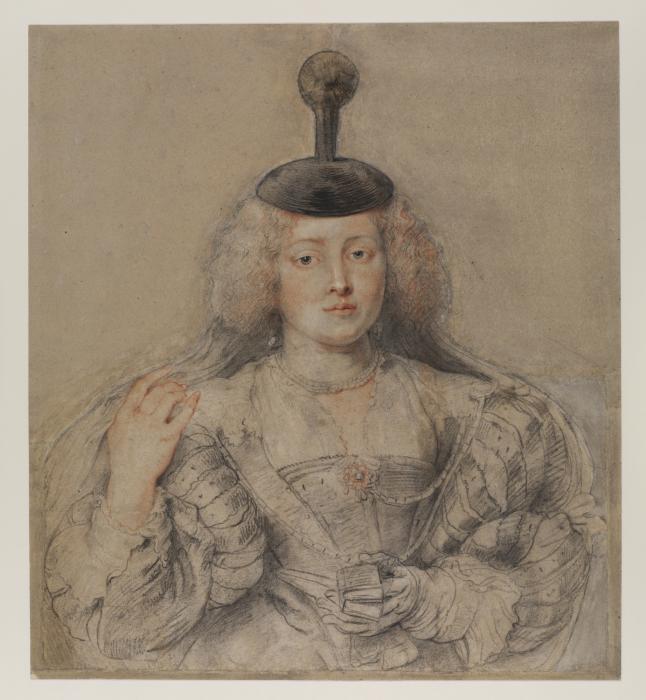
Peter Paul Rubens, Hélène Fourment, c. 1630, chalk and pen and ink, 24 x 21 1/2 inches; The Courtauld Gallery (Samuel Courtauld Trust).

History has given us plenty of silly headdresses.  But what, exactly, is that thing on her head?

In this drawing, currently on display at the Frick Collection, Hélène Fourment is depicted in perfectly period attire, with a devotional prayer book in one hand and the other modestly lifting her veil to capture the viewer’s gaze.  She was the second wife of Peter Paul Rubens, who often used her as model and muse.  She is featured prominently—and flatteringly—in many of Rubens’ works.  Rubens was particularly sensitive to fashion of the time and rendered it in detail—this headdress, then, could hardly be a mistake on his part, but a conscious reflection of a legitimate accessory of the early part of the seventeenth century.

Hélène’s headdress has three components: the distinctive pom-pom, the rounded crown portion, and the veil. It appears in other surviving works by Rubens.

Peter Paul Rubens, Study for a Portrait of Hélène Fourment, c. 1638-1639, chalk on paper, 43cm x 26 cm, British Museum.

Peter Paul Rubens, Hélène Fourment with a Carriage, c. 1639, oil on wood, 1.95m x 1.32m, Louvre.

The Louvre’s notes on Hélène Fourment with a Carriage describe the headdress as a “hat in the pom-pom fashion then current in Germany and the Low Countries.” After playing with French, German, and Dutch translations of “pom-pom,” “tuft,” and “tassel,” I found references to headdresses in northern Europe consisting of a pom-pom hat in conjunction with the terms “bon grace” or “bongrace” and “huke” or “heuk.”  Fairchild’s Dictionary of Fashion defines the bongrace as a “stiffened oblong woman’s head-covering with drapery in back; worn in 16th and early 17th c. over a coif.”  In The Mode in Hats and Headdress, Ruth Turner Wilcox writes, “A most curious mantle covering head and body, was the huke, a hooded wrap of black cloth and of Moorish origin worn in Europe from the eleventh century.  It became especially modish in the sixteenth and seventeenth centuries particularly in the Netherlands, Flanders, Germany.”

Detail of plate from The Mode in Hats and Headdresses.

Further investigation of Flemish painters yields a few more appearances of this headdress.  It was not exclusively for adults, as modeled by a child in this painting:

Jacob Gerritsz. Cuyp, Three Children in a Landscape, c. 1635, oil on canvas,130 x 198 cm, Museum Boijmans van Beuningen.

The headdress appears twice in this painting of a market scene, suggesting its popularity among townspeople:

Attributed to Govert Jansz, called Mijnheer, Earth: Elegant Figures at a Vegetable and Cattle Market, after 1619, oil on panel,25cm x 30cm.

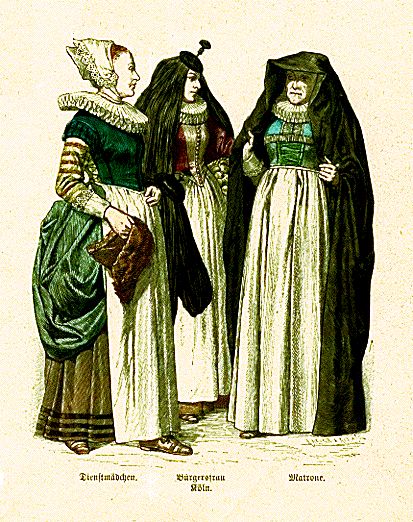
In the nineteenth century, Braun and Schneider recorded the headdress in their annals of costume history.

Plate 54D from Braun and Schneider’s The History of Costume.

In 1630, the headdress was described as follows:  “The richer sort of women doe weare a huicke which is a rob of cloth or stuffe plated and the upper part of it is gathered and sowed together in the forme of an English potlid with a tassel on the top.”

From Arabic garment of the Middle Ages to a potlid with a pompom–what a curious accessory!  Thanks to Hélène Fourment and Peter Paul Rubens for bringing it to our attention!

Resources
Calasibetta, Charlotte Mankey and Phyllis Tortora.  Fairchild Dictionary of Fashion.    New York: Fairchild Books, 2003.
Historic Costume in Pictures.  New York : Dover Publications, 1975.
Murray, James A. H., ed.  A New English Dictionary on Historical Principles.  Oxford: Clarendon Press, 1901.
Strachan, Edward and Roy Bolton.  Old Master Paintings and Drawings. London: Sphinx Books, 2009.
Wilcox, R. Turner.  The Mode in Hats and Headdress.  New York: C. Scribner’s Sons, 1945.
Posted in Fashionista Friday | Tagged , , , , , | 2 Comments

Mystery Monday: Ginette Spanier, La Directrice

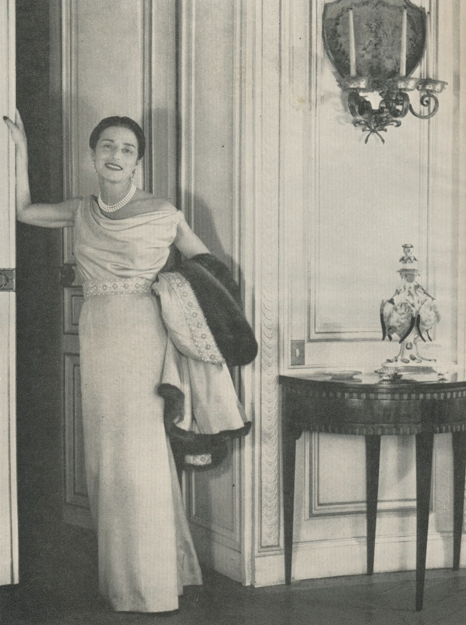
Yes, this is Ginette Spanier. She was the directrice of the House of Balmain from 1947 to 1976.

From It Isn’t All Mink.

In her autobiography, It Isn’t All Mink, Spanier describes her job and its various trials:

“…If a seam is not quite right, that is a matter of life and death. If a mannequin falls in love and thinks of getting married, and her work reflects her absence of mind, other mannequins behave as if she had committed murder. If a woman is not soignée enough (that abused word means “well-groomed,” but mere “well-groomed” falls far short of the standards of the couture, let me tell you) it is a tragedy of melodramatic intensity. I remember appearing once with Pierre Balmain when I thought I really looked marvelous. Hair, shoes, dress, all were perfection. Pierre Balmain screamed. ‘Ah-h-h,’ he screeched, ‘your bag. It’s terrible.’ So, what disaster for me if I failed in this respect. I was very far for soignée when I met Pierre Balmain.

Renée and Edith, deux habilleuses. From It Isn’t All Mink.

“Basically I would say the directrice is responsible for every human problem throughout the part of the firm which the public can see. The workrooms are not her business. But it does become her business if a certain dress does not fit, so she had to co-operate with the fitters responsible for their workrooms. If the terrible shrieking of two mannequins coming to blows over who shall show what dress should penetrate to the ears of, say, the Begum Aga Khan, then that also is the fault of the directrice. If the tearing and snarling sounds made by two vendeuses quarreling over a customer should reach the customer, that is the directrice’s fault too. If a customer does not pay her bill, that somehow is also the directrice’s fault. And so on, and so forth, right round the clock” (185 – 186).

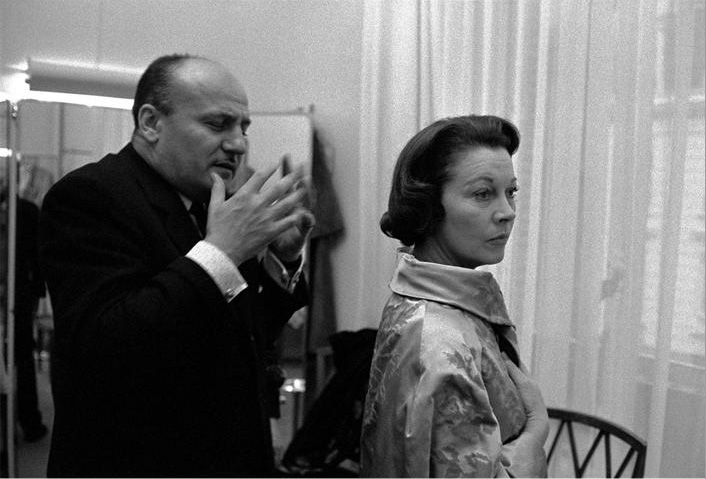
Lessing, Erich. Photograph of Fashion-designer Pierre Balmain and actress Vivien Leigh during a fitting, 1960. Copyright Magnum photos.

The creation of each season’s collection was always dramatic:

“As the collection is being made there is poetry in the air. I have sometimes, in the early days, stood on the pavement after dark and stared up at the House of Balmain, seeing every floor blazing with light and the dark shadows of busy women passing and repassing across the unshaded glass. And I have been there the next morning at 5 A.M. to see them still at it. Tired little girls from workrooms with arms full of half-finished gowns. Model girls, eyes made up like ballerinas, weeping from exhaustion, surviving on bottles and bottles of champagne. I love the wildness in the air, the elation and the perennial feeling of the dress rehearsal that means, ‘We open tomorrow.’ It is as though the pavements of the rue François Premier were in some way electrified” (171).

In 1954, Life magazine printed as series of photos of the beautiful confusion found backstage during a Balmain couture show. To view the photos, including some images of Ginette Spanier, please visit sighsandwhispers.com.

Balmain, Pierre. Evening Dress, 1953. Silk, rhinestones, and sequins. Copyright 2012 the Metropolitan Museum of Art.

Balmain, Pierre. Evening Dress, 1953. Silk, rhinestones, and sequins. Copyright 2012 the Metropolitan Museum of Art.

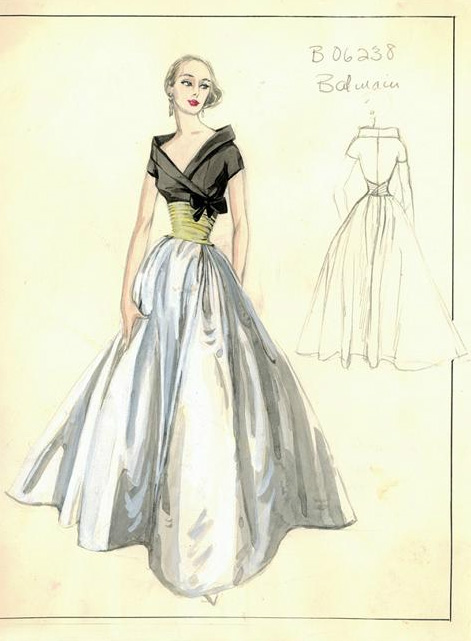
Balmain, Pierre. Black, yellow, and white evening gown with V-shaped stand collar, Fall 1954. From the FIT Library Department of Special Collections.
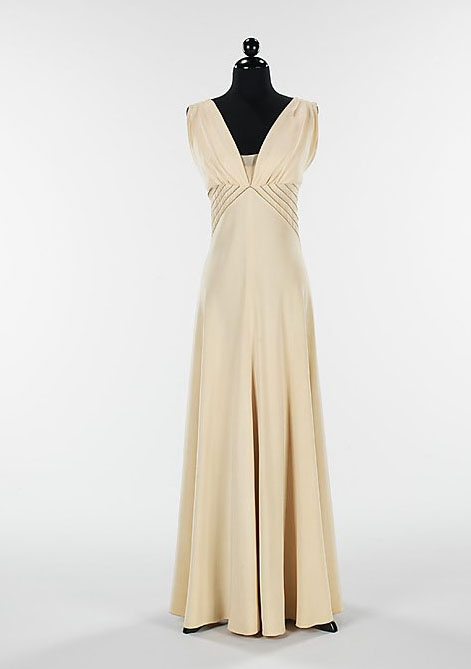
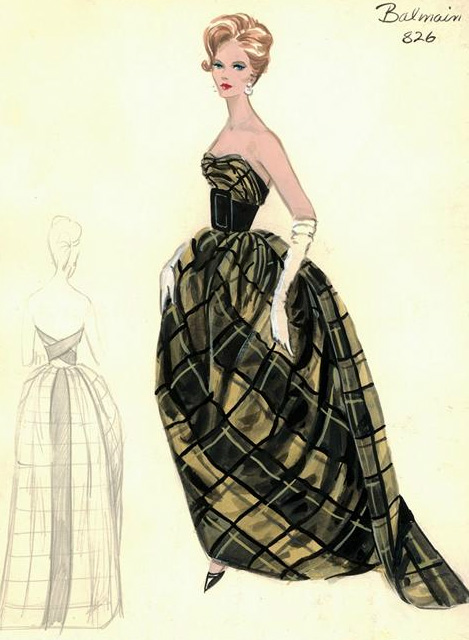
Balmain, Pierre. Black and ochre tartan evening gown with boned strapless bodice, black velvet belt with large rectangular buckle, Fall 1960. From the FIT Library Department of Special Collections.

Before founding his own house in 1945, Pierre Balmain worked under Edward Molyneux and at Lucien Lelong alongside Christian Dior.

“Pierre Balmain was amused by my enthusiasm, my enjoyment of organization, my love of selling. We talked together. He was broad and strong and in his thirties. He had been studying to be an architect before he became fascinated by women’s clothes. I am sure it is the way that clothes are made and built that inspires him. He is an extraordinary personality. Bouncy as  a countryman, he is the exact opposite o the conventional idea of a couturier…. He has a wonderful memory. He remembers every dress he has ever made, with its name and number, and the customer to whom it has been sold. His whole existence is the couture…. He loves long evening dresses and little woolen numbers, high at the neck. He loves dancing. He loves Italy. He loves publicity. He loves very luxurious clothes with embroidery all over them; he loves furs, he loves impossible combinations of material…lynx fur squirting out of tulle. Once he made an ermine blouse. He loves navy and black, brown and black. He won’t have an even number of anything, particularly buttons. It is a terrible crime to consider four buttons instead of three. He likes narrow feet, pointed shoes, tall girls, rich women…. He loves wild projects that will take him to the end of the world” (176 – 177).

The Seidmanns, Ginette and her husband, Paul-Emile. From It Isn’t All Mink.

It Isn’t All Mink begins with a series of stories about Ginette Spanier’s happy childhood, when she longed to be English while living in the French countryside. At the start of World War I, she moved to England, were she stayed, learning, living, and working until her marriage to Paul-Emile Seidmann brought her back to her native France.

The majority of the book describes the next six years, from 1939 – 1945. The Jewish couple spent most of the war hiding from the Nazis in occupied France. At the beginning of the war, they faced discrimination, and later found it necessary to change their surname and move frequently to avoid persecution and death in a concentration camp.  These years spent in fear of capture – without money or enough food – provide a great contrast to Spanier’s life after World War II, full of fashion and frivolity, but it is these chapters that best display her intelligence, courage, and perseverance. And while the focus of the book shifts to providing an understanding of haute couture, Spanier’s voice remains strong, and her diligence and intelligence find a new medium – as the directrice of a fashion house.

All quotes from:
Spanier, Ginette. It Isn’t All Mink. New York: Random House, 1960.
For more information, please see the following resources:
Balmain, Pierre. My Years and Seasons, Eng. trans. by E. Lanchbery with G. Young. London, 1964.
Spanier, Ginette. And Now It’s Sables…. London: Robert Hale Ltd, 1970.
Spanier, Ginette. The Long Road to Freedom. London: Robert Hale Ltd, 1976.
Posted in Mystery Mondays | Tagged , , , | Leave a comment